THE HOT SAUCE MANIFESTO
by
Devoid Taylor
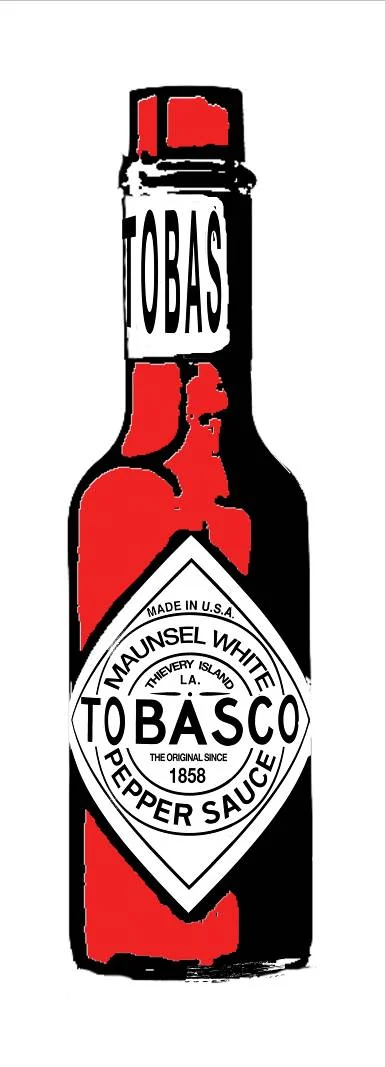
the unofficial and unfinished rough draft
published by
popboompow
edition 0.01

The Hot Sauce Manifesto
as appropriated from the internet by Devoid Taylor...
with a couple of his own ideas too.
What you are about to absorb is as truthful as anything that can be absorbed in this time we live in. While some of it exists as opinion – the vast majority of it resonates with the facts it is taken from. What lies ahead is a serpentine trail of thought, theory, conjecture, convolution, and conspiracy… And - like most serpentine trails - it eventually leads down the rabbit hole. Follow it long enough and at the bottom of the rabbit hole you will find the intent of The Hot Sauce Project and the true core of what it means when you hear the words – ‘We’ve been sauced.’
The Hot Sauce Project is an exploration of Toxic Consumption in our modern era. It’s about the pervasiveness of pop culture across all boundaries. It’s about corporate greed and it’s use of mass media to justify mass production with a reliance on mass consumption. It’s about consumers buying into their own oppression. It’s about pop art and it’s use of appropriation. It’s about the utilization of icons to boost sales. It’s about the defense mechanism of a plant. It’s about the chemical capsaicin. It’s about using something poisonous to excite. It’s about the history of the Tabasco pepper. It’s about the way something hidden can pass undetected and therefore continue the propagation of a species… both literally and metaphorically. It’s about crowd control and keeping the status quo. It’s about the appropriation of an idea and turning it into a multinational. It’s about a top secret project started by Apple Computers in the 90’s. It’s about the founder of that project moving on and blazing a trail for the future of the information age. It’s about metadata. It’s about the way metadata is captured, stored, used and exploited. It’s about the way metadata is attached to our online personas. It’s about a reality distortion field. It’s about social networking and the loss of privacy.
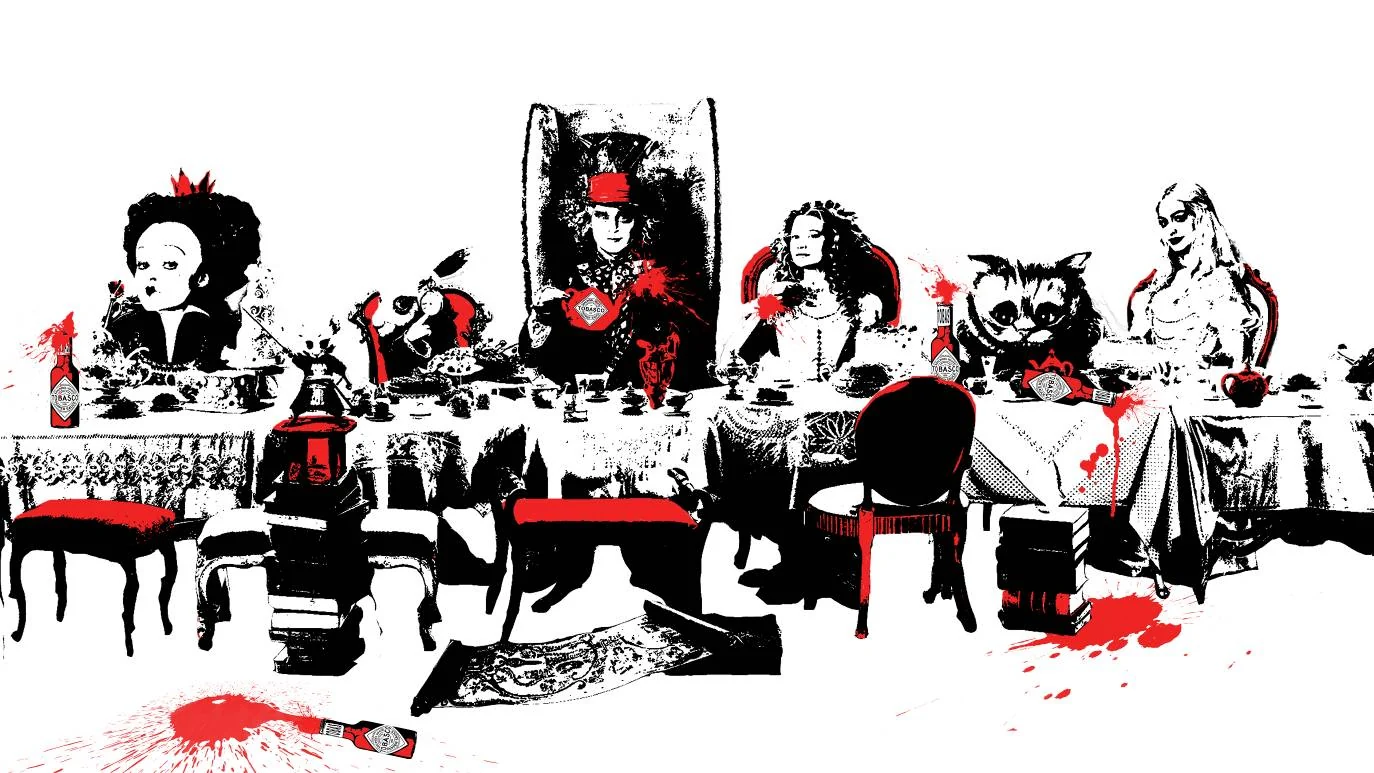
Well… I did warn you about the rabbit hole.
Shall we begin?
Solanacae - Capsicum Frutescens
Being that this is a project about consumption it makes sense we start with one of the only things we as consumers need to consume in order to live: food. The project begins with hot sauce and hot sauce begins with the chili pepper. The family – genus – species of which is Solanacae Capsicum Frutescens. Looking at the etymology reveals some interesting coincidences.
Solanacae is a family of flowering plants. The family is often referred to as the Nightshade family – as in the deadly poisonous nightshade. While not all species in the family are toxic – many are. The name Solanacae is believed to derive from Solanum first used by Pliny the Elder (23-79) for a plant also known as strychnos, most likely S. nigrum. Its derivation is uncertain, possibly stemming from the Latin word sol, meaning "sun," referring to its status as a plant of the sun. Another possibility is that the root was solare, meaning "to soothe," or solamen, meaning "a comfort". [1] So – the coupling of pop icons with hot sauce seeks to comment on the soothing effect mass media hopes to convey to the consumer while pushing new products and ideas for purchase.
Capsicum is a genus of plants within the nightshade family - Solanacae. The generic name is derived from the Greek word (kapto), meaning "to bite" or "to swallow." [2] This is a fitting root given the all consuming nature of corporate run media – and – within the art work accompanying this project the viewer is being presented with images of pop icons doused in sauce made from [kapto fruit] not only is the sauce meant for your consumption – but so are the images and what they represent. Bite on that… chew a little… and swallow. Mmmm.
Capsicum Frutescens – commonly known as chili peppers – are native to the Americas and have been cultivated for thousands of years. The original Mexican term, chilli (now chile in Mexico) came from the Nahuatl word chilli or xilli, referring to a larger Capsicum variety cultivated at least since 3000 BC, as evidenced by remains found in pottery from Puebla and Oaxaca. [3] Beyond this – Chili Peppers were one of the first self pollinating crops cultivated in Central and South America. [4] In this instance in regards to the Hot Sauce Project we can think of self-pollination as self-perpetuating where pop culture begets pop icons which in turn perpetuate pop culture and the consumption of it. The danger of this self-pollination is a lack of variation and an inbreeding depression that contributes to a reduced health of our culture. In the Hot Sauce Metaphor – the Tobasco Sauce is signatory of our media illness.
Current day Chili Pepper usage is widespread across many forms from culinary to medicinal - and from offensive weaponry to agricultural defense. It is indeed pervasive like our media. We will touch on many uses as we continue along this trail. In its most basic form – Chili Peppers are used in Cuisines around the world as a way to excite an otherwise bland experience. In the parallel to the Hot Sauce Project – Pop Icons are coupled with Hot Sauce as a way to align the fact that our culture latches onto icons as a way of identifying with what we want to be - smarter, richer, sexier, funnier, healthier, more desirable… on and on. Media is pushing us to self pollinate ourselves with ideas that ‘spice up’ our sometimes otherwise bland existences. By buying into pop icons – we are hoping to buy into a better version of ourselves – when in truth we are self-pollinating and therefore engaging in an inbreeding depression. What is most interesting to me here - is not the fact that we latch onto pieces of pop culture we want to identify with – nor the fact that we use hot sauce to excite our taste buds… but rather – the thing that causes the sensation of excitement or arousal to begin with – enter Capsaicin and Toxic Consumption.
Capsaicin
Capsaicin is the active ingredient in Chili Peppers – and therefore Hot Sauce – that gives it that signature kick. It is poisonous to mammals – that includes us. Below is a barrage of facts. Absorb them – and then we will break them down.

The
Science
Capsaicin (/kæpˈseɪ.ɨsɪn/; 8-methyl-N-vanillyl-6-nonenamide, ((CH3)2CHCH=CH(CH2)4CONHCH2C6H3-4-(OH)-3-(OCH3) ) is the active component of chili peppers, which are plants belonging to the genus Capsicum. It is an irritant for mammals, including humans, and produces a sensation of burning in any tissue with which it comes into contact. Capsaicin and several related compounds are called capsaicinoids and are produced as secondary metabolites by chili peppers, probably as deterrents against certain mammals and fungi.[5] Pure capsaicin is a volatile, hydrophobic, colorless, odorless, crystalline to waxy compound. Remember this fact – we will come back to it.
Capsaicin is present in large quantities in the placental tissue (which holds the seeds), the internal membranes and, to a lesser extent, the other fleshy parts of the fruits of plants in the genus Capsicum. The seeds themselves do not produce any capsaicin, although the highest concentration of capsaicin can be found in the white pith of the inner wall, where the seeds are attached.[6]
The seeds of Capsicum plants are predominantly dispersed by birds. The TRPV1 channel to which capsaicin binds does not respond to capsaicin and related chemicals in birds (avian vs mammalian TRPV1 show functional diversity and selective sensitivity). Chili pepper seeds consumed by birds pass through the digestive tract and can germinate later, but mammals have molar teeth, which destroy seeds and prevent them from germinating. Thus, natural selection may have led to increasing capsaicin production because it makes the plant less likely to be eaten by animals that do not help it reproduce.[7] In addition, there is evidence that capsaicin evolved as an anti-fungal agent.[8] The fungal pathogen, Fusarium, is known to infect wild chilies which reduces seed viability. Capsaicin deters the fungus, and in doing so limits this form of pre-dispersal seed mortality.
The burning and painful sensations associated with capsaicin result from its chemical interaction with sensory neurons. Capsaicin, as a member of the vanilloid family, binds to a receptor called the vanilloid receptor subtype 1 (VR1).[9] First cloned in 1997, VR1 is an ion channel-type receptor. VR1, which can also be stimulated with heat and physical abrasion, permits cations to pass through the cell membrane and into the cell when activated. The resulting depolarization of the neuron stimulates it to signal the brain. By binding to the VR1 receptor, the capsaicin molecule produces similar sensations to those of excessive heat or abrasive damage, explaining why the spiciness of capsaicin is described as a burning sensation.
Early research showed capsaicin to evoke a strikingly long-onset current in comparison to other chemical agonists, suggesting the involvement of a significant rate-limiting factor.[10] Subsequently, the VR1 ion channel has been shown to be a member of the super family of TRP ion channels, and as such is now referred to as TRPV1. There are a number of different TRP ion channels that have been shown to be sensitive to different ranges of temperature and probably are responsible for our range of temperature sensation. Thus, capsaicin does not actually cause a chemical burn, or indeed any direct tissue damage at all, when chili peppers are the source of exposure. The inflammation resulting from exposure to capsaicin is believed to be the result of the body's reaction to nerve excitement.
In 2006, it was discovered that the venom of a certain tarantula species activates the same pathway of pain as is activated by capsaicin, the first demonstrated case of such a shared pathway in both plant and animal anti-mammal defense.[11]
The Culinary
Because of the burning sensation caused by capsaicin when it comes in contact with mucous membranes, it is commonly used in food products to give them added spice or "heat" (piquancy). In high concentrations, capsaicin will also cause a burning effect on other sensitive areas of skin. The degree of heat found within a food is often measured on the Scoville scale. In some cases people enjoy the heat; there has long been a demand for capsaicin-spiced food and beverages.[12] It is common for people to experience pleasurable and even euphoriant effects from ingesting capsaicin. Folklore among self-described "chiliheads" attributes this to pain-stimulated release of endorphins, a different mechanism from the local receptor overload that makes capsaicin effective as a topical analgesic. In support of this theory, there is some evidence that the effect can be blocked by naloxone and other compounds that compete for receptor sites with endorphins and opiates.[13]
Psychologist Paul Rozin suggests that eating chilis is an example of a "constrained risk" like riding a roller coaster, in which extreme sensations like pain and fear can be enjoyed because individuals know that these sensations are not actually harmful. This method lets people experience extreme feelings without any risk of bodily harm.[14]

The Medicinal
Capsaicin creams are used to treat psoriasis as an effective way to reduce itching and inflammation.[15]
According to animal and human studies, the oral intake of capsaicin may increase the production of heat by the body for a short time. Due to the effect on the carbohydrates breakdown after a meal, cayenne may also be used to regulate blood sugar levels.[16]
Capsaicin selectively binds to a protein known as TRPV1 that resides on the membranes of pain and heat sensing neurons.[17] TRPV1 is a heat activated calcium channel, which opens between 37 and 45 °C (98.6 and 113 °F, respectively). When capsaicin binds to TRPV1, it causes the channel to open below 37 °C (normal human body temperature), which is why capsaicin is linked to the sensation of heat. Prolonged activation of these neurons by capsaicin depletes pre-synaptic substance P, one of the body's neurotransmitters for pain and heat. Neurons that do not contain TRPV1 are unaffected.
The result appears to be that the chemical mimics a burning sensation; the nerves are overwhelmed by the influx, and are unable to report pain for an extended period of time. With chronic exposure to capsaicin, neurons are depleted of neurotransmitters, leading to reduction in sensation of pain and blockade of neurogenic inflammation. If capsaicin is removed, the neurons recover. [18]
Carcinogenic, co-carcinogenic, and anti-carcinogenic effects of capsaicin have been reported in animal studies.[19]
The Weaponization
Capsaicin is also the active ingredient in riot control and personal defense pepper spray chemical agents. When the spray comes in contact with skin, especially eyes or mucous membranes, it is very painful, and breathing small particles of it as it disperses can cause breathing difficulty, which serves to discourage assailants.
In other deterrents it is frequently used against mammalian pests. The first pesticide product using solely capsaicin as the active ingredient was registered with the U.S. Department of Agriculture in 1962.[20]
The Capsaicin Breakdown
From the above we absorbed the following:
Capsaicin is a highly toxic chemical. As the key ingredient causing excitement in the use of hot sauce it is the underlying element that leads to the theme of toxic consumption in the work. We knowingly ingest a poison with the goal of increasing our enjoyment of our experience. This is toxic consumption. In the work this not only aligns with the literal consumption of hot sauce - but also with the more subversive consumption of pop culture.
It is a poison to mammals - including humans. Again - scientifically toxic consumption.
In its pure form it is colorless and odorless - and from there one could say close to undetectable. We will delve into this more in the next layer of our journey, but it is important to note... From the bird’s eye view - capsaicin allows for the undetectable physical planting of a seed of a plant... Or in the work: the figurative planting of a seed of a thought or idea.
It evolved in chili peppers as a defense mechanism as a way to protect its seeds from predators - through this it allowed for birds to eat it's fruit and therefore it’s seeds - thereby ensuring the propagation of the species as birds would ingest the seeds immune to the toxic effects of capsaicin and carry the seeds away from the point of origination where they would be dispersed unharmed from the avian digestive tract and new plants would take root.
Capsaicin stimulates the same neural pain pathways as tarantula venom. This is just a fun fact!
Even though it is toxic to humans - we found it is exceedingly popular in cuisine due to the euphoria it can create through the release of endorphins when consumed. We also learned about the psychological draw through the idea of constrained risk due to the intense sensations it can trigger with no real threat of physical harm. Constrained risk resonates within the work mimicking the idea that there is no real danger of physical harm due to the consumption of pop culture. However in this sense - the danger truly is real - it simply does not manifest itself in a physical sense - but in a psychological one. Just as capsaicin affects our neural pathways - so does pop culture. The constant barrage of images and ideas re-programs our ability to discern between what we want and what we need.
We learned that through ingesting capsaicin the chemical mimics a burning sensation; the nerves are overwhelmed by the influx, and are unable to report pain for an extended period of time. This is a comment back on the masochistic nature of our society and culture that we willing fully ingest something that causes us pain and discomfort. As well the fact Capsaicin causes a burning that leads to numbness. As media singes through our synapses our overexposure numbs us to new stimulus - a key ingredient to the crowd control of our globalized populous. Satiated with distractions we are unable to concentrate on what's happening with the man behind the curtain. So distracted in fact - that we don't even attempt to recognize there is a curtain - let alone a force operating behind it. Yes - I just used a pop culture reference to describe a mechanism of pop culture.
We learned that capsaicin has carcinogenic effects in animal studies further underlining our theme of toxic consumption. The hot sauce itself is toxic - and in the work - so are the icons they seek to mask.
We learned about its use in crowd control tactics. In this instance - pepper spray is a first resort in crowd control. The hot sauce project seeks to remind us the true first resort in crowd control is mind control. With pre-emptive mind control there is no fear of a crowd forming. Through this pop culture is pushed as a distraction - a diversion from real issues. Edward R. Murrow said it best when he borrowed from Karl Marx - 'television is the opiate of the masses'. That statement could be amended in the internet age to say – pop culture is the opiate of the masses.

tObasco NOT tAbasco – or – Why Edmund McIlhenny was a Pop Artist
The following is appropriated in large part from Chuck Evans. Chuck Evans is the ultimate pepper enthusiast. He is the owner of Montezuma Brand Hot Sauces and the co-author of ‘The Hot Sauce Bible’ alongside the ‘Pope of Peppers’ Dave DeWitt. He was instrumental in this project - allowing me to harass him over the phone for hours on end. I can’t thank him enough. Beyond this I also had the privilege of working closely with the Great Great Grandson of Colonel Maunsel White. He was one of my greatest assets in this endeavor and his input was beyond inspirational.
The Real History of the First Louisiana Tobasco Sauce
Setting the Stage - The War of 1812
Maunsel White (1783-1863) was born near Limerick, Ireland and orphaned at age six. He arrived in America at age thirteen and lived in Plaquemines Parish, Louisiana. However, little is known about his life until he joined the New Orleans militia.
In 1814, Captain Maunsel White, at the age of 31, was placed in charge of a white men’s militia regiment, named the Louisiana Blues, under the command of Major Jean Baptiste Plauch, who reported directly to Major General Andrew Jackson, commander of the Seventh Military District and the United States forces in the Gulf campaign against Britain’s blockade of American ports. General Jackson was later elected President of the United States in 1828.[21]
Major Plauch headed the New Orleans uniformed militia companies totaling two hundred and eighty-seven men.[22]Each of the four companies had its own distinctive, colorful uniform, and many of their members had previous military experience in France, Saint-Domingue (Haiti), and Latin America. A certain Captain Dudley Avery (d.1816), a physician from Baton Rouge, served as a medical officer in a regiment of uniformed militia during the battle of New Orleans and continued to write accounts of the conflict.[23] Captain Dudley Avery and Captain Maunsel White served in the same New Orleans uniformed militia regiment.
Between 1814 and 1816, Captain Dudley Avery wrote numerous letters to Mary Ann Browne Avery, the parents of Daniel Dudley Avery (1810-1879), from New Orleans where he also served as a member of the state legislature. In 1813, Captain Dudley Avery was appointed justice of the peace in East Baton Rouge Parish. In his letters of 1814, Captain Dudley Avery mentioned General Jackson, the progress of the war, and some of the discussions in the legislature. In December 1814, Captain Dudley Avery wrote about the troops that were in New Orleans, their expectation of being attacked, and later, that the enemy had landed and two battles had taken place. At the time of the Battle of New Orleans, detachments composed of United States army troops came from Kentucky, Tennessee, Mississippi, and Louisiana militia; Baratarian pirates; Choctaw warriors; and free black soldiers. Major General Andrew Jackson defeated overwhelming British forces in 1815 in America’s first military victory.
Louisianans contributed to the American victory in many ways. Behind the front lines white and free black men forty-five years and older formed home guards to protect private property and maintain order in New Orleans and surrounding towns and posts. Slaves and citizens helped widen canals and build defenses along them. The New Basin Canal was built by Irish immigrants beginning in 1832 and opening for traffic in 1838. Slaves also fortified military positions and fought in several battles of the Louisiana campaign. Women at home made clothing for the troops and flags and bandages for the militia regiments, while nuns and free women of color nursed the wounded at hospitals and convents. [24]
After the Battle of New Orleans, now-Colonel Maunsel White became active in mercantile activities as a commission merchant and forwarding merchant.[25] Due to his extensive wartime contacts, Maunsel White was appointed a New Orleans commissioner. The New Orleans Canal and Banking Company, which owned and built the New Basin Canal, was founded by Maunsel White.[26] Financially, the canal was a success serving as a transport to downtown New Orleans and opening up trade with communities north of Lake Pontchartrain and cities along the Gulf of Mexico.
Maunsel White invested heavily as a sugar cane farmer, receiving U.S. Patent No. 1,326 on September 17, 1839 for an evaporating pan in setting and arranging sugar kettles. Maunsel White also marketed cotton grown from his war contacts, including General John Coffee from Tennessee, the subsequent Surveyor General of Mississippi Territory & Alabama Lands, who also served under General Jackson.[27] Maunsel White operated his Deer Range plantation growing sugar cane, corn, and other crops. In 1858, his son Maunsell White, Jr. (1835-1883) purchased Junior Place, formerly the Velasco Plantation. Maunsel White and his eldest son kept extensive plantation records, including a set of plantation journals from 1852-1883 documenting the operation of the Whites plantations; diaries of his agricultural pursuits and economic conditions, including New Orleans business news, crop predictions, and cotton shipments. Also included are a set of autograph books and letters of correspondence with Andrew Jackson, Zachary Taylor, and letters written to his eldest son, who attended Mandeville College near Baton Rouge as well as the University of Virginia. These records are documented in the Inventory of the Maunsel White Papers, 1802-1912, Collection Number 2234, at the Manuscripts Department of the University of North Carolina at Chapel Hill.
In 1846 legislators voted to move the site of the state capital from New Orleans to Baton Rouge. Colonel Maunsel White was appointed as one of three statehouse commissioners to oversee building the new capitol. Before building began, Baton Rouge General Assemblyman Daniel Dudley Avery replaced one of the commissioners.[28] Lawyer, representative to the General Assembly from Baton Rouge, and eventual Judge Daniel Avery, who was also joint owner of the Petit Anse Island sugar plantation, and Deer Range sugar plantation owner Maunsel White, became colleagues.
To be clear – Maunsel White and Dudley Avery served in the same militia. Dudley’s son Daniel became one of three commissioners next to Maunsel White overseeing the capital move.
The Lore of Red Peppers
Of special interest in the Maunsel White Papers is a letter of June 13th, 1847 in which Maunsel White described the reception of returning Mexican-American war heroes in New Orleans. The war arose from the competing claims to Texas by Mexico and the United States in the wake of the Mexican Revolution. Texas had just fought a war of independence against Mexico, which considered Texas a “breakaway province” and refused to recognize its independence. The root causes of war were westward expansion on the part of Americans and political instability in Mexico in the aftermath of the Mexican War of Independence which had made it difficult for the United States to negotiate with Mexico and for Mexico to administer its northern territories. American troops entered Mexico City where the Mexican-American War ended in 1848 establishing the southern borders of the United States, where the subsequent Treaty of Guadalupe Hidalgo resulted in the United States purchase of Mexico’s northern territories.
American soldiers fighting in the Mexican-American war returned to New Orleans from Vera Cruz which port city is just north of an area of Mexico known as the Tabasco region (which is now a state in Mexico). According to a series of articles from the Metropolitan News-Enterprise and conversation with the great-great grandson bearing the same name of Maunsel White; The New Orleans Daily Delta published an article about Colonel White’s new enterprise on January 26, 1850:
Col. White has introduced the celebrated tobasco red pepper, the very strongest of all peppers, of which he cultivated a large quantity with the view of supplying his neighbors, and diffusing it throughout the state.
The article reports:
Owing to its oleaginous character, Col. White found it impossible to preserve it by drying; but by pouring strong vinegar on it after boiling, he has made a sauce or pepper decoction of it, which possesses in a most concentrated form all the quantities of the vegetable. A single drop of the sauce will flavor a whole plate of soup or other food. The use of a decoction like this, particularly in preparing the food for laboring persons, would be exceedingly beneficial in a relaxing climate like this…
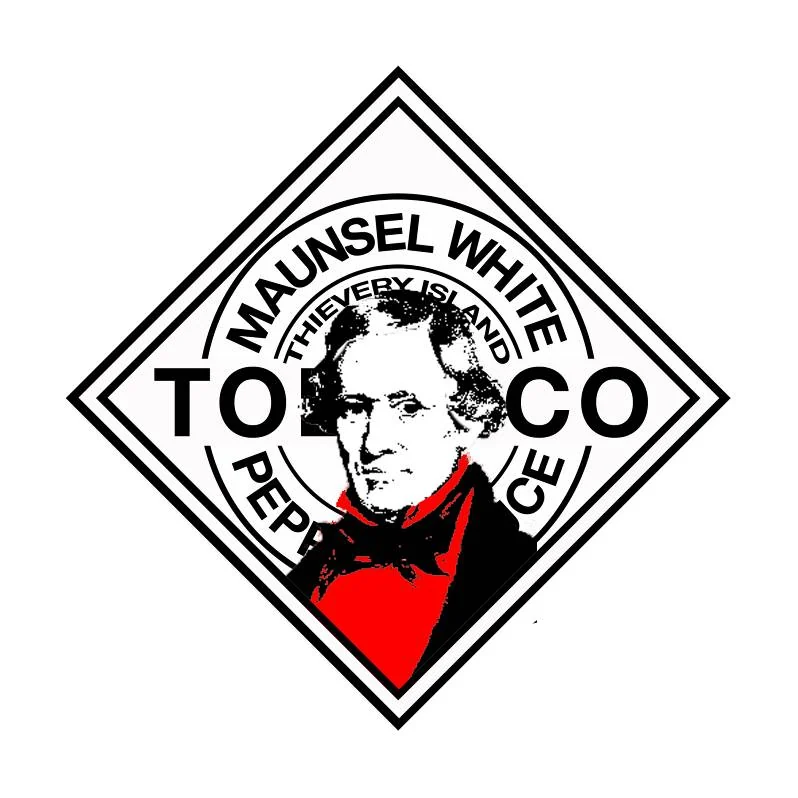
Maunsel White is likely to have come by the tobasco pepper from American soldiers returning from Vera Cruz to the celebration in New Orleans. The simple explanation is that American soldiers, exposed to the foreign produce and foodstuffs in a distant land where many would be returning to farming and agricultural pursuits after their service, would be interested in crops that they have seen and tasted in the mercados (marketplaces), and especially the abundance of vegetables, herbs, and spices for sale in the marketplaces of the cities of Monterrey and Vera Cruz, and in the cavernous Mercado Tlatelolco in Mexico City.
Where Maunsel White participated in the celebrations as a city official, it is not difficult to imagine, and certainly fits logically within the time frame that Maunsel White sauce was first concocted (which is dated by two different accounts to have been either 1849 or 1850) that the alleged traveler from Central America story perpetuated in McIlhenny family lore was actually a soldier returning through the port of New Orleans from the Mexican-American war to a festive reception in June of 1847, being honored and greeted by a prominent former military officer who was also a city commissioner, our very own Maunsel White. Returning soldiers often waited several weeks in the port of Vera Cruz for a vessel to set sail for New Orleans, therefore, it is likely that all manner of pocket souvenirs including trinkets and clothing, spices and produce, were transported back to the states.
According to McIlhenny family tradition, the story passed down from Tabasco sauce founder, Edmund McIlhenny (1815-1890), is that he obtained some red pepper seeds from a Central American traveler who recently arrived in Louisiana.
However, while this event may have occurred, it is more likely that a soldier in the Mexican-American War gave Maunsel White tobasco seed.[29] In 1849 Maunsel White was growing tobasco peppers at Deer Range Plantation long before Edmund McIlhenny began growing tabasco peppers on Petit Anse Island Plantation, the salt dome whose name was later changed to Avery Island. Edmund McIlhenny did not even live on the Avery plantation until 1860, after his marriage to Mary Eliza Avery in 1859, and there is no record or belief that he grew his tabasco peppers anywhere else. Further, there is a significant gap in time in McIlhenny family lore where the Mexican-American War ended in 1848 and when Edmund McIlhenny planted his first tabasco chile crop.
Is it actually believable that Edmund McIlhenny received seeds after the Mexican American War prior to 1850 and magically kept them for 10 years before planting his first crop? I think not. Then he must have received the seeds a different way than what is claimed.
Edmund had arrived in New Orleans only seven years prior in the 1840’s and during that time as a Crescent City banker was busy establishing his five banks. It was only during the Reconstruction period, once confederate currency was worthless, where the McIlhennys and Averys were financially struggling that the Avery plantation was of significant economic importance to their survival.
Marsh-Avery Ownership History of Isle Petit Anse
The massive salt dome that towers over flat marshland surrounded by the Bayou Petit Anse in the heart of Louisiana’s Cajun country seven miles south of New Iberia was purchased by John C. Marsh (1789-1857) on or about 1818. John Marsh was assisted by his second son, George Marsh (d.1859) in operating the islands sugar plantation. In 1849, John Marsh sold his interest to two of his sons-in-law, Daniel Dudley Avery (1810-1879), married to Sarah Craig Marsh (1818-1878)
We remember him as the son of Maunsel White’s wartime comrade Dudley – as well as a fellow commissioner who worked with Maunsel on the Capital Project.
and Ashbel Burnham Henshaw. In 1854, Daniel Avery bought out the interest of Ashbel Henshaw, owning outright what is now known as Avery Island. In 1859, Mary Eliza Avery, daughter of Daniel Dudley Avery and Sarah Craig Marsh, married Edmund McIlhenny who was at that time a prominent Crescent City banker.
So… As much as the McIlhenny Corporation would like to deny the fact that Edmund knew Maunsel. Or that Maunsel may have in fact been the one to first give Edmund Tabasco Seeds. In my mind it rings true beyond a shadow of a doubt that in Pre-Civil War New Orleans – where the population was only around 6,000 people – where the Maunsels and Averys were connected in undisputable ways – and where they were both upper class moving in the same high society circles – Maunsel White would absolutely have been invited to the wedding of his wartime comrades Grand Daughter and the Daughter of his partner in the capital project. And – in 1859 – I think a lovely wedding gift to Edmund from Maunsel would have been a handful of exotic seeds from his very own prized tobasco plants.
Beyond this – I would go so far as to say that by the time of their marriage - Maunsel White had already been producing his hot sauce for 10 years. I believe wholeheartedly that his concoction was already quite popular amongst the New Orleans elite and that his sauce would have been featured at the McIlhenny-Avery wedding celebration - Thereby giving Edmund the idea for the sauce and later appropriation of the idea for a new business!
But I digress…
Deciding that it was best to avoid the conflict of the Civil War, the Avery family and the newly-wedded McIlhennys settled in at the Avery sugar plantation on Petit Anse Island, located 140 miles west of New Orleans. However, Isle Petit Anse’s salt deposits became a primary focal point of war efforts in the tug-of-war between the North and the South where salt was a vital commodity for civilian and military uses. The families fled to Texas to avoid the battles. Returning in 1865 the plantation was in shambles and over the next few years negotiations took place with former slaves returning to work the plantation. Reconstruction efforts took their toll as did Mother Nature. In 1872, the cisterns ran dry in New Iberia due to a drought and water was sold on the streets. From 1873 through the end of 1876, the Averys were involved in a legal battle to retain their property where Daniel Avery was in debt to the estate of David Hayes with mortgage notes due in January 1873. Daniel was unable to raise the money to pay the notes and his wife Sarah obtained a judgment against him in 1876 to protect her part of the property (Marsh estate). Petit Anse Island was sold at auction in 1876 where a friend purchased it for a very low price and sold it back to the Averys who regained control of the plantation. Sarah Marsh Avery died suddenly in April, 1878 and Daniel Dudley Avery followed in June, 1879.
Numerous documents relating to the fortunes of the Averys after the Civil War address the chief topic of the salt mines on Petit Anse Island and the family's attempts to make a successful enterprise from salt mining.[30] According to geological reports, the salt deposit was extremely valuable; however, correspondence between Daniel Dudley Avery in New Orleans, and his son John Marsh Avery, indicates the difficulty the Averys had in obtaining capital to mine the salt, as well as the growing indebtedness of the Avery family members. Edmund McIlhennys banks were gone with the winds of change in the South and he was also looking for a way to reconstruct a livelihood.
When the McIlhennys and Averys fled Isle Petit Anse during the Civil War to Houston, Texas, it is alleged that upon their return in April 1865 that the sole remaining item was a crop of tabasco peppers.
In another twist on the same story relating to the importance of the tabasco pepper crop, Edmund attempted to resume his banking career in New Orleans. The story[31] continues:
“That failed, but during the trip an unknown man gave him some pepper seeds. He returned to Avery Island, planted the seeds, and began experimenting with a pepper sauce out of career desperation and a dislike of bland food.”
Once again family legend appears to be an undocumented recollection. Did Edmund receive the seeds while on their trip to Texas? Or – was he in fact given them at his wedding and did he plant them on the island prior to 1863 and his fleeing of the civil war – whereby on his return he did in fact find it as not only the only surviving crop, but a flourishing one?
And lest we not forget about the traveler stories… were not the seeds given to Edmund McIlhenny on or about 1848 at the conclusion of the Mexican-American War where Edmund grew them in his wife’s garden on the Island, however, where he did not raise them commercially for another twenty years? This summarization certainly does not reflect Edmunds 1859 marriage to Mary Eliza Avery and their move to Avery Island accurately, for the timeline does not provide a twenty year window between 1859 and 1868 when Edmunds first commercial crop reached maturity. The McIlhenny Company is beginning to publicly recognize the inconsistencies of its history attributable to family legend.
“The collection of documents and artifacts relating to Tabasco sauce history has been a huge undertaking, said Dr. Shane K. Bernard, historian and curator to McIlhenny Company. I’ve found items of considerable value in attics, in warehouses, and in other archives and museums around the world. And while reviewing this material I discovered inconsistencies concerning such basic topics in the history of Tabasco sauce as the origin of peppers that Edmund McIlhenny used to concoct his product, and the early reception of that product by the general consuming public.”
Exactly how the Mexican red pepper seeds arrived from the area of Tabasco, Mexico and actually ended up in the soil of Whites Deer Range Plantation in Plaquemines Parish and in the soil of Averys Petit Anse Island Plantation in Iberia Parish, may quite possibly remain under speculation and continue as a disputed historical legend for all time.
What is certain however – Maunsel White planted them first and made a hot sauce from them long before Edmund McIlhenny.
The historian and curator for the Avery Island/McIlhenny Company has publicly dismissed a direct link of Maunsel White and Edmund McIlhenny. Downplaying the political appointment of Daniel Avery and Maunsel White to the statehouse commission to plan construction of the new state Capitol in Baton Rouge, the curator describes any connection as tenuous, however; it is precisely because of Maunsel White’s family connections to the Averys that the connection is more than a discernible link.[32]
The likelihood that Maunsel White and Edmund McIlhenny were more than mere acquaintances is certainly enhanced by the fact that prominent New Orleans banker Edmund McIlhenny married plantation owner Daniel Averys daughter, Mary Eliza Avery, on June 30, 1859 in St. James Episcopal Church in Baton Rouge. Of interest would be the wedding guest registry of Edmund and Mary Eliza for the record of wedding guests may very well evidence the signature of Maunsel White at the nuptials and reception of his colleague’s daughter and new son-in-law. Certainly, where the entrepreneurial Maunsel White was also a New Orleans commissioner and founder of the New Orleans Canal and Banking Company, as well as a prominent plantation owner, early patent owner, and wholesaler; the family connections, public service, and business interests of Maunsel White are in juxtaposition with the family connections, business interests, and private family interests of New Orleans banker, and Avery plantation resident, Edmund McIlhenny.
Most importantly, Col. Maunsel White personally knew both Captain Dudley Avery, who served as a physician in the same New Orleans uniformed militia as Captain Maunsel White, and the physician’s son Daniel Avery, plantation owner, jurist, and father-in-law of Edmund McIlhenny. Where Daniel Avery was born in 1810, Captain Dudley Avery’s war constituents would have heard about the Captains first born son. Captain Dudley Avery died when Daniel was six years old and it is quite likely that Colonel White would have taken an interest in Daniel Avery’s adolescence. This very same interest that later saw Daniel appointed as a New Orleans Commissioner alongside Maunsel.
The fact that Captain Maunsel White served in the same militia with Captain Dudley Avery, and also served with Avery’s son Daniel as a statehouse commissioner, is conclusive of a relationship spanning nearly four decades between Maunsel White and members of the Avery family. It would be improper to dismiss as mere coincidence the correlations between Dudley and Daniel Avery with Maunsel White; and the marriage of Edmund McIlhenny to Sarah Marsh Avery, pursuant to Maunsel Whites personal acquaintance with Daniels daughter, Mary Eliza Avery and son-in-law Edmund McIlhenny.
They were indeed very well familiar with each other.
The Sauce
In 1859, the same year that Edmund and Mary Eliza tied the knot, Maunsel White reportedly began selling his Concentrated Extract of Tobasco Sauce. Evidence that White’s sauce was commercially available derives from an article in The New Orleans Daily Delta and from the Steamship Ed. Richardson 1879 menu which includes in its list of Relishes, Maunsel White.
Maunsel White believed that his tobasco pepper concoction had therapeutic qualities. This belief was documented in The New Orleans Daily Delta which printed a letter from a visitor to Maunsel Whites plantation, reporting:
“I must not omit to notice the Colonels pepper patch, which is two acres in extent, all planted with a new species of red pepper, which Colonel White has introduced into this country, called Tobasco red pepper. The Colonel attributes the admirable health of his hands to the free use of this pepper.”[33]
During the Civil War Maunsel White lost control of his Deer Range plantation.[34] White died in 1863[35] and was buried in Cyprus Grove Cemetery, 5200 Canal Boulevard in New Orleans. The cemetery literature notes:
“Maunsel White (Veteran of the Battle of New Orleans and notable merchant). A prominent businessman in antebellum Louisiana, better known among epicures for his creation, Maunsel White Pepper Sauce. White was among the first in the nation to market a sauce of Tabasco chiles. White’s secret recipe of mashed and strained chiles mixed with vinegar and salt cultivated appetites around the world. Maunsel White is entombed in a fine marble memorial designed in the Greek revival style by architect Jacques de Pouilly.”
Maunsel White’s influence in the beginning of Louisiana’s pepper sauce industry is ever present. Trappey’s Red Devil Cayenne Pepper Sauce (now owned by B&G Foods) owes its namesake to Maunsel White. Apparently, the original “Red Devil” name used by B.F. Trappey & Sons was coined by Maunsel White and reflected in the image created for his personal silver service valet.
The process method described in the January 26, 1850 New Orleans Daily Delta article reports the term decoction, where the root word decoct means to extract the flavor of by boiling. This author believes that the boiling method used by Maunsel White might possibly refer to a chile pepper vinegar, in which the tobasco decoction necessitates a minimal amount of processing the tobasco pepper itself, i.e., primarily picking, cleaning, and pickling the peppers.
The McIlhenny Company Pepperfest website History Tent question and answer section responds to the following:
Does history record that Edmund McIlhenny obtained his peppers or pepper sauce recipe from Maunsel White?
“No. In fact, there is no contemporary historical evidence that Edmund McIlhenny knew Maunsel White, much less that he received his peppers or pepper sauce recipe from Maunsel White. Furthermore, we know that White’s and McIlhenny’s recipes were different: White’s recipe, descriptions of which appeared in print on at least two occasions, called for boiling his concoction; whereas McIlhenny never boiled his product, but allowed it to ferment naturally.”
Chuck Evans and I unanimously disagree with the first sentence in the McIlhenny Company answer. It is evident that Maunsel White knew Edmund McIlhenny. While it is apparent that the pepper sauce recipes of Maunsel and Edmund were different – there is no disputing the fact that Maunsel’s Tobasco Sauce came way before the modern day Tabasco®.
Maunsel White Concentrated Extract of Tobasco Sauce continued to be marketed by his son, Maunsell White, Jr. (1835-1883 until sometime before his death. Maunsell White Junior’s eldest son, Maunsell White, III (1856-1912), did not continue in the family business; however he became a noted metallurgist and mining engineer. Little is known of Maunsell White, Junior’s other two sons, Carl and David. It is presumed that the approximate 24-year commercial production of Maunsel White Peppersauce ceased upon the death of Maunsell White, Jr. However, bottles circa 1900 have been provided to Chuck Evans by a direct descendent of Maunsel White - A Maunsel White by the very same name. I have had the pleasure of speaking with him at depth on this topic and he supports all of the above.... This circa 1900 pepper sauce does not appear to be a decoction, but instead made from a pepper mash.
The Reign of TABASCO
Edmund McIlhenny (1815-1890), was born and raised in Hagerstown, Maryland. His father was the owner of McIlhennys Tavern which sat on the northwest corner of the public square. The elder McIlhenny was also the mayor of Hagerstown. In 1841, allegedly after the death of his father and at the age of 26, Edmund moved to New Orleans.
Edmund prospered after building five banks in New Orleans and began to hob knob with the wealthy of Crescent City where he eventually met Daniel Averys daughter, Mary Eliza Avery. Edmund had no farming experience prior to his marriage and settling on the Avery plantation. According to family legend, Edmund McIlhenny maintained a dislike for bland food. The influence of African, Caribbean, and Mexican cultures in the melting pot cuisine of New Orleans, in addition to the unique local preparations of the Acadians/Cajuns as well as the Spanish and French Creole populations in Louisiana, must have generated a crescendo of unique and interesting foods. The availability of fresh and exotic ingredients provided the adventurous epicurean with a playground of flavors and ideas.
Making Tabasco red pepper sauce is a simple process requiring only three ingredients. All three ingredients were readily available on Avery Island: salt, cane sugar juice (vinegar), and tabasco chiles. Vinegar was prepared by fermenting the sugar cane grown on Petit Anse.
From an 1881 article titled, “A Little World”, in Scribner’s Monthly, Volume XXII, by J. G. Holland:
“Curiously enough, the chief industries at Petit Anse arise from the production and preparation of the three principal condiments which minister to the comfort of civilized man-pepper, sugar, and salt. A feature of these hilltops is the crop of red pepper, which seems to find a most congenial soil thus near the sun. A concentrated essence is prepared, put up, and sent to market from a small laboratory on the island…”
“But the pepper crop is of the least importance-a mere “side speculation”…when compared to the island’s other exports.”
Originally the method used was to ferment the ripe crushed red peppers with salt in stoneware jars; and later in discarded white oak barrels by tapping a hole in the barrel and covering the top of the barrel with rock salt to allow the peppers natural gases to escape without permitting air into the barrels. Salt was added regularly to the top of the barrel to further prevent oxygen from reaching the pepper mash. This process permitted the red peppers to naturally ferment without spoiling. When the natural fermentation stopped, the salt would form a hard crust over the top of the barrel.
The barrels are stored for three years to properly complete the fermentation process. Once the salt forms a hard crust, indicating the fermentation process is completed, the barrels are then opened and the bright red mash is removed for processing. The mash concentrate is pounded in a box and strained through a sieve, where the solids are set aside. Vinegar is added to achieve the proper consistency of the finished sauce and then stirred/emulsified for a twenty-eight day period to reduce visible separation of solids and liquids. The resultant pepper sauce is then ready for bottling.
On Avery Island, a McIlhenny secret recipe apparently exists - however, the real secret rests with the red Tabasco peppers being picked at the peak of ripeness, mashed, and then properly fermented, diluted with vinegar, and stirred at length. The secret is primarily the (lengthy) process, and where time is money; longevity of the manufacture and consistency of red pepper production with allowances for crop failures[36] has placed the McIlhenny Company in a unique position of total saturation of wholesale distribution and the inestimable goodwill of generations of repetitive sales of a timeless classic.
Edmund McIlhenny originally wanted to call his concoction Petite Anse Sauce (after the salt dome which then was known as Isle Petite Anse). But when Avery family members balked at the commercial use of the family Island’s name, he opted to use the name of the red peppers source and sought a trademark for improving his pepper sauce method.
The Salt
The Avery Island salt dome is one of five along the Louisiana Gulf Coast, formed when an ancient sea bed evaporated, depositing pure salt which erupted in large chunks and pushed the ground into a hill. Early native inhabitants knew of the massive salt dome, and during the Civil War, Union troops and Confederate soldiers fought in a tug of war over the precious natural resource. Because of the importance of this natural resource, rural Iberia Parish was a hotly contested area.
The Rub
McIlhenny’s horticultural enterprise may have been interrupted by invading Union troops from captured New Orleans. Union troops invaded the island and captured the salt mines. In 1863 the McIlhenny and Avery families fled, abandoning the plantation to take refuge in Texas. The Union troops plundered Avery mansion and destroyed the plantation fields.
The Spice
When the McIlhenny and Avery families returned to Avery Island in 1865, they found their plantation destroyed and their sugar cane fields in ruin. Allegedly a few volunteer chile plants still survived, providing enough seeds for Edmund McIlhenny to rebuild his pepper patch. However, historical fact and family legend are not exactly clear on whether Edmund began growing peppers before the Civil War or after he returned to the plantation.
Whatever the case, gradually Edmunds yield of pods increased to the point where he could experiment with his sauce recipe in which ripened chiles were crushed into a mash with added rock salt, aged in stoneware jars and subsequently in fifty-gallon white oak barrels for three years and strained; where the resulting concentrate of pepper sauce was then mixed with vinegar. According to the McIlhenny Company archives, in 1869 McIlhenny bottled his first batch of aged sauce in new cologne bottles with shaker spouts (not the 350 used cologne bottles as has been passed down as gospel) and then sent the bottles as samples to likely wholesalers.
Allegedly, Edmund passed some of the sauce on to General Hazzard, the former federal administrator for the region, whose distant cousin E.C. Hazzard in New York City, was reputed to be the largest wholesale grocer in the United States. However this was accomplished, it is believed that McIlhenny Tabasco Sauce was distributed through E.C. Hazzard’s wholesale business. Described as a sauce from a new type of chili pepper and based on the strength of purchase orders that followed, Edmunds commercial enterprise began in 1869.
According to McIlhenny Company historian and curator, Shane Bernard, PhD:
“However, this somewhat romanticized tale, full of specific and colorful details that imply veracity, is largely untrue. We don’t know for certain how Edmund McIlhenny obtained his original peppers. He never recorded the story for posterity, and his wife, brother-in-law, and children held diverse views on the subject, some mutually exclusive, said Dr. Bernard. In addition, 350 recycled cologne bottles containing Tabasco sauce were not sent to market in 1868. Rather, McIlhenny grew his first commercial crop in 1868, but sold no Tabasco sauce until 1869, when he sent 658 new cologne bottles filled with his condiment to market. And we know from McIlhennys meticulous business records that the domestic popularity of Tabasco sauce grew slowly over a decade or more, and didn’t successfully export to Europe until the late 1870s.”
Tobasco and the Work
Let’s review the hard facts:
• Maunsel White was undeniably connected to the Averys – and therefore – Edmund McIlhenny by marriage.
• 1847 – Maunsel White presided over celebrations of returning soldiers from the Mexican-American War. Soldiers who would have first carried home the Tobasco plant.
We can only assume that Maunsel would have planted the seeds shortly thereafter thereby raising his first crop of Tobasco by 1848-49.
• 1850 – Article in the New Orleans Daily Delta is published declaring that Maunsel White had introduced the celebrated Tobasco Red Pepper and talks about him cultivating a large quantity and making a sauce for himself and his neighbors. We know that he was making it by 1850 – however – we cannot pinpoint it was for sale until 1858.
• 1869 – Edmund McIlhenny bottled his first batch of Tabasco.
A FULL 20 YEARS AFTER MAUNSEL WHITE.
From what you have just absorbed the most essential thing to remember with regards to The Hot Sauce Project is that Maunsel White is the undisputable first creator of hot sauce made from Tobasco chile peppers that originated from the province of the same name in Mexico. He was making and selling this hot sauce more than 20 years prior to the creation of what we know as the present day Tabasco® sauce. A layer of this project seeks to give the credit back to Maunsel and his descendants... But deeper than that - where pop art is generally art by the appropriation of images and ideas - and whereby - the hot sauce project is very much rooted in the pop art philosophy and aesthetic - it makes sense that my hot sauce borrows from the McIlhennys who appropriated their sauce from Maunsel White. This is why I jokingly say - Edmund McIlhenny was a pop artist.
The Bottle Design -
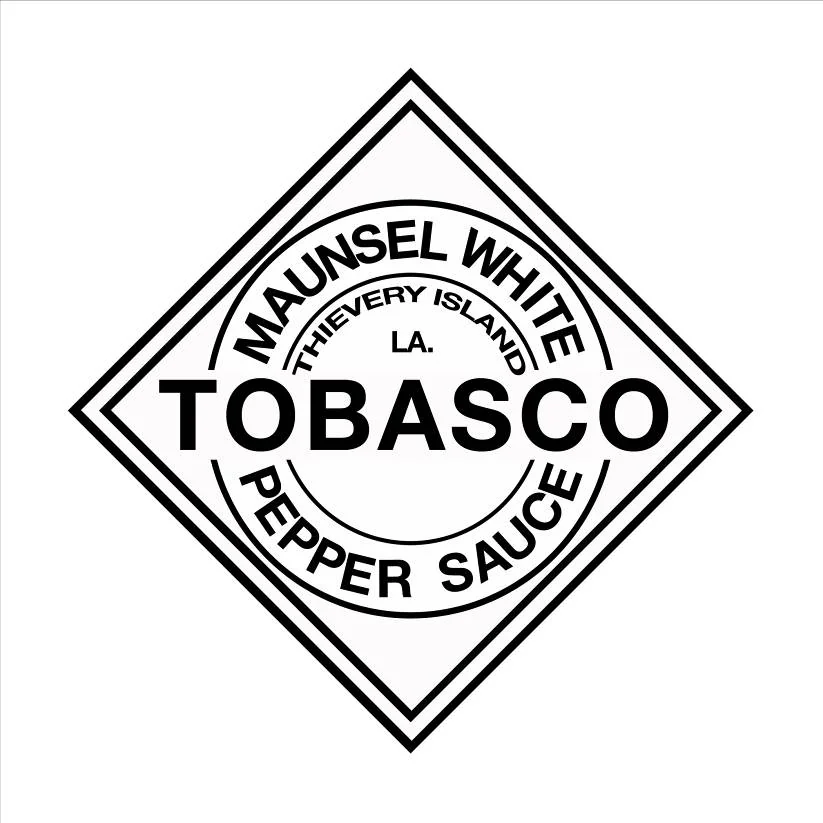
While Maunsel white did bottle and sell his sauce a full 10 years prior to Edmund - a record does not seem to exist of what that 1858 bottle might have looked like. More than likely it was first bottled and sold in recycled cologne bottles. Within the work there was a conscious decision to base the Maunsel White label off of the McIlhenny version we know today - the white diamond. At first glance a first time viewer of the hot sauce project will see the red bottle with the white diamond plus the word TOBASCO and recognize it as the now iconic McIlhennys Tabasco®. This is important and essential as the first impression is a key component to the residual imagery... Just as in media and advertising - there are always 2 messages - the first that comes at face value - and the second - buried beneath - overflowing with the subliminal. This theme repeats in the work where the viewer is asked to recognize an object for what it is - and what it is not. This signifies to the viewer that there is indeed a deeper meaning - a hidden message - that the work is not simply pretty icons doused in hot sauce. The hidden - or not so hidden - layers of the hot sauce project seek to mimic the same layers that come from media. Upon the second glance the viewer begins to notice something is off with what they recognized as the Tabasco® bottle – and through closer inspection is forced to look deeper – to look underneath – to search for the hidden meanings within the work. So to should we take a closer, deeper look at the media fantasy we are surrounded by on a daily basis.
The Diamond itself is not an intentional appropriation of the Tabasco® bottle design – but rather – a way to further give back the credit to Maunsel White. Maunsel White’s descendants have furnished to Chuck Evans – who has in turn furnished to me – examples of original Maunsel White Hot Sauce Bottles that date prior to the turn of the century that feature a white diamond label with an inset circle with type rotating around the circle – Much like the modern day Tabasco® bottles we all know and love.
Within the Tabasco® design – at the top crest of the inner circle over the word TABASCO® is the location of origin ‘Avery Island’. I have substituted this with what I find to be the fitting play on words – ‘Thievery Island’ further demarking the injustice that was perpetrated on our beloved Maunsel White… and signifying that we are finally – stealing it back.
Pre-20th century business was a wild west of sorts and very few rules and regulations were in place to protect small business owners. Copy cats and numerous varieties of similar products existed. While Patent law was becoming common place – trademarks were not. In 1905 Congress passed the Federal Registration of Trademarks Used in Commerce between States Act. Through this the McIlhenny Co. was able to wage war and secure the sole use of the word Tabasco®. They defeated such companies as Heinz – and another notable subject of pop art – The Campbell Soup Company.
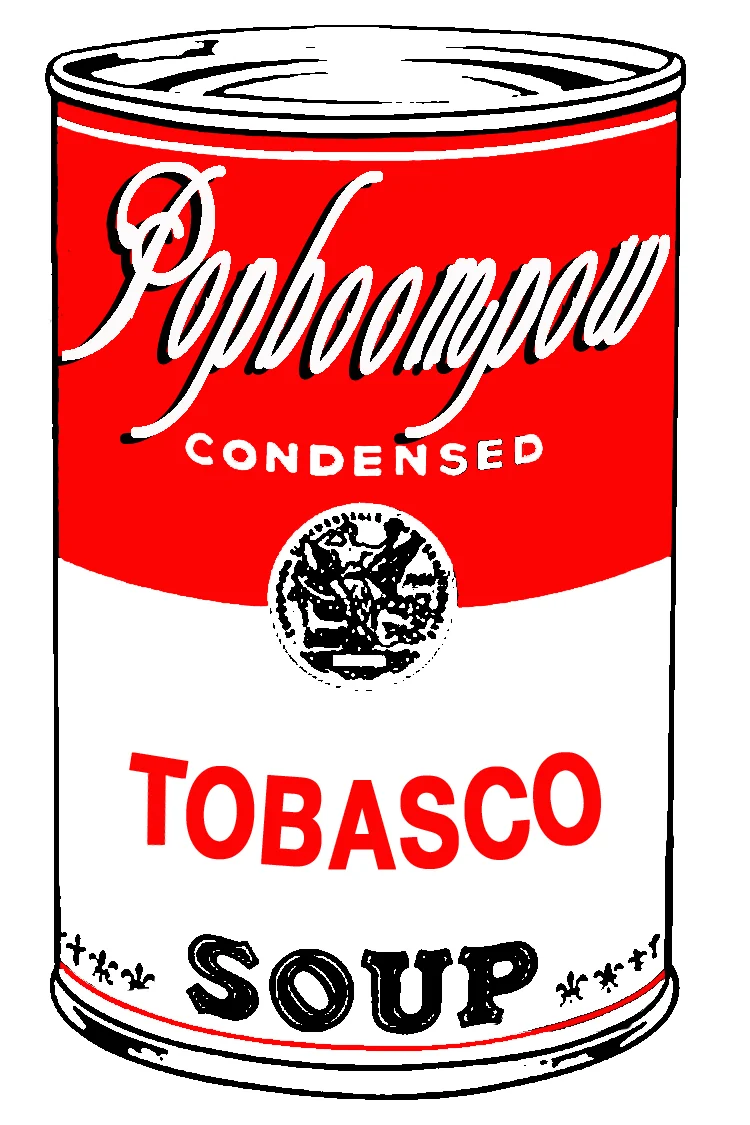
Had Maunsel not died when he did – and had Maunsell Jr.(he spelled his name with two L’s) been able to hold out a little longer until 1905 and the Trademark Act – or had he been a slightly more astute business man – Those battles may not have been won by the McIlhenny’s – but by the Whites – As their claim to the original Tobasco Sauce was iron clad.
Beyond the obvious meaning of ‘Thievery Island’ – I am also seeking to comment back on the nature of pop art as it relates to pop culture. Everything is creation through appropriation. And appropriation is just a dressed up way of saying stolen. This entire art project is stolen… and this artist is well aware of the permeating nature of that sentiment. The truth is – the artwork that is the centerpiece to this project – is not the art. They are the distraction – the physical manifestation of the true work that exists within these thoughts and these words.
Well… That was fun.
Shall we go deeper?
A versus O
Let's take a moment here and shift gears to take a look at tAbasco versus tObasco - A versus O.
We just learned the true history of Tobasco hot sauce. But to delve further into this rabbit hole we will now take a look at the symbolism behind the alphabetical letters A and O. I don't want to journey too far into the illuminati matrix or the luciferean agenda here, but for those interested in learning more I highly recommend your own further research. It is indeed some of the most fun and fascinating conspiracy theory stuff out there.
Within the illuminati agenda the alphabet is a device employed to perpetrate mass hypnosis and the creation of our modern day alphabet is deeply rooted in sigil magic utilized to enslave our minds. This statement alone resonates within The Hot Sauce Project with the parallels of purpose of mass media being thought control and mass hypnosis. However - once we delve into the specifics of each symbolic gesture things get really interesting.
The letter A is symbolic of the all Seeing Eye, the pyramid with the capstone. It represents an all seeing - all knowing - all powerful entity. Within the work mass media is this entity. By overthrowing tAbasco with tObasco we are seeking to replace the oppression by this entity with one of our own creation. O. The first step in overthrowing an oppressor is recognizing we are first oppressed.
O is symbolic of perpetual fertility - of creation - and creative energy itself. It is often said to be the eye as taken from its very form of a circle. While the A is the perch from whence the eye sees all - the O is sight itself. By taking the O in tObasco we are signifying the beginning of the first step in throwing off our oppressors... We are seeing the truth behind their mass hypnotic trance.
The reference to the illuminati conspiracy here is simply an acknowledgement of a ruling elite. The idea that a select few are determining what can be consumed by all. These are the few who are creating the pop icons we love so much. Beyond the illuminati agenda there are deeper undertones throughout the work with regards to alphabetical symbolism.
From the Greek there is alpha and omega, the first and last letters of the Greek alphabet. This is the beginning and the end. The religious subtext here from the Christian viewpoint is complex - but in a nutshell with the lack of the A - the beginning - the end is near.
This feeds into a quote by the French Jesuit - Pierre Teilhard de Chardin who helped discover Peking man and said 'the universe would evolve toward an omega point'.[37] The Omega Point was a theory developed by Teilhard in his Phenomenon of Man. He States - the universe is constantly developing towards higher levels of material complexity and consciousness. For Teilhard, the universe can only move in the direction of more complexity and consciousness if it is being drawn by a supreme point of complexity and consciousness. As a member of the Catholic Church this Omega Point would have been Christ who draws all things into himself. Teilhard’s studies were controversial and the Roman Catholic Church prohibited their publication as a violation of the orthodoxy. The Phenomenon of Man was finished in the 1930’s but was not published until after Teilhard’s death in 1955.
Teilhard viewed evolution as a process that leads to increasing complexity. From the cell to the thinking animal, a process of psychical concentration leads to greater consciousness.[38] The emergence of Homo sapiens marks the beginning of a new age, as the power acquired by consciousness to turn in upon itself raises humankind to a new sphere.[39] Borrowing Julian Huxley’s expression, Teilhard describes humankind as evolution becoming conscious of itself.[40]
In Teilhard's conception of the evolution of the species, a collective identity begins to develop as trade and the transmission of ideas increases.[41] Knowledge accumulates and is transmitted in increasing levels of depth and complexity.[42] This leads to a further augmentation of consciousness and the emergence of a thinking layer that envelops the earth.[43] Teilhard calls the new membrane the “noosphere” (from the Greek “nous,” meaning mind), a term first coined by Vladimir Vernadsky. The noosphere is the Collective consciousness of humanity, the networks of thought and emotion in which all are immersed.[44]
Wow… Sound a little familiar? A collective identity could be equal to our pop culture. A layer of thought that envelops the earth, A Mind Sphere, Networks of thought and emotion, these could all be easily used to describe the World Wide Web. And now, in this day, the web is the most common vehicle for the delivery and dispersal of media and information embedded with toxins for mass consumption. We will delve further into the internet’s role in The Hot Sauce Project in the next layer of our exploration but in terms of O and Omega – Teilhard’s ideas resonate with a frequency I could not possibly ignore.
The development of science and technology causes an expansion of the human sphere of influence, allowing a person (or in my mind – a corporation) to be simultaneously present in every corner of the world. Teilhard argues that humanity has thus become cosmopolitan, stretching a single organized membrane over the Earth.[45] Teilhard describes the process by which this happens as a “gigantic psychobiological operation, a sort of mega-synthesis, the “super-arrangement” to which all the thinking elements of the earth find themselves today individually and collectively subject.”[43] The rapid expansion of the noosphere requires a new domain of psychical expansion, which “is staring us in the face if we would only raise our heads to look at it.”[46] In Teilhard’s view, evolution will culminate in the Omega Point, a sort of supreme consciousness. Layers of consciousness will converge in Omega, fusing and consuming them in itself.[47] The concentration of a conscious universe will reassemble in itself all consciousnesses as well as all that we are conscious of.[48]
In my mind this is the end state, the end of time. Not that I am turning this project into a doomsday soothsayer - but I do feel it is important to note the presence of omega - as the end. And within this work the sauce can also be signatory to a calling for the end of the pop culture illusion we are currently hypnotized by, a rebellion against the collective identity that is being perpetrated onto us on a global scale.
N ow – Bring the ‘A’ and the ‘O’ back together and mesh them together. We come up with the digital @ a key component in this internet age and again – a tool for the spread of toxic ideas and utilized in the consumption of social media as apparent in email domains and twitter user accounts. Beyond this – the analog A inside of O, or Circle-A, is the well known symbol of Anarchy.
The Circle-A is a monogram that consists of the capital letter "A" surrounded by the capital letter "O". The letter "A" is derived from the first letter of "anarchy" or "anarchism" in most European languages and is the same in both Latin and Cyrillic scripts. The "O" stands for order. Together they stand for "Anarchy is the Mother of Order," or more accurately – “Anarchy is Order Without Power” the first part of a Proudhon quotation.[50]
Pierre-Joseph Proudhon was a French politician, founder of mutualist philosophy, economist, and libertarian socialist. He was a member of the French Parliament and the first person to call himself an "anarchist". He is considered among the most influential theorists and organizers of anarchism. While Proudhon was notable for some unfavorable personal bigotries, I bring him up here (and anarchy for that matter) to showcase some of the ideas they put forth with relation to The Hot Sauce Project. Most interesting of which is the 1851 publication of his The General Idea of the Revolution in the Nineteenth Century which urged for a ‘society without order’. [51]
In this instance I am not saying that The Hot Sauce Project is about Anarchy – however within the society of pop culture and media consumption – I am saying that we would be best served to have Order without Power. To have content meant to be consumed created by the people – for the people. Anarchy as seen through the eyes of the punk movement which made it popular symbolizes rebelliousness. In terms of The Hot Sauce Project – there is indeed a rebelling against the images and ideas we are constantly being force fed.
In his 1851 manifesto, which was written from prison exactly at the time our dear Maunsel White was harvesting his first crop of Tobasco Chile Peppers, he states –
‘To be GOVERNED is to be watched, inspected, spied upon, directed, law-driven, numbered, regulated, enrolled, indoctrinated, preached at, controlled, checked, estimated, valued, censured, commanded, by creatures who have neither the right nor the wisdom nor the virtue to do so. To be GOVERNED is to be at every operation, at every transaction noted, registered, counted, taxed, stamped, measured, numbered, assessed, licensed, authorized, admonished, prevented, forbidden, reformed, corrected, punished. It is, under pretext of public utility, and in the name of the general interest, to be place[d] under contribution, drilled, fleeced, exploited, monopolized, extorted from, squeezed, hoaxed, robbed; then, at the slightest resistance, the first word of complaint, to be repressed, fined, vilified, harassed, hunted down, abused, clubbed, disarmed, bound, choked, imprisoned, judged, condemned, shot, deported, sacrificed, sold, betrayed; and to crown all, mocked, ridiculed, derided, outraged, dishonored. That is government; that is its justice; that is its morality.’[52]
I find this to be a fascinating string of words… and one that will make more sense as we delve into the next layer of our quest when we start talking about metadata and social networking. Remember it – plan to come back to it.
For now - back to the Circle-A symbol.
The first recorded use of the A in a circle by anarchists was by the Federal Council of Spain of the International Workers Association. This was set up by Giuseppe Fanelli in 1868. [53]
The very same year Edmund McIlhenny raised his first crop of Tabasco® peppers.
As noted above, the circle-A long predates the anarcho-punk movement, which was part of the punk rock movement of the late 1970s. However, the punk movement helped spread the circle-A symbol more widely, and helped raise awareness of it among non-anarchists. This process began with the use of anarchist imagery when members of the band Crass become aware of the symbol while traveling through France.[54] With time the symbol, and "anarchy" as a vague synonym for rebelliousness, were incorporated into common punk imagery. This led to gradual appearances in mainstream culture over the course of several years, at times far removed from its political origin (described by Situationists as "recuperation"). These appearances typically connected it with anarchy and were intended as sensationalist marketing ploys, playing off of mainstream association of anarchy with chaos.
The idea of recuperation is of specific interest to The Hot Sauce Project. Recuperation, in the sociological sense, is the process by which politically radical ideas and images are twisted, co-opted, absorbed, defused, incorporated, annexed and commoditized within media culture and bourgeois society, and thus become interpreted through a neutralized, innocuous or more socially conventional perspective.[55] More broadly, it may refer to the cultural appropriation of any subversive works or ideas by mainstream culture. Perhaps most famous of which can be found in another symbol of rebellion, Che Guevara, a now completely watered down fashion money making tool meant to signify counter culture – but now those found in the shirts or other items are simply signifying they are mainstream consumers.
The Hot Sauce Project feeds off of Recuperation in its attempts to be the polar opposite as it explodes from the motivation of Détournement.
Détournement is a technique developed in the 1950s by the Letterist International, and later adapted by the Situationist International,[56] that was defined in their inaugural 1958 journal as "the integration of present or past artistic productions into a superior construction of a milieu. In this sense there can be no situationist painting or music, but only a situationist use of those means. In a more elementary sense, détournement within the old cultural spheres is a method of propaganda, a method which reveals the wearing out and loss of importance of those spheres."[57] It has been defined elsewhere as "turning expressions of the capitalist system and its media culture against itself"[58] --as when slogans and logos are turned against their advertisers or the political status quo.[59]
Through this definition of détournement it is easy to see the aim of The Hot Sauce Project to turn the capitalist system and its media culture against itself. This philosophy is a driving force behind the work and has been at the forefront of my mind through every icon exploration.
The Situationists are a source of immense inspiration to the work. Their ideas on the imbecilization of young people through the deliberately anti-cultural production of novels, films, et cetera conducted with the means of large-scale industry is of paramount interest. As well – The Hot Sauce Project seeks to comment back on their ideas of official culture as a rigged game where conservative powers forbid subversive ideas to have direct access to the public discourse and are not allowed to integrate into the official culture until after they have been trivialized and sterilized. In addition to this idea is the most essential - their view on the misery of social alienation and commodity fetishism that our capitalist society inflicts. In this instance the work centers around an icon fetish that is a manifestation of the commodity fetish which only seeks to further the social isolation through feelings of inferiority.
In the above section we explored Teilhard’s Omega Point and his philosophical prediction of the World Wide Web, with the O of tObasco standing in as a representative of the omega point in the work. Now we will dive further into the present day significance of the Omega Point as it pertains to the World Wide Web. To do so – we must take a look at one of the most influential corporations in the Information Age – the one and only – Apple. Before we do so – it is worth mentioning quickly that the A removed from tObasco could also be symbolic of the Apple as represented in the Book of Genesis as the forbidden fruit and when partaking of the fruit Adam and Eve gained the knowledge of Good and Evil. If the Apple represents knowledge than with the absence of the Apple in tObasco there is significance in the lack of knowledge. There is a piece of the work that is also saying through the lack of knowledge we in the mass populous are left in the dark susceptible to whatever thoughts or ideas are being fed to us by the creators of official culture. And - IF the Apple truly is symbolic of the Knowledge of Good and Evil - or even simply KNOWLEDGE it makes the next section all the more poignant.

Apple Computer’s Project X – or HOT SAUCE
Project HotSauce – which was code named Project X – (mysterious enough for you?) was an experimental software developed by Apple Computer in the late 1990’s as a sample application of its Meta Content Framework or MCF. MCF was developed by Ramanathan V. Guha at Apple Computer between 1995 and 1997. When the research project was discontinued, Guha left Apple for Netscape. [60] Hot Sauce offered users a way to visualize metadata within the architecture of the Meta Content Framework. What is important here is it was a beginning to the exploration of how to make sense of and aggregate the vast amounts of data that was beginning to be generated by the digital age and the oncoming arrival at Teilhard's Omega Point. Beyond this - R.V. Guha has gone on to innovate upon the idea and is almost single handedly responsible for the standards in place today that allow for the uniform capture, assimilation, and dispersal of meta data.
But let's not get ahead of ourselves... let's continue the thought and follow the evolution of Metadata from Apple's HotSauce through to how it is being used today.
Meta Content Framework
The Meta Content Framework was a tool utilized to make sense of Meta Data. Meta Data is simply 'data about data'. The Prefix meta is defined as transcending, all encompassing - pertaining to a level beyond. The main purpose of metadata is to facilitate in the discovery of relevant information, more often classified as resource discovery. Metadata also helps organize electronic resources, provide digital identification, and helps support archiving and preservation of the resource. Metadata assists in resource discovery by "allowing resources to be found by relevant criteria, identifying resources, bringing similar resources together, distinguishing dissimilar resources, and giving location information." [61]
So - How is all this metadata being generated? Well - we are generating it. Each and every one of us. Prior to the dawn of the computer age - metadata existed in the analog sense but for the most part was vastly useless for anything but the simplest of tasks or data analysis. Metadata was used in various forms as a means of cataloging archived information. The Dewey Decimal System employed by libraries for the classification of library materials by subject is an early example of metadata usage. Library catalogues used 3x5 inch cards to display a book's title, author, subject matter, and a brief plot synopsis along with an abbreviated alpha-numeric identification system which indicated the physical location of the book within the library's shelves. Such data helped classify, aggregate, identify, and locate a particular book. Another form of older metadata collection is the use by US Census Bureau of what is known as the "Long Form." The Long Form asks questions that are used to create demographic data to find patterns of distribution.[62] Now with the onset of the digital era - and the advent of cloud computing and server farms, vast amounts of data can be held and stored until needed for various forms of analysis.
As each one of us moves through this world occupying time and space we are creating a never-ending string of metadata that is tied to us personally. We are no longer individuals but extensive pools of metadata which compose our online personas. These personas are being grouped into data sets by big business and big brother in an effort to continually define and redefine us over and over again according to agendas we can only barely begin to fathom. We are both wittingly and un-wittingly generating metadata for their purpose of exploiting it.
Anytime we interact with our digital world we are generating and adding to our own metadata biography. We generate metadata by credit card transactions - from taking vacations to buying milk and everything in between - Metadata is being captured and stored on where we went, how we got there, what we bought and where we bought it from, where we went to dinner, how much we tipped, whether we drank alcohol or not. On and on. Beyond credit transactions - we populate our metadata journals with phone calls we make, to whom, for how long, and how often. Apps we use. Searches we query online. What we shop for through Google, or Amazon, or any other like type platform. Think your private browsing is actually private? Think again - all websites you visit are captured and stored in multiple ways both on your phone or computer. Your ISP (internet service provider) knows all... and that information is discoverable. Beyond that - all your interactions are tracked through the use of IP addresses. Internet Protocol Addresses are unique numbers assigned for every gateway into the digital sphere. Your IP address is both an identifier and a locator, telling the Internet who you are and from where in the world on a computer network you're connecting to the Internet. Any device that can access the Internet has an IP address, which is the Internet's version of the return address on a mailed envelope. Whenever you send a request over the Internet, your IP address is included. Because every request sent over the Internet is tied to an IP address, anyone with the capacity to monitor which IP address sends requests to a server can figure out where you've been going online and to whom you've been sending messages. [63] Think of anyway you interact with the world around you and ask if this information is being written into your metadata biography. How about what music you listen to on Spotify? What movies you watch on Netflix? What channels you watch with your smart cable box? What shows you record with your DVR? What locations you Google Map? What addresses you place into your GPS? ...Nevermind the fact that you GPS is on and tracking where you drive. What about your medical metadata? What doctors are you making copayments to? Where are you getting your prescriptions filled? This is all the tip of the iceberg... We will save the exploration of the mass of ice beneath the surface that is Social Media for later on. Now that you have a new understanding of the profound impact of metadata on our consumer culture - let's continue the exploration of Meta Content Framework and its evolution to the metadata standards of today.
MCF as visualized by Guha and Apple Computer's HotSauce software was a first attempt to make sense of the exponential growth rate of vast amounts of data, and the first steps in attempting to formulate some sort of standard. Through standards - not only would one content providers metadata documented in a proprietary fashion be useful - but ALL Content Providers metadata adhering to the same standard (MCF) could become collated into vast data suppositories - or data warehouses. Once inside these warehouses - these mammoth databases are ripe for data mining.
Data Mining is the computational process of discovering patterns in large data sets involving methods at the intersection of artificial intelligence, machine learning, statistics, and database systems. The overall goal of the data mining process is to extract information from a data set and transform it into an understandable structure for further use.[64]
Let's read that again - The overall goal of the data mining process is to extract information from a data set and transform it into an understandable structure for further use. In other words - our metadata biographies are being collected by big business and farmed for ways they can utilize that information to be more effective in their exploitation of us - our wants, our needs, our habits, our desires, etc.
These are some of the ways data mining is happening:
BUSINESS
In business, data mining is the analysis of historical business activities, stored as static data in data warehouse databases. The goal is to reveal hidden patterns and trends. Data mining software uses advanced pattern recognition algorithms to sift through large amounts of data to assist in discovering previously unknown strategic business information. Examples of what businesses use data mining for include performing market analysis to identify new product bundles, finding the root cause of manufacturing problems, to prevent customer attrition and acquire new customers, cross-selling to existing customers, and profiling customers with more accuracy.[65]
• In today’s world raw data is being collected by companies at an exploding rate. For example, Walmart processes over 20 million point-of-sale transactions every day. This information is stored in a centralized database, but would be useless without some type of data mining software to analyze it. When Walmart analyzes their point-of-sale data with data mining techniques they are able to determine sales trends, develop marketing campaigns, and more accurately predict customer loyalty.[66]
• Every time a credit card or a store loyalty card is being used, or a warranty card is being filled, data is being collected about the users behavior.[67]
• Data mining in customer relationship management applications can contribute significantly to the bottom line. Rather than randomly contacting a prospect or customer through a call center or sending mail, a company can concentrate its efforts on prospects that are predicted to have a high likelihood of responding to an offer. More sophisticated methods may be used to optimize resources across campaigns so that one may predict to which channel and to which offer an individual is most likely to respond (across all potential offers). Additionally, sophisticated applications could be used to automate mailing. Once the results from data mining (potential prospect/customer and channel/offer) are determined, this "sophisticated application" can either automatically send an e-mail or a regular mail. Finally, in cases where many people will take an action without an offer, "uplift modeling" can be used to determine which people have the greatest increase in response if given an offer. Uplift modeling thereby enables marketers to focus mailings and offers on persuadable people, and not to send offers to people who will buy the product without an offer. [68]
• Data mining is helpful to human resources (HR) departments in identifying the characteristics of their most successful employees. Information obtained – such as universities attended by highly successful employees – can help HR focus recruiting efforts accordingly. Additionally, Strategic Enterprise Management applications help a company translate corporate-level goals, such as profit and margin share targets, into operational decisions, such as production plans and workforce levels.[69]
• Market basket analysis, relates to data-mining use in retail sales. If a clothing store records the purchases of customers, a data mining system could identify those customers who favor silk shirts over cotton ones. Although some explanations of relationships may be difficult, taking advantage of it is easier. The example deals with association rules within transaction-based data. Not all data are transaction based and logical, or inexact rules may also be present within a database. [68]
• Market basket analysis has been used to identify the purchase patterns of the Alpha Consumer. Analyzing the data collected on this type of user has allowed companies to predict future buying trends and forecast supply demands. [68]
Remember the term Alpha Consumer. We will come back to it.
SCIENCE and ENGINEERING
• In the study of human genetics, sequence mining helps address the important goal of understanding the mapping relationship between the inter-individual variations in human DNA sequence and the variability in disease susceptibility. In simple terms, it aims to find out how the changes in an individual's DNA sequence affects the risks of developing common diseases such as cancer, which is of great importance to improving methods of diagnosing, preventing, and treating these diseases.[70]
The above has apparent positive aspects, but what is the reverse - where insurance companies may use this data against us to profile our risks and predisposition to various diseases which may then adversely affect coverage.
MEDICAL
• In 2011, the case of Sorrell v. IMS Health, Inc., decided by the Supreme Court of the United States, ruled that pharmacies may share information with outside companies. This practice was authorized under the 1st Amendment of the Constitution, protecting the "freedom of speech."[71] However, the passage of the Health Information Technology for Economic and Clinical Health Act (HITECH Act) helped to initiate the adoption of the electronic health record (EHR) and supporting technology in the United States.[72] The HITECH Act was signed into law on February 17, 2009 as part of the American Recovery and Reinvestment Act (ARRA) and helped to open the door to medical data mining. Prior to the signing of this law, estimates of only 20% of United States based physicians were utilizing electronic patient records.[72] Søren Brunak notes that “the patient record becomes as information-rich as possible” and thereby “maximizes the data mining opportunities.”[72] Hence, electronic patient records further expands the possibilities regarding medical data mining thereby opening the door to a vast source of medical data analysis.
SPATIAL
• Spatial data mining is the application of data mining methods to spatial data. The end objective of spatial data mining is to find patterns in data with respect to geography. So far, data mining and Geographic Information Systems (GIS) have existed as two separate technologies, each with its own methods, traditions, and approaches to visualization and data analysis. Particularly, most contemporary GIS have only very basic spatial analysis functionality. The immense explosion in geographically referenced data occasioned by developments in IT, digital mapping, remote sensing, and the global diffusion of GIS emphasizes the importance of developing data-driven inductive approaches to geographical analysis and modeling.
This type of data mining is most apparent with our interactions with applications like Google Maps. Do you care that where you are going is captured in your metadata biography? If not where you are going - then how about the fact that big business is asking themselves (Why) are you going where you are going?
MUSIC
• Data mining techniques, and in particular co-occurrence analysis, has been used to discover relevant similarities among music corpora (radio lists, CD databases) for purposes including classifying music into genres in a more objective manner.[73]
Not to mention the ability to define your taste and share like type music with you which you may than purchase via platforms like Spotify, iTunes, Pandora.
SURVEILLANCE
• Data mining has been used by the U.S. government. Programs include the Total Information Awareness (TIA) program, Secure Flight (formerly known as Computer-Assisted Passenger Prescreening System (CAPPS II)), Analysis, Dissemination, Visualization, Insight, Semantic Enhancement (ADVISE),[74] and the Multi-state Anti-Terrorism Information Exchange (MATRIX).[75] These programs have been discontinued due to controversy over whether they violate the 4th Amendment to the United States Constitution, HOWEVER many programs that were formed under them continue to be funded by different organizations or under different names.[76]
PATTERN MINING
• "Pattern mining" is a data mining method that involves finding existing patterns in data. In this context patterns often means association rules. The original motivation for searching association rules came from the desire to analyze supermarket transaction data, that is, to examine customer behavior in terms of the purchased products. For example, an association rule "beer ⇒ potato chips (80%)" states that four out of five customers that bought beer also bought potato chips. [68]
Further Data Mining techniques are currently being pioneered and improved upon on an ongoing basis. What is outlined above is a mere portion of data mining practices and techniques. The range and purpose of this field is widely varied and growing in complexity with the types of data aggregated each year.
To continue this exploration of the relevance of metadata to The Hot Sauce Manifesto we will now return to Apple's Project Hot Sauce.
As outlined above - Apple's Project Hot Sauce was not the invention of Metadata - however it was a groundbreaking foray into the field of making sense of metadata. Of visualizing it in a way that would make it useful for future users - content providers and content consumers. Through this it is of utmost relevance to this project. It is in fact a Keystone. Should Apple have called it anything other than Hot Sauce this entire house of cards would crumble. But they did not - They called it Hot Sauce... and through this it allows us to draw immense correlations between Toxic Consumption in Mass Media - and the use of Metadata to further the agenda of Mass Media as marketing tool.
We will now return to R.V. Guha and his integral role as a father of metadata. Ramanathan V. Guha's career has had an immense impact on the digital world you interact with today. He is a man behind the curtain of sorts - and an unsung hero of the information age. His contributions to computer science are as important as some of the most notable names in the field like Steve Jobs, Bill Gates, etc. He holds a Doctorate in Computer Science from Stanford University and is the sole owner of over 40 patents (and counting) in the realm of Computer Science. [77] He has held the highly coveted and most prestigious top tier title of Google Fellow since 2005 where he currently still works today among his many other endeavors including his founding of Schema.org which handles standards for vocabularies dealing with structured data markup and is in use by over 8.5 million websites. [77] Through his work on MCF Guha published an abstract titled 'Towards a Theory of Meta-Content'. In it he writes about some of the aspects of his Theory of Meta-Content:
'One of the points I am trying to make is that we should use a common language to represent the myriad forms of meta-content we might want to use. This meta-content language is, at its core, just a representation language. We could use a relational database, object oriented database, frame system or logic based knowledge representation system to store and access the meta-content. All that is required is a persistent store and a query mechanism. But a theory of meta-content is not the same as a scheme for storing and accessing meta-content. The theory should also provide some guidelines for the organization and use of the meta-content.A final theory of meta-content will be to content what Lisp or SmallTalk are to programming. It should provide a conceptual framework for the creation, organization and consumption of content. We are in the "fortran era" of meta-content.'
SIDE NOTE: The Fortran Era refers to pre 1980's use of computers and their programming language. This can be considered a figure of speech in layman terms to say that the age of MetaData was in its earliest stages - quite literally rudimentary and somewhat Neanderthal-like. Fortran was developed by IBM in the 1950's and utilized punch cards as the sole method for input or output into a computer. [78] Due to Guha's relentless championing of Metadata he has brought it out of the dark ages of the Fortran Era and into an era more fitted to an analogy like the Industrial Revolution. Once Metadata truly reaches the height of its Information Age - our lives will never be the same.
'However, there are at least certain elements that should be part of a good theory of meta-content. Listed below are some elements that I feel are essential.
1. The representation, manipulation and storage of meta-content should not be tied to that of the content it describes. For example, it should be possible to have a single collection of meta-content statements (I will refer to a collection of meta-content statements as an MT) that are about pages on the WWW, files on an AppleTalk network, messages in email folders, etc.
This is to say - Metadata from vast sources should be able to be aggregated. Which brings us back to data mining.
2. The meta-content should be machine understandable. Unlike content, which is typically meant for direct human consumption, meta-content is typically meant for machine consumption. Having a few lines of arbitrary text as "comments" about each file (as in the Finder) does not constitute a theory of meta-content.
This is to say - Meta-content should be written in a programming language that can exist cross application and cross platform and should be spoken fluently by all machines and softwares.
3. The meta-content language should be very expressive. There is nothing more frustrating than wanting to tell the machine something but not being able to tell it. Non-expressiveness only leads to kludges. The appendix has more on the language itself.
Statements in the meta-content language should be able to refer not just to files, WWW pages and such but also to people, places, activities and such.
This is increasingly relevant in terms of the points we have already discussed... and here Guha paved the way for our preceding exploration of meta-data and data mining.
4. We should aim for richly structured pieces of meta-content. The quality of services provided by programs that use meta-content is proportional to the richness of the meta-content they use.
Today, meta-content is very poor in structure. Simple searching based on the words occurring in a text is the predominant way of searching for information. Hierarchical organizations of content (such as in the Finder or Yahoo) represent the richest structures available today.
An example of something that goes just beyond this is a program that runs around the web parsing corporate web pages and recognizing the pages that have to do with job listings, product information, news releases, etc. Some other program can then use this to "retrieve" documents for a user (as in our example where the user was interested in product offerings from Bay Area toy companies.)
Remember - this was being written pre-Google which did not officially launch until 1998... And more importantly - Google would not be what it is today without Guha's work on the Theory of Meta-Content. At its most basic - Google the Search Engine parses the internet for Meta-Content relevant to a specific search.
5. The authoring and publication of meta-content should be separable from its consumption. The programs/people who generate MTs could be different from those who consume it. It should also be separable in a stronger sense - different programs such as search engines, browsers and authoring tools should be able to tap into the same MT for very different purposes.
This all ties back in to the exploitation of data and data mining. As do his proposals below... all of which formed the groundwork for the ways our meta-data is used (and exploited) today.
6. The meta-content language should have reflective abilities. It should be possible, from within the language, to view any MT itself as content. This ability is required to combine information from two or more MTs whose vocabularies might vary. Also, just as the amount of meta-content grows, we will need meta-meta-content to manage the meta-content itself. At that point we should not have to invent new mechanisms for that purpose.
7. It should be possible to aggregate two or more MTs into a single MT or into an MT of MTs. From a functional perspective, it should be possible to combine information obtained from different sources to fulfill a request. In the example of putting together a page of product offerings from Bay Area toy companies, XYZ cannot determine that a certain company is in the Bay Area (or even that it was a toy company). All it can do is to determine that a certain page is about the location or product offerings of a company. However, LMN might be able to integrate this information with information from Pacific Bell yellow pages to fulfill the user's request. There should be nothing in the meta-content language that makes this difficult.
One consequence of this is that the representation of MTs should be independent of how they are constructed. Portions of an MT might come directly from a user and other portions might come from a program. But a program using the MT should not have to worry about this.
8. The aggregation of MTs should be not just at the format & syntax level but at a semantic level.
For example, consider two of the more popular WWW hierarchies - Yahoo and Magellan. They have similar categories but use different names for the same categories. It should be possible to map these different names into one another within the language. This is admittedly a trivial example. In general, we should be able to write statements that provide partial mappings from one ontology into another.
This is related to the use of MTs which are about other MTs (the meta-meta level). This can be done either by mapping each directly into the other or by mapping both into a neutral common terminology.
9. The meta-content language should come with a rich "starter set" vocabulary that provide the preferred terms to use to refer to people, places, time, etc. This is the analog of "standard libraries" that most programming languages have. In addition to making it easier to create MTs, this will also make it easier to aggregate MTs.
10. The meta-content language is not really intended to be a programming language or a datastructure, but a communication language. The datastructure and programming language needs of a program that attempts to do animation in a 2.5 D layout of a million node hierarchy are going to be very different from those of a search program that deals with a billion pieces of meta-content but can take thirty seconds to respond. The databases/programs that have meta-content might store it anyway they want and the programs that use it might store it anyway they want. But there is a standard query language with an agreed upon semantics.
The meta-content language is not only independent of the format and location of the content, but it is also independent of the application internal data structure used by the application to store the meta-content.'[79]
Wow. Incredible. Reading this with the understanding that it was written in the mid 90's before the dawn of targeted marketing online gives me goose bumps. For the average every day non-computer scientist technology user - it is hard to process just how great an impact this Theory has had on our lives. But it was and is a profound set of ideas. I realize for those reading this you may at this point be a bit exhausted and asking yourselves what in the world this has to do with some bizarre art project about Hot Sauce? I beg you to stay with me - we are on the cusp of it getting quite remarkable.
Around the time of Steve Jobs return to Apple in 1997 - Apple's Project Hot Sauce was abandoned to push the focus from Software to Product.
In fact - at this time according to an Interview between myself and R.V. Guha - Apple's entire Advanced Technology Group was closed down. The Advance Technology Group was a corporate research laboratory at Apple Computer that existed from 1986 to 1997.
Guha Left apple and went to work at Netscape. While at Netscape Guha coupled the Meta Content Framework with XML (Extensible Markup Language). XML is a markup language that defines a set of rules for encoding documents in a format that is both human readable and machine readable. [80]
Through this work the new and improved Resource Description Framework was born.
Resource Description Framework - RDF
RDF - or, the Resource Description Framework - also known as Resource Data Framework is a family of World Wide Web Consortium specifications. [81] Remember the World Wide Web Consortium - also known as W3C or just W3... we will come back to them.
The RDF data model[82] is similar to classic conceptual modeling approaches such as entity–relationship or class diagrams, as it is based upon the idea of making statements about resources (in particular web resources) in the form of subject–predicate–object expressions. These expressions are known as triples in RDF terminology. The subject denotes the resource, and the predicate denotes traits or aspects of the resource and expresses a relationship between the subject and the object. For example, one way to represent the notion "The sky has the color blue" in RDF is as the triple: a subject denoting "the sky", a predicate denoting "has", and an object denoting "the color blue". Therefore RDF swaps object for subject that would be used in the classical notation of an entity–attribute–value model within object-oriented design; object (sky), attribute (color) and value (blue). RDF is an abstract model with several serialization formats (i.e., file formats), and so the particular way in which a resource or triple is encoded varies from format to format.[83]
This mechanism for describing resources is a major component in the W3C's Semantic Web activity: an evolutionary stage of the World Wide Web in which automated software can store, exchange, and use machine-readable information distributed throughout the Web, in turn enabling users to deal with the information with greater efficiency and certainty.[84] RDF's simple data model and ability to model disparate, abstract concepts has also led to its increasing use in knowledge management applications unrelated to Semantic Web activity.
A collection of RDF statements intrinsically represents a labeled, directed multi-graph. As such, an RDF-based data model is more naturally suited to certain kinds of knowledge representation than the relational model and other ontological models. However, in practice, RDF data is often persisted in relational database or native representations also called Triplestores, or Quad stores if context (i.e. the named graph) is also persisted for each RDF triple.[85]
RDF completely permeates our world today. It was quickly popularized and propagated into use furthered by its adoption as the standard for metadata by W3. Without it - the way we use the web today would be vastly different.
This is all due to the genius and vision of R.V. Guha and his colleagues.
Before we move on to our next phase of this exploration I would like to take a moment to recap and expound on the relevance of this section as it pertains to The Hot Sauce Project.
APPLE(S)
We began with Apple. The computer company. Their Logo is the fruit of the same name. Predominately associated with the color red. Much like our Chili Peppers. Also a fruit - also associated with the color red. More fascinating here - Just as chili peppers contain our beloved toxin capsaicin... Apples contain their own amygdalin within their seeds. Amygdalin is a sugar and cyanide compound which is known as a cyanogenic glycoside. Ingesting small amounts of apple seeds will cause no ill effects, but in extremely large doses can cause adverse reactions. There is only one known case of fatal cyanide poisoning from apple seeds; in this case the individual chewed and swallowed one cup of seeds. It may take several hours before the poison takes effect, as cyanogenic glycosides must be hydrolyzed before the cyanide ion is released.[86]
A fascinating correlation that an Apple carries with it the ability to become toxic just as a Chili Pepper does. Neither are necessarily inherently malicious - but both can be destructive depending on how they are used, abused, or consumed.
This idea is incredibly relevant to the Hot Sauce project once one begins to look at the fact that so much content in this age is being consumed via mobile devices with Apple's iPhone as arguably one of the more popular options among first world consumers. We will discuss this more in a bit... for now - back to the fruit.
It is worth mentioning here as an interesting side note the complexity of the Apple Genome. In 2010, an Italian-led consortium announced they had decoded the complete genome of the apple in collaboration with horticultural genomicists at Washington State University,[87] using the Golden delicious variety.[88] It had about 57,000 genes, the highest number of any plant genome studied to date[89] and more genes than the human genome (about 30,000).[89]
Wow... the Genome of the Apple contains almost twice as much data as that of the Human Species. That is a lot of knowledge packed into a tiny fruit.
What does that say about Steve Jobs' naming of his company long before the idea of a Genome project was even possible? With the amount of genes in an Apple far outweighing that of a Human - it truly does make them a vehicle for knowledge both literally and metaphorically.
Apples are rampant within mythology. Through this lens their various symbolism becomes another item of interest.
In Paganism and Norse Mythology within the 13th century work - Prose Edda - written by Snorri Sturluson, the goddess Idun was said to provide the gods with apples that granted eternal youthfulness.[91]
This is quite interesting when one looks back at Apple's early iPod marketing campaigns and their play on youthfulness. Not to mention their whole approach to design which has always maintained an appeal to younger generations. Through this they have almost assumed the role of Idun promising eternal youthfulness through the use of their Apple products.
The English Scholar Hilda Roderick Ellis Davidson noted a connection within her work between apples and the Vanir - a tribe of gods associated with fertility. She cites an instance when Skirnir (Old Norse for "Bright One")[92], is sent to woo Gerth (anglicized version for the Old Norse meaning "Fenced In")with eleven golden apples in order to win her love for the Norse god Freyr. At first Gerth rejects the advance but then Skirnir begins to use all manner of threats - the last of which described her fate as her banishment to Nagrind (Hell) where she will be possessed by a Giant named Hrimgrimnir and given only goat urine to drink and upon her body he carves three runes symbolizing lewdness, frenzy, and unbearable desire. Only once she agrees to go to Freyr does Skirnir erase the runes. [93]
I cannot help but reflect on the interactions of Skirnir and Gerth - and the idea that we are being 'fenced in' by 'bright things'. That all of our time we spend locked hypnotically staring into bright screens of light we are in some ways being held captive against our will. In all the ways content is delivered to us - the vast majority save print - is taking the form of a 'bright one' - film, television, internet, computers, tablets, telephones... they are all 'Bright Ones' bringing us various forms of apples each with their own kind of promise all of which are indeed 'Fencing us in'.
We are Gerth.
One more bizarre implication H. R. Ellis Davidson uncovers about apples is that they are utilized as 'the food of the dead' as signaled by the use of the phrase 'Apples of Hel' in the 11th century poem by Thorbiorn Brunarson. [94]
Should I even touch this one? Perhaps I'll just let you think about it a bit and draw your own twisted correlations between Apples, Apple, Mass Media and Toxic Consumption. It's kind of fun, isn't it?
Let's move on from the obscure Norse Mythology... How about Greek? The Apple as a symbol is also all over Greek Mythology. The most widely known example of which is obviously when Eris, the greek goddess of discord, became so disgruntled after she was excluded from the wedding festivities of Peleus and Thetis that she inscribed a Golden Apple with the word 'Kalliste' (meaning - 'for the most beautiful one') and threw it into the wedding party. Three goddesses claimed the apple: Hera, Athena, and Aphrodite. Paris of Troy was appointed to select the recipient. After being bribed by both Hera and Athena, Aphrodite tempted him with the most beautiful woman in the world, Helen of Sparta. He awarded the apple to Aphrodite, which then signaled the beginnings of the Trojan War. [95]
The apple was thus considered, in ancient Greece, to be sacred to Aphrodite, and to throw an apple at someone was to symbolically declare one's love; and similarly, to catch it was to symbolically show one's acceptance of that love.[96]
An epigram claiming authorship by Plato states:
I throw the apple at you, and if you are willing to love me, take it and share your girlhood with me; but if your thoughts are what I pray they are not, even then take it, and consider how short-lived is beauty.
—Plato, Epigram VII[96]
Through the above we can choose to extrapolate and derive in our own bizarre way that Apple products attempt to make us believe that by using them we are 'the most beautiful'. That somehow the brand of our devices makes us unique or above the vast populace of other consumers - even if they too use Apple. Apple has built an empire on clean design and slick interfaces that actually are intrinsically and aesthetically beautiful. So in some ways - the Apple users among us are 'the most beautiful' - or at least, are made to feel that way through clever marketing and a sense that belonging to this group of elitists somehow assists in the defining of identity.
While we are making thin assumptions of ridiculous conspiracy we may as well also say the usage of an Apple product is an acceptance of technologies love for us. A love that is founded on planned obsolescence and the taking advantage of our commodity fetish. It's an abusive relationship and we, the consumers are the victims. What does it say about us to accept a love that does not reciprocate? What does it mean to love something that acts like a jealous lover - that consistently checks in on us, that tracks our movements, what we are doing, where we are, what we are looking at, who we are talking to, writing to, texting to, on and on. And even though this is an absurd statement - there is in fact some fraction of truth vibrating beneath the surface. Take it further and realize that information is being sold to the highest bidders - or used to tempt and exploit you in new and various ways. The next time you pull out your smart phone... before unlocking the screen to do anything - take a moment and take Plato's advice... Contemplate how short-lived beauty is. Our iPhone Sixes will shortly be replaced by something newer, better, sexier - and we will be left feeling unloved and empty with a void that corporations would have us believe can only be filled by 'the new thing'.
Through the writing of Plato and the correlation to Aphrodite we can indeed even fast forward to a more modern day reference of an Apple as a toxic item within Pop Culture. The Fairy Tale - from Grimm to Walt Disney's one and only beloved Snow White.
Is it worth pointing out that our heroine with the first name SNOW and last name WHITE shares the same surname as a certain other person of interest to The Hot Sauce Project?
Too late, I already did.

Through this tale Snow White's wicked stepmother who is jealous of Snow White's surpassing beauty disguises herself as an old woman and presents Snow White with a poison Apple. While this action was driven by jealousy - in fact the Queen could not help but find a love inside herself for the perfection that Snow White represented. Through her hatred of her own imperfection she had no choice but to attempt to destroy that which she loved the most but could not possess. The gift of the Apple to Snow White was in a twisted way an expression of Love... And the Apple itself - was truly a gift 'for the most beautiful'. When Snow White accepted it - she was in fact accepting the subliminal concept that possessing it was a sign of her perfection and the love of herself was somehow dependent upon the adoration of strangers. Through the acceptance of this Apple - she becomes poisoned - toxic - and she falls unconscious into a dream like sleep. I do not wish to go too far into the Feminist Agenda here - as the crimes perpetrated on Women by Mass Media is a manifesto unto itself... but the reader should note it has been present everywhere since the dawn of our media age. It should go without saying that I detest the fairy tale princess that we have been force feeding our daughters along with the ideas that they need to wait for a Prince to come rescue them. Please - for the sake of the future of humanity - Kill the Princes.
Again.... I digress. Where were we? Ah yes - Apples and Symbolism...
Within the Christian Tradition - we have previously touched on the Apple as reflected in the book of Genesis as the forbidden fruit within The Garden of Eden. I should bring it up here again to remind us of its widely held association with 'The Knowledge of Good and Evil'.
That was a fun journey into some sideways thinking. To further wrap up this section I should like to re-state:
As noted above - we now know the information punch packed within the genome of the Apple. Apple(s) is/are indeed a purveyor of knowledge.
Apple Computer is one of the pre-eminent technology companies in existence in this information age. This Age of Knowledge - where indeed - knowledge is power.
Apple also had a Hot Sauce Project. Or - Project X, which created the application Hot Sauce - which was the first software to visualize meta-content.
The search for a way to make sense of all the metadata that was being born in the late 90's was not a quest to organize information. IT WAS A QUEST to organize that information - aggregate it - and turn it into something truly useful... KNOWLEDGE.
Knowledge about us - the consumers.
Apple was indeed the birthplace of the new knowledge based currency of metadata - and it all started with HOT SAUCE!!!
Guha left Apple and took his ideas with him. In some weird twisted way he was expelled from the Garden of Eden.
His work continued - and evolved - and through that he turned the ideas behind Hot Sauce - into RDF.
RDF - IS the standard for all metadata that wishes to be turned from plain information about information into KNOWLEDGE.
In terms of Big Business and Content Providers - If their metadata is not utilizing RDF or a derivative of it. It might as well not exist. It ceases to be useful. It lacks Knowledge.
In this equation - we as the consumers - the ones who generate the metadata - we do not have the keys to the knowledge database. We are not allowed the access - and even if we were - We are illiterate. Blindly scribbling words in our metadata biographies that we cannot even begin to hope to read. But - Big Business is reading... and they are fascinated by it... and they are using it to tell us how our own stories should develop.
So - as a twisted documentarian of pop culture and its references - please allow me to quote the indomitable Matt Damon...
"How do you like them Apples?"
All the above said - I would like to state here that I do not view Apple Computer as some 'Great Evil' that plagues us. I am personally a user of Mac Computers as well as the Apple iPhone, However - their relevance to The Hot Sauce Project is undeniable as the birth place of an idea that blossomed into the current state of meta data as we know it. And the rampant use of their products for the delivery and collection of metadata is a crucial cross section of what is happening in the world of Mass Cult and Technology as a whole. I am not Anti-Technology - I use technology as much, if not a considerable amount more than the next person. The purpose of this Hot Sauce Project is to simply ask the question of how we are using these new technologies? And perhaps more importantly to point out how we are letting them use us.
And where the above pertains to culture - how are we allowing our own idea of culture be replaced and watered down by that of the approved culture of mass media as it is being continually delivered to us through our technology. If we are not allowed control of our content - it is up to us to either find ways to take control - or - to make a conscious decision of what we are willing to consume. If we do not - we become helpless to resist that which has been decided for us.
Where to next?
Reality Distortion Field – the other RDF
Reality distortion field (RDF)is a term coined by Bud Tribble at Apple Computer in 1981, to describe company co-founder Steve Jobs' charisma and its effects on the developers working on the Macintosh project.[97] Tribble said that the term came from Star Trek.[98] Later the term has also been used to refer to perceptions of his keynote speeches (or "Stevenotes") by observers and devoted users of Apple computers and products.[97]
The RDF was said by Andy Hertzfeld to be Steve Jobs' ability to convince himself and others to believe almost anything with a mix of charm, charisma, bravado, hyperbole, marketing, appeasement and persistence. RDF was said to distort an audience's sense of proportion and scales of difficulties and made them believe that the task at hand was possible.[97]
The term is also used by Apple's competitors when they criticize Apple. On Research In Motion's official BlackBerry blog, Jim Balsillie introduced a blog post by saying “For those of us who live outside of Apple’s distortion field”.[99]
Jobs' reality distortion field was parodied in Dilbert:
Dilbert built a functioning reality distortion field emitter, which is used during Dogbert's keynote speech.[100]
In chapter three of the 2011 biography of Steve Jobs, titled Steve Jobs, biographer Walter Isaacson states that around 1972, while Jobs was attending Reed College, Robert Friedland "...taught Steve the reality distortion field...” [101]
In this context of another use for the acronym RDF - we see a calculated yet almost supernatural manipulation of the world around the emitter of the Reality Distortion Field. This Reality Distortion Field in the framing structure of The Hot Sauce Project is important to note the ways in which Mass Media itself has 'turned on' their own Reality Distortion Fields. And the way in which they have done so is through the use of the other RDF - the Resource Data Framework. We will dive further into this concept of the dual usages of RDF...
But for the moment -
Let us indulge a somewhat fascinating field trip into an offshoot of the rabbit hole.
Steve Jobs and Robert Friedland share a strange history together that is relevant to The Hot Sauce Project in the most bizarre coincidence. Robert Friedland was expelled from Bowdoin College in 1970 after being arrested by federal authorities for the possession of an estimated $100,000 worth of LSD, 24,000 tabs of acid, a crime for which he served two years in federal prison.[102] He graduated in 1974 from Reed College, Oregon, USA, with a political science degree. His senior year at Reed, Friedland was student body president.[103] During his time at Reed he met Steve Jobs, with whom he shared an interest in Eastern spirituality. At the time, Friedland served as the caretaker of an apple farm south of Portland that was owned by his millionaire uncle Marcel Muller and Jobs would come on the weekends and help with the apple orchard,[101] which served as the inspiration for the name of his company, Apple, Inc.[103] Jobs and Friedland spent an incredible amount of time together while at Reed - and Friedland was the one responsible for encouraging Steve's pilgrimage to India.[104] It is of interest to note that - 'before either of them became billionaire business tycoons, they were sandal-wearing, acid-dropping college students with a shared interest in Eastern spirituality.' [104] When Jobs was later honored with the Vollum Award at the Reed Convocation in 1991 he paid tribute to this time of his life saying 'I can assure you that as the patina of time takes its toll, I thank God I had these experiences here. It has helped me in everything I have ever done, although I wouldn't have guessed it at the time.'[103] These were the formative years of his life. These experiences and the influences of LSD trips in Apple Orchards, he felt, allowed him to release a certain part of his psyche to tap into a deeper knowledge than he had previously known... and through the experiences with Friedland he was able to perfect the charisma and inspiring aura that he was both loved and hated for.
And now this is what strikes me. Both became billionaires. Both ambitions born from the seeds of that Apple Orchard. Both fortunes grown through the manipulation of knowledge and men. And yet - While Steve went on to create one of the premiere technology companies and is heralded as improving his world. (We can choose to define his world as First World - which was improved at the expense and exploitation of the Third - or we can ignore this aspect and just move on as we are so used to doing. Shoo! -you ethical dilemmas... Shoo!)
Robert made his fortune through mining and engaging in risks at the expense of the environment. He is ranked as the United States' worst contaminator. His offenses against the environment have given him the nickname 'Toxic Bob'.[105] Friedland-owned Galactic Resources, a mining corporation, invested in a gold mine in Summitville, Colo., that spilled large quantities of cyanide into the tributaries of the Alamosa River. According to a December 24, 2000 New York Times article, the 1992 spill killed all flora and fauna in a 17-mile stretch of the river. The Crestone Eagle, a newspaper in Colorado, described it as the state's "worst environmental disaster."[105]
Did you catch that?
Cyanide.
The very same toxin that can be generated from the seeds of apples.
This man is indeed one of the World's Bad Apples.
A June 12, 2001 article in the Seattle Post-Intelligencer stated that Galactic Resources agreed to contribute $27 million toward the cleanup, far short of the estimated $232 million the effort ultimately cost. Mines and Communities, a website dedicated to exposing the negative effects of mining, reported that "a timely resignation" by Friedland coupled with moving many of his assets outside of the country saved him from further personal liability. Although Friedland's maneuvering prevented the company from incurring the full cost of the cleanup, trouble continued two years later when Friedland again became embroiled in an environmental disaster, this time in Guyana. [105]
According to the New Internationalist, one of Friedland's companies, South American Goldfields—along with the World Bank and the Guyana Government—was responsible for perhaps the worst cyanide spill ever when a mine leaked "3.2 billion liters of cyanide-laced tailings" into two Guyana rivers. He reportedly avoided financial ruin through another resignation.[105]
3.2 Billion Liters of Cyanide.
This man is a criminal. His toxic consumption of the earth has resulted in toxic waste byproducts that have been fueled by our consumer culture. Through that perhaps the blame for his faults lie with us the consumers for enabling and encouraging the mechanisms of his greed.
The correlations here go deeper still. Friedland's most recent enterprise - Ivanhoe Mines - which holds mining interests in Africa and Mongolia among other locales currently mines Platinum, Gold, Nickel, Copper, Zinc, and a wide range of Base Metals including Tin and Aluminum. [106] Many of which are utilized in the making of Apple's Products.
Apple Computer has been at the center of numerous controversies regarding their use of materials as well as the refining processes used to offer that 'slick' look consumers crave. Processes which utilize the immensely harmful chemicals benzene and n-hexane. Beyond their toxic creation methods which they have spent vast amounts of resources in attempts to remedy they have also come under fire for various labor conditions within their factories in China. This issue was pushed to the forefront of public awareness after a string of suicides at the factories of the leading iPhone manufacturer - Foxconn. [107]
While pointing out the mistakes of both these Goliaths that profited from their willingness to risk - I feel it is important to note - that Apple has at least attempted to assume responsibility for their actions. And has indeed become an industry leader in the attempt to alleviate other toxins and toxic materials from their process.
The synergetic bond that existed between Steve and Robert is profound to me in that it was born from experiences on an Apple Orchard. Steve became the fruit of the Apple - the food itself - that those who partook of his offerings were engaging in a consumption of Knowledge. Steve's work, vision, and products allowed for the rampant spread of Knowledge. It literally put Knowledge at a consumers fingertips. And through those devices - it then began the secret conversation that captured knowledge and sent it back to Big Business. Robert became the seed of the Apple - in this respect he was both the poison (Cyanide) and the material potential or promise held within the refining of the seeds of the earth - minerals. Without the mining of metal - the Apple Products would not exist.
I thank you for reading thus far - this concludes the unofficial and unfinished rough draft of the Hot Sauce Manifesto... From here there are more details to be explored and uncovered. The next version of this will be a complete one and it will dive back into some of the things outlined above as well as move forward into further exploration of Cult of Personality, The World Wide Web Consortium, Facebook's Open Graph, Alpha Consumers, and further discussions revolving around the art work itself and the choices made in the way in which it is created which address the intentional digital artifacting and the 2 dimensionality of the work as almost as if to say - congratulations - you can take a threshold - Now you're an Artist!
For those of you feeling slightly unsatisfied - you can now take the below as somewhat of a nutshell of this manifesto - and The Hot Sauce Project.
I can't thank you enough for reading - You are now more in the know - and you know what it means to say 'We've been sauced!'.
And so - here is what you should have skipped to the end of the book to read...
The Hot Sauce Manifesto is the exploration of the metaphor embedded within The Hot Sauce Project. It utilizes Hot Sauce as a commentary on our media illness and our societies acclimation to dysfunction.
Within the work - Capsaicin is this hidden toxic chemical which is attached to chili peppers and exists as a mechanism to aid in the propagation of the species and ensures the seeds reach fertile ground...
so to...
metadata is this undetectable unbeknown information which is attached to our persona and now exists as a mechanism to aid in the propagation of consumerism and ensures the seeds of the mass cult reach fertile ground...
and through this -
Birds are to chili pepper seeds
as
Mass media is to metadata.
They both collect and deposit.
Each one guaranteeing the cycle continues in their own way.
and further more -
Just as hot sauce is the arousing exciting byproduct of chili peppers... so too are pop icons to mass media.
The Hot Sauce project has sought to comment back on this inbreeding depression generated by the mass engagement in what is presented as approved culture and asks individuals to think twice before buying into their own oppression. We have indeed been sauced... but that does not mean we have to eat the dish we have been served.
SELECTED WORKS
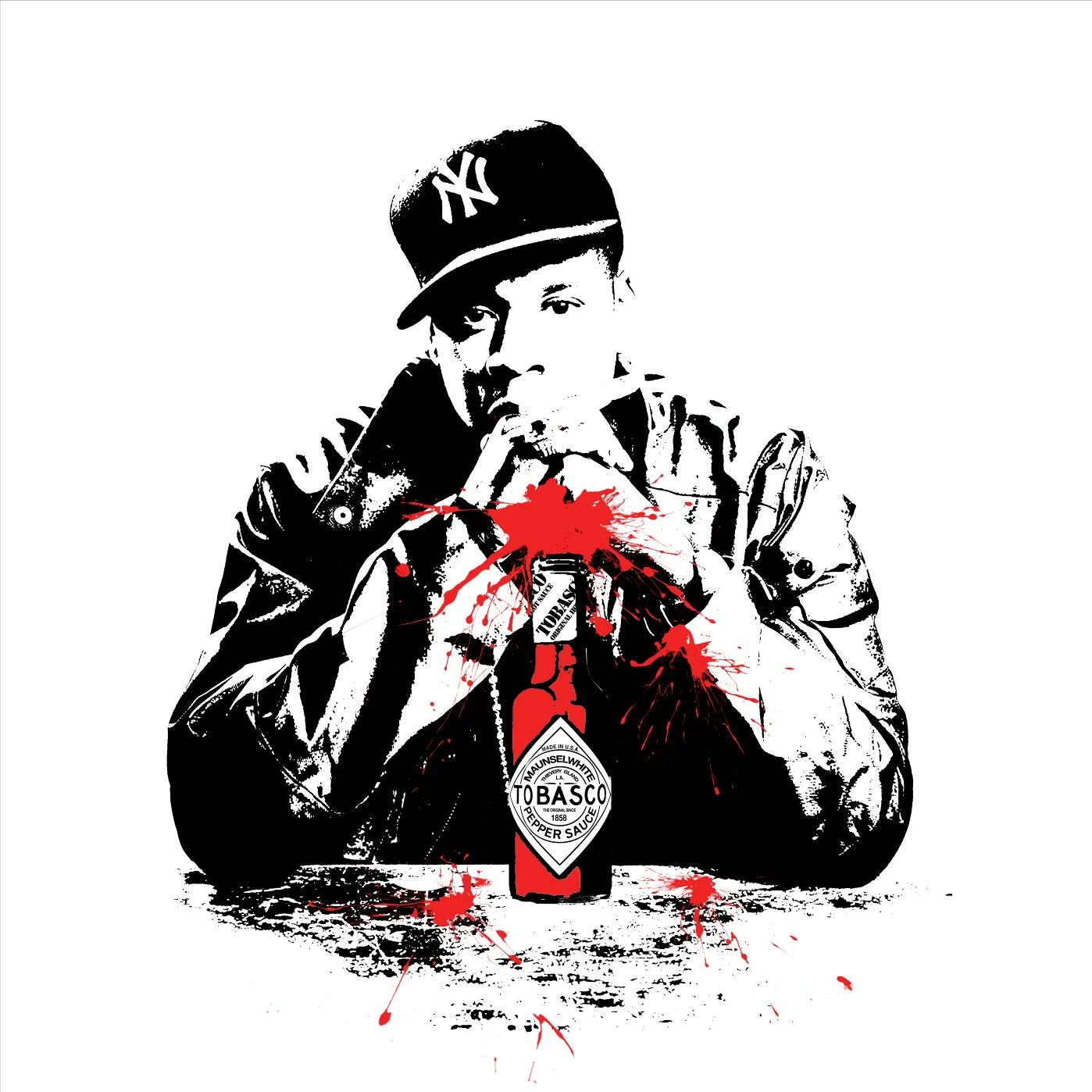
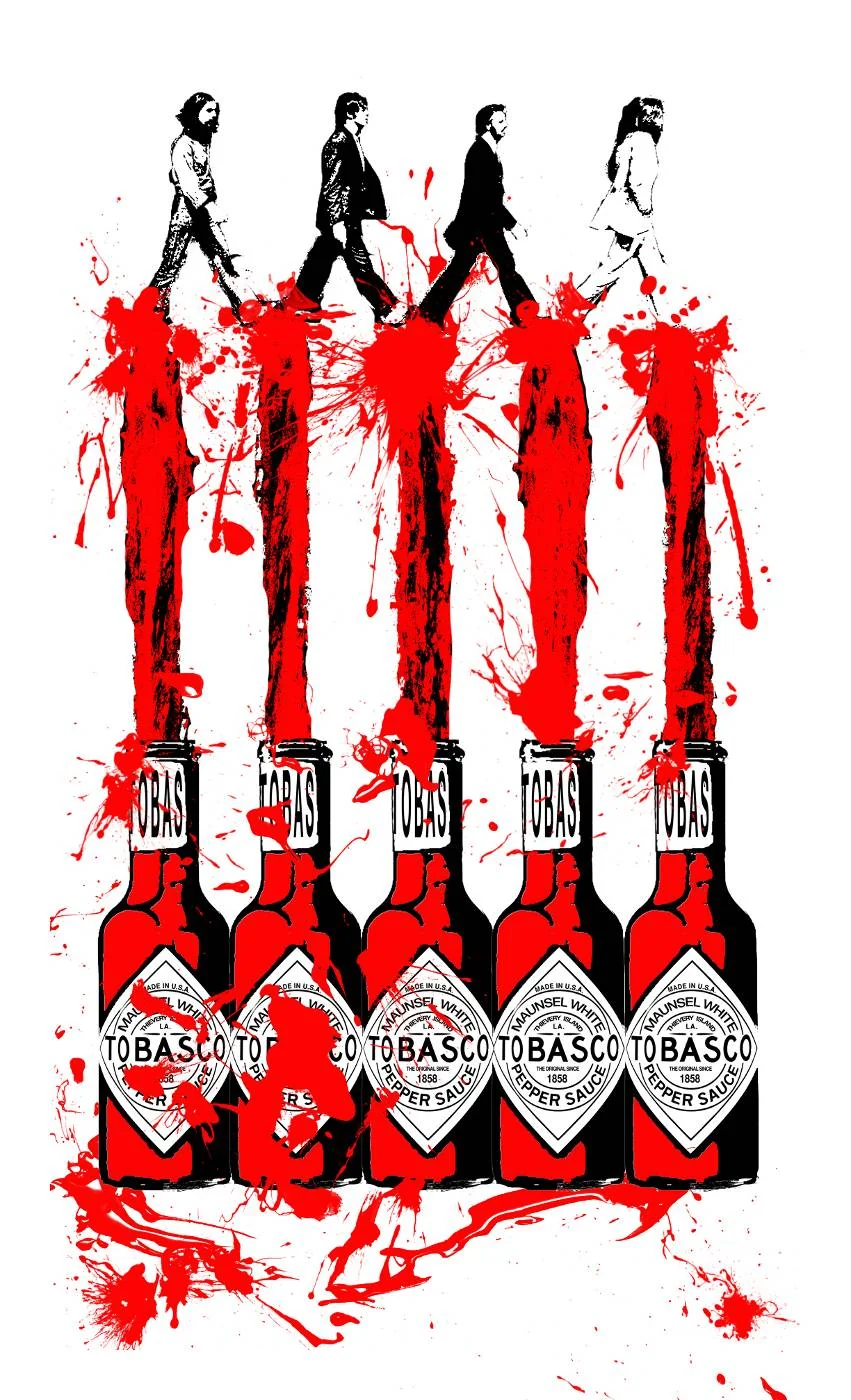


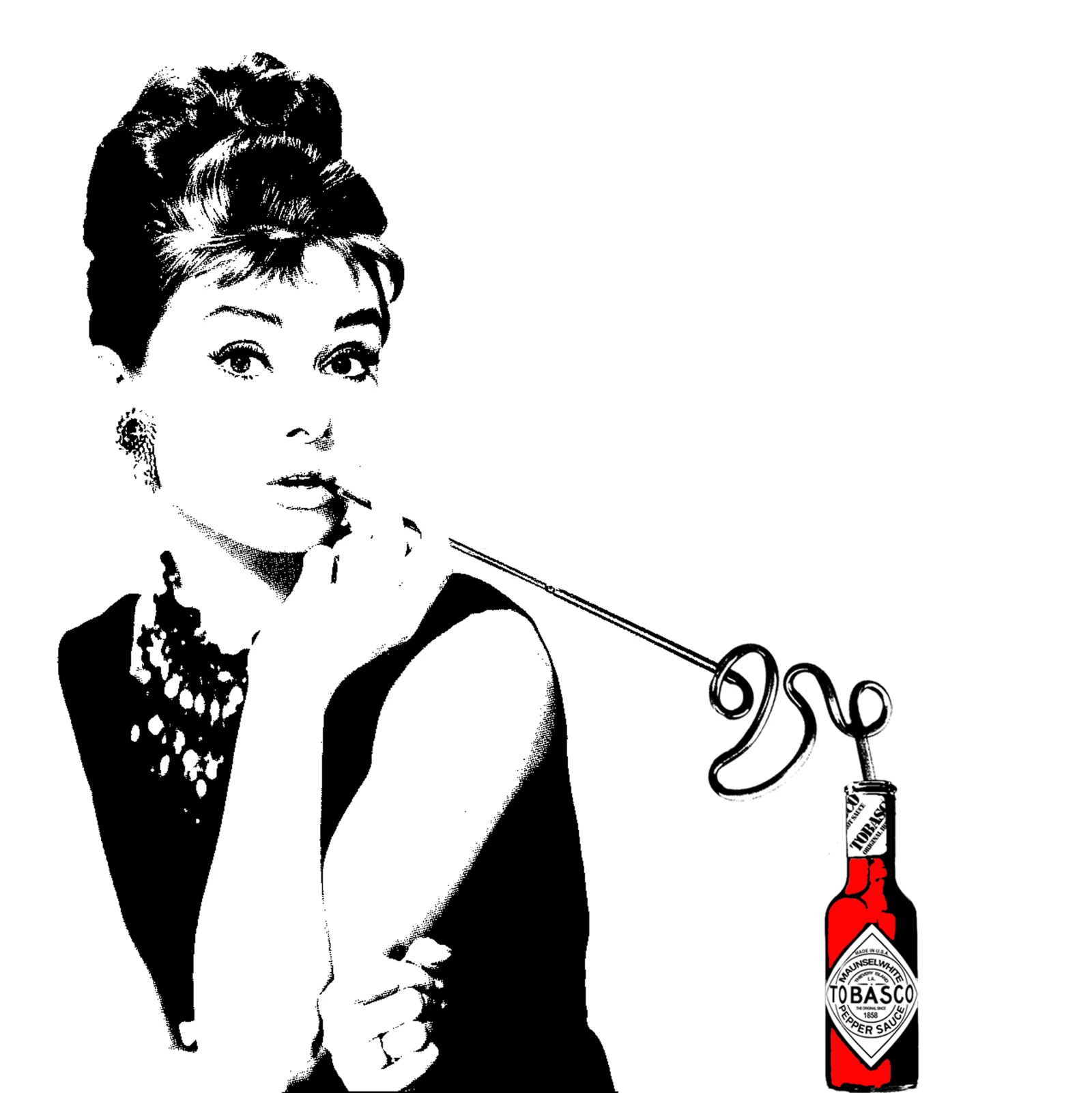

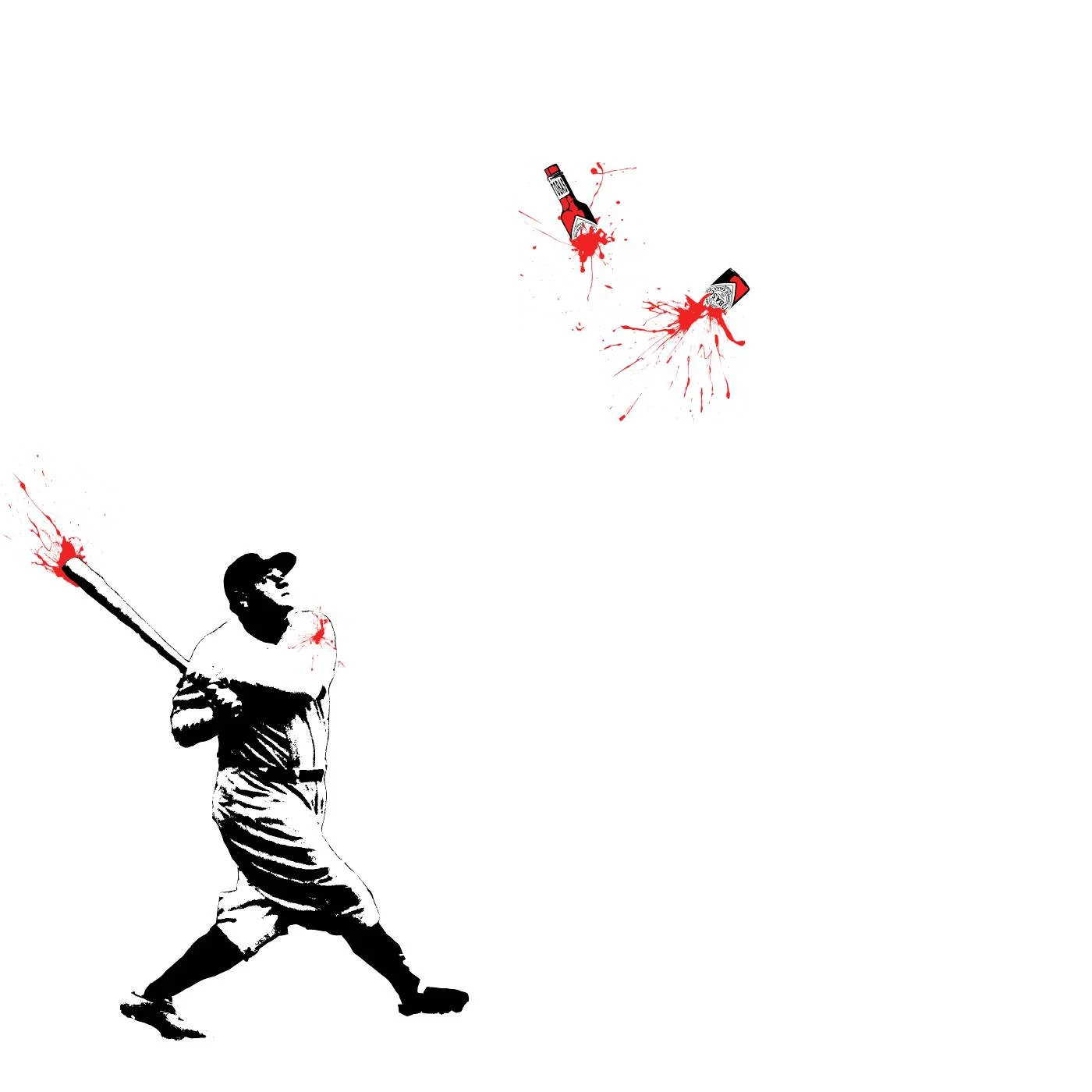


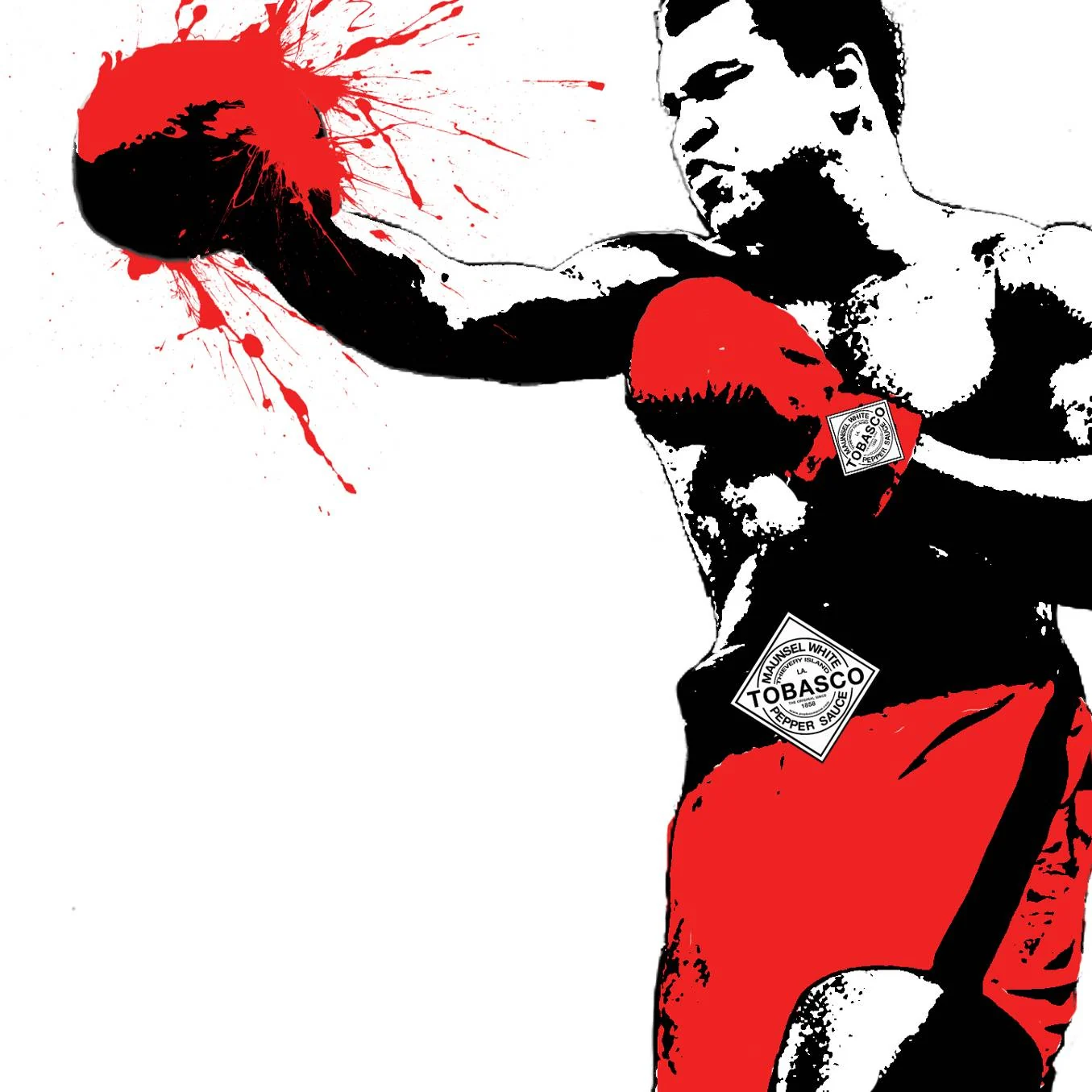
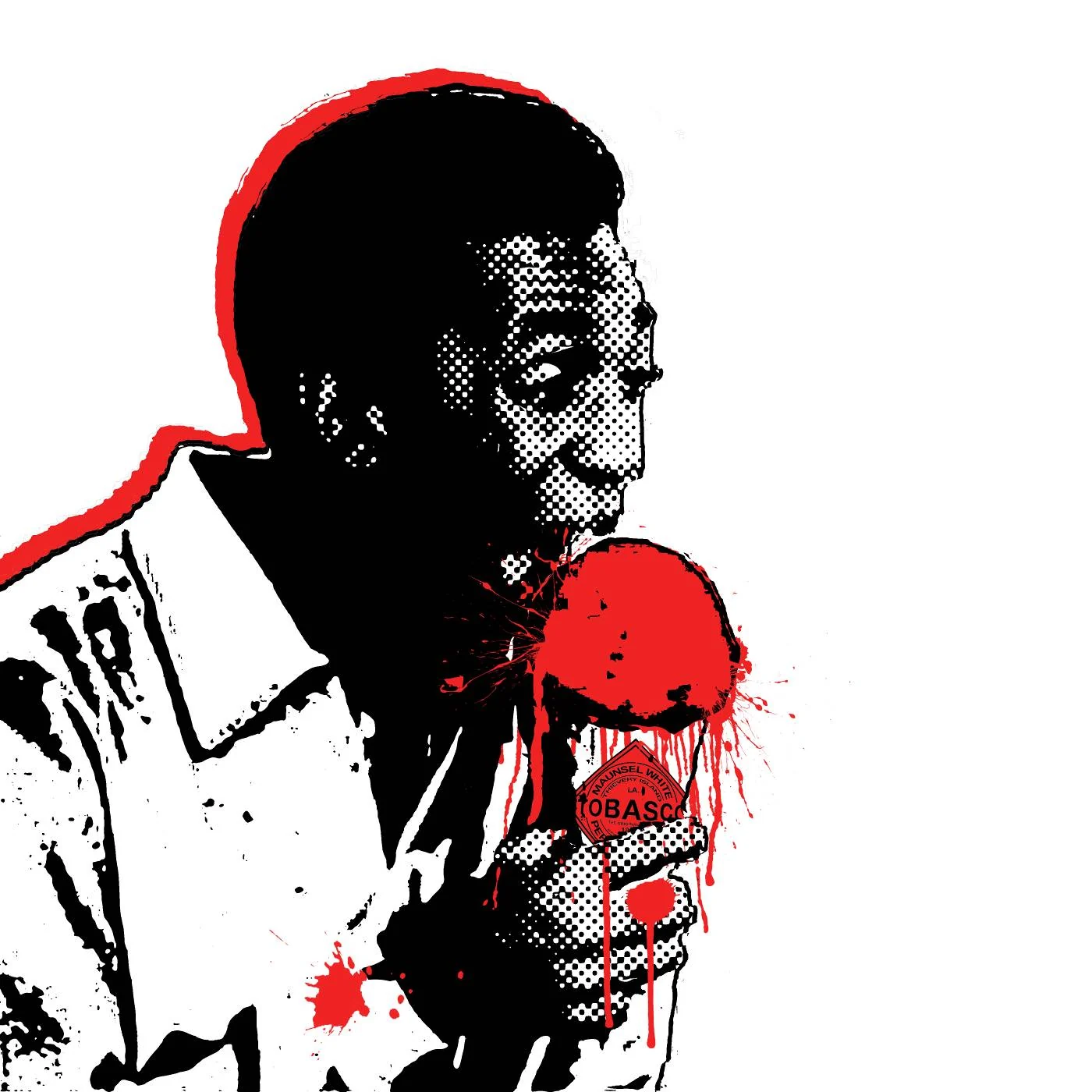
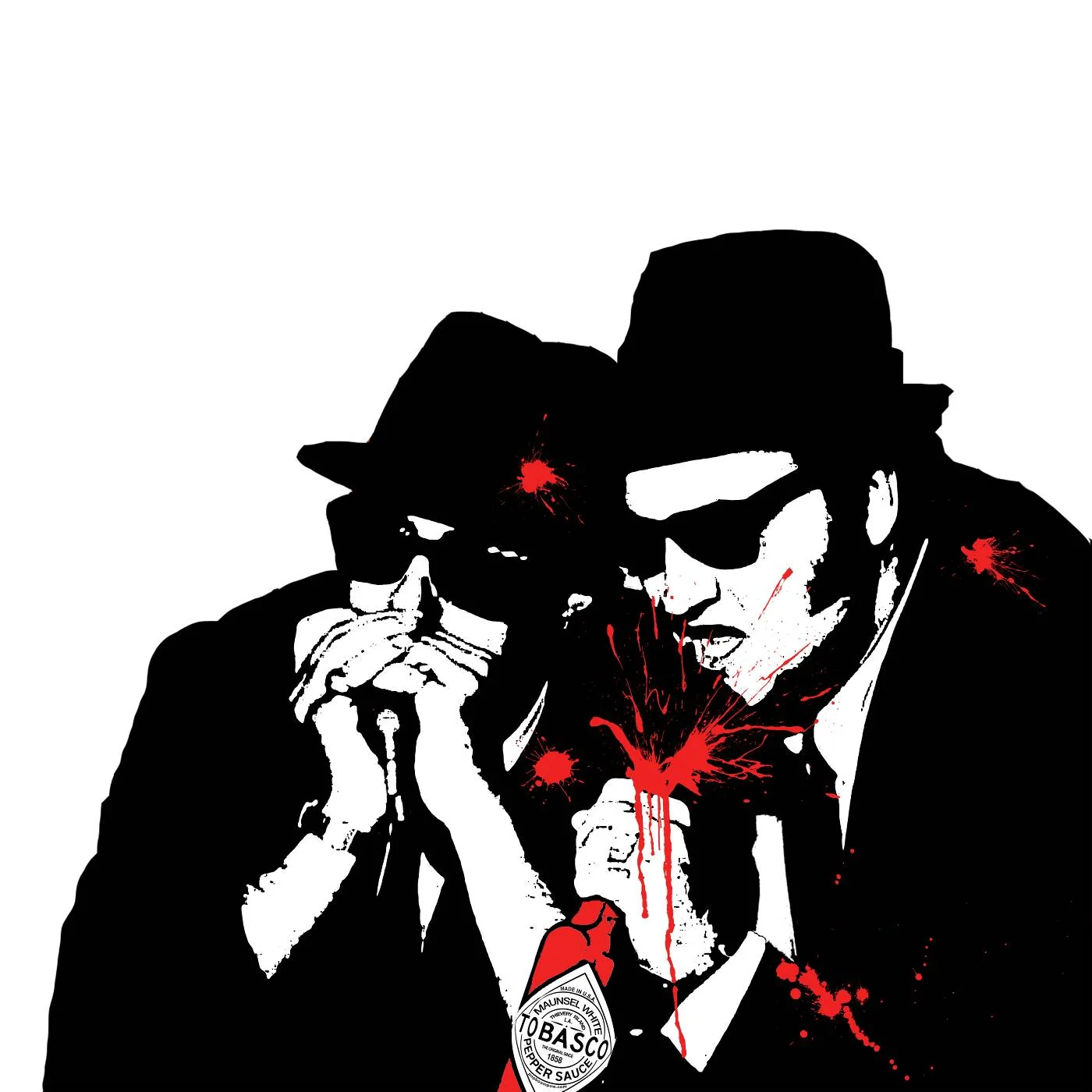
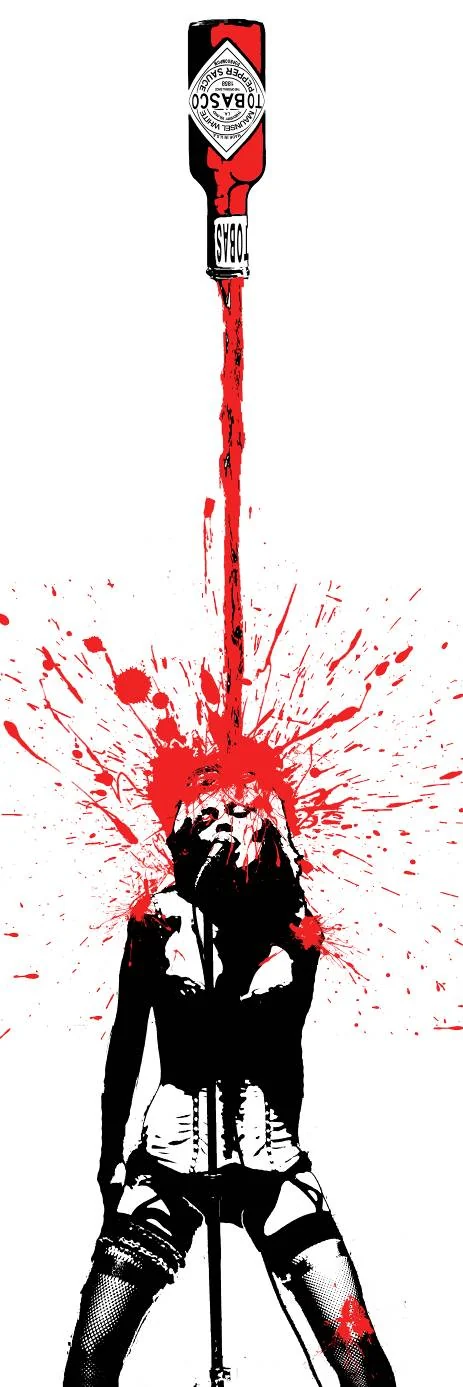
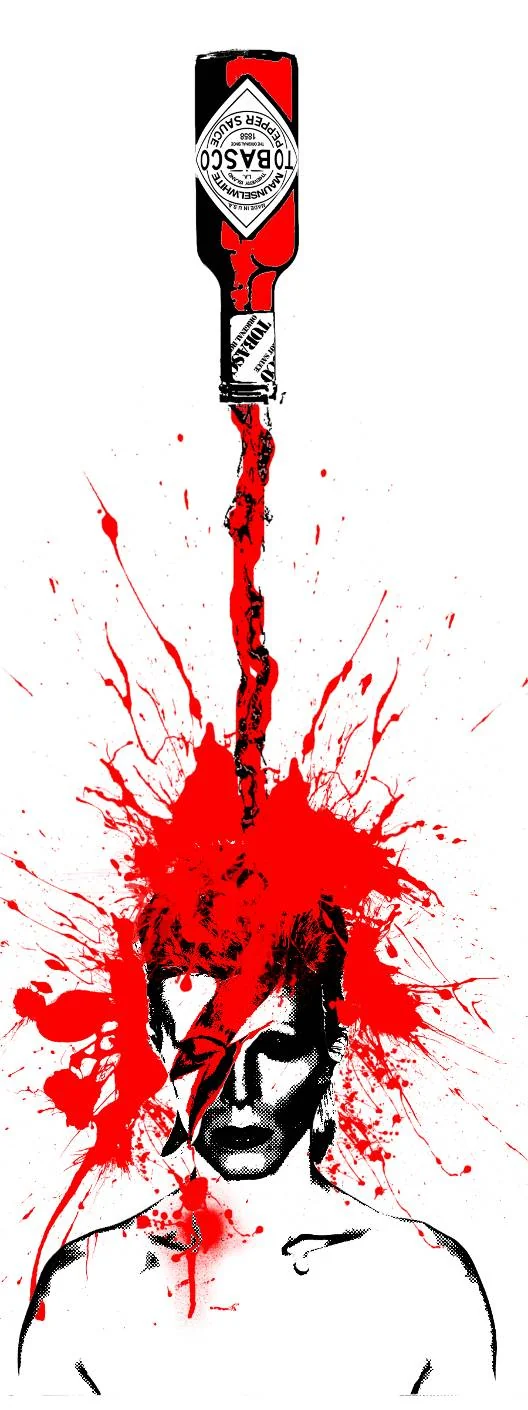
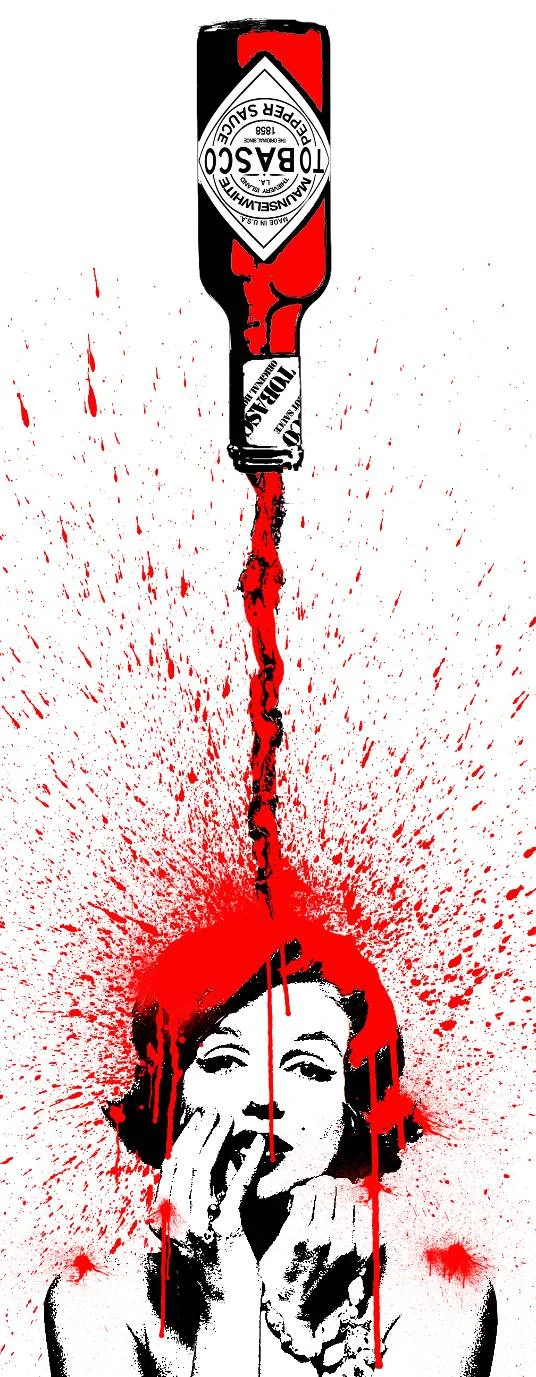
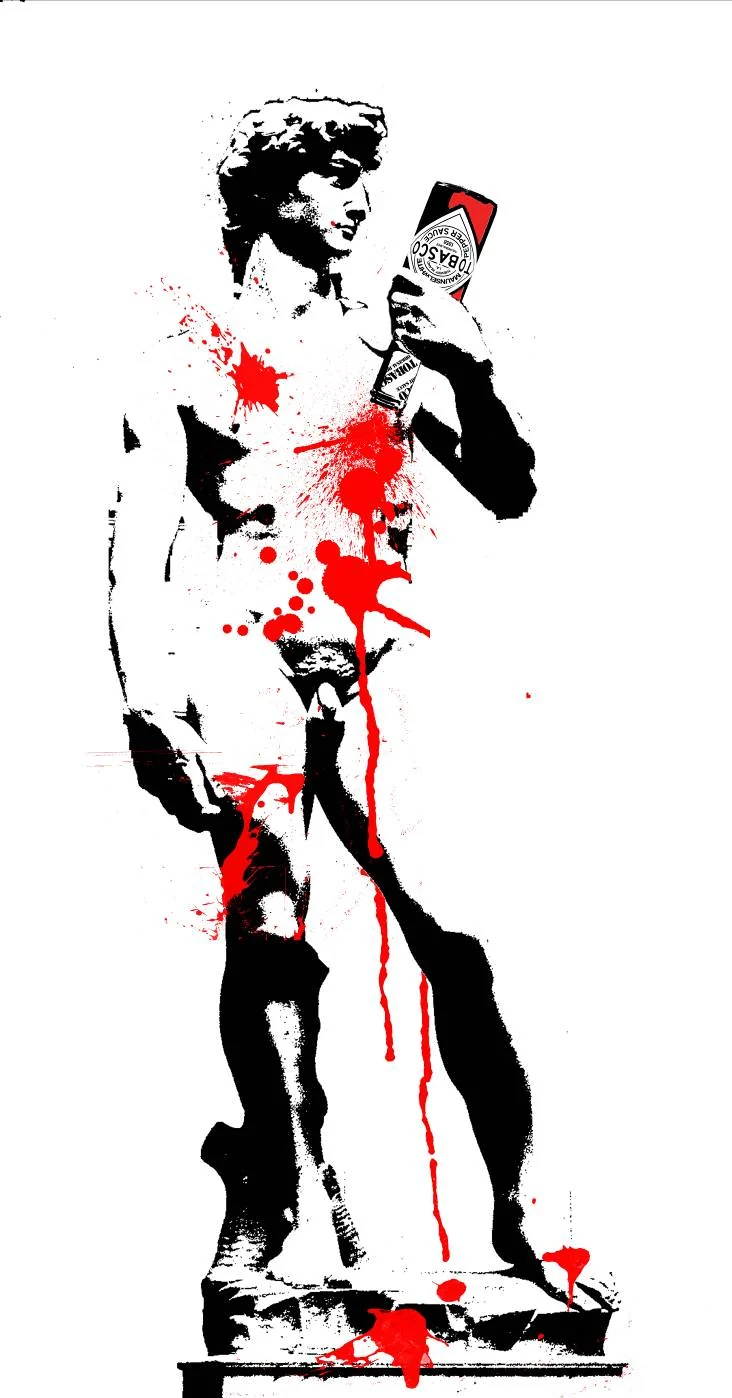

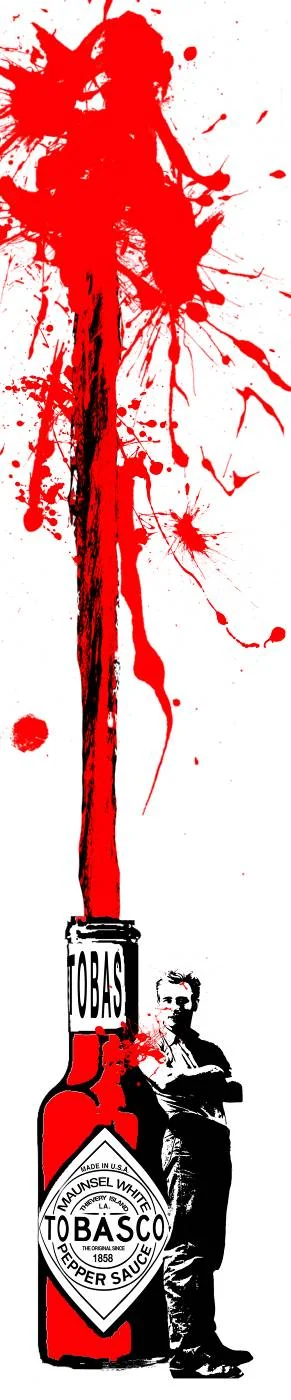

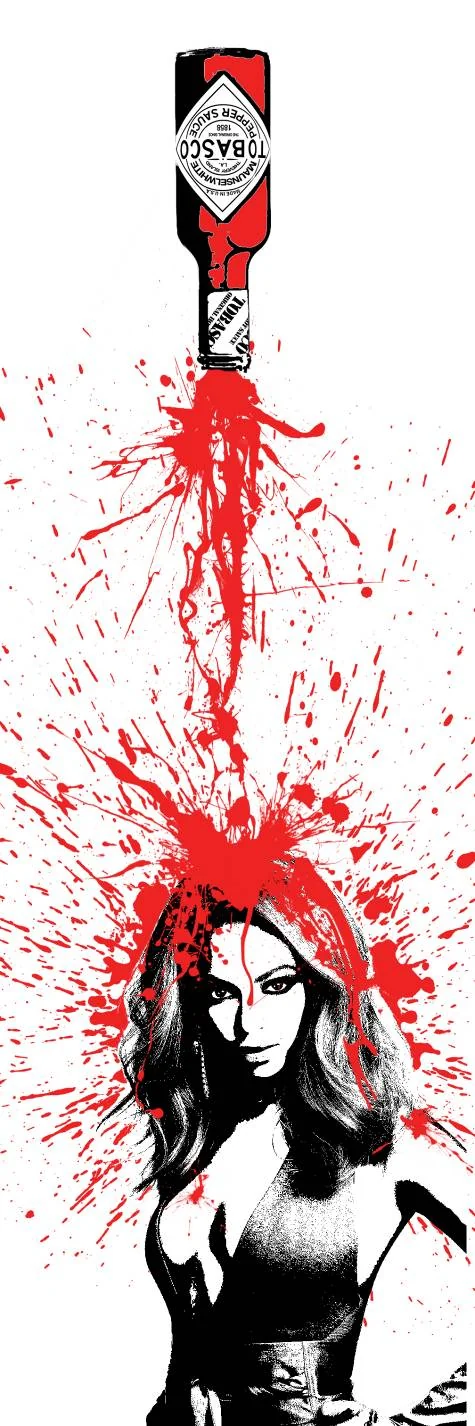
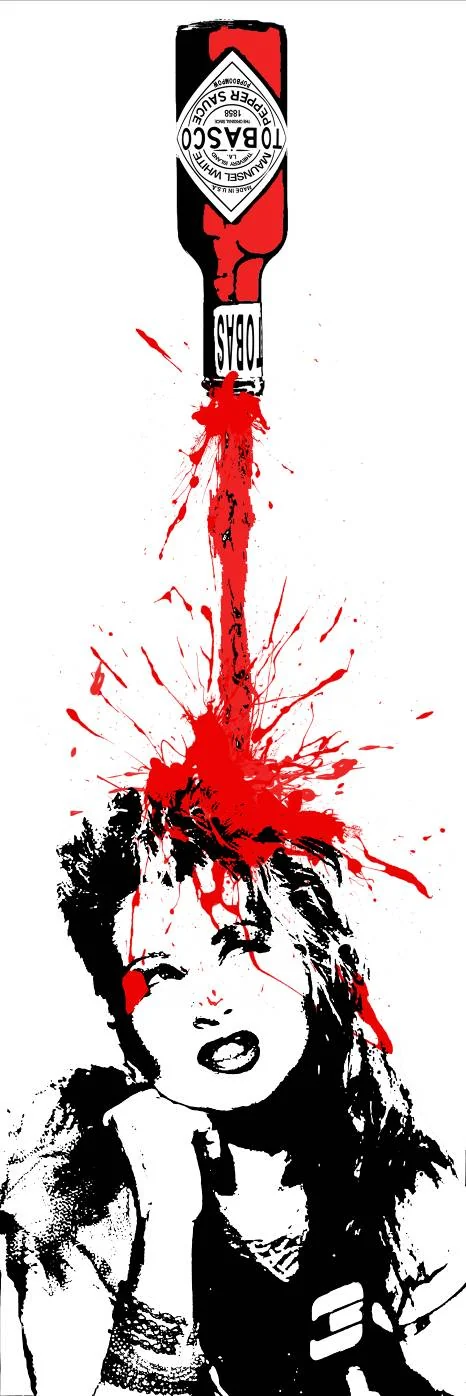


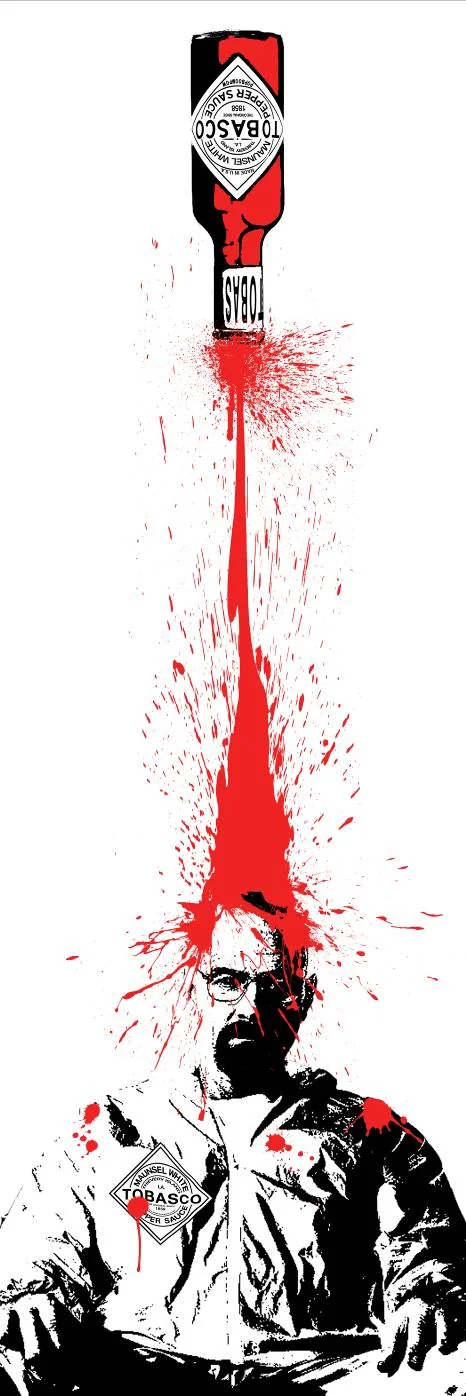
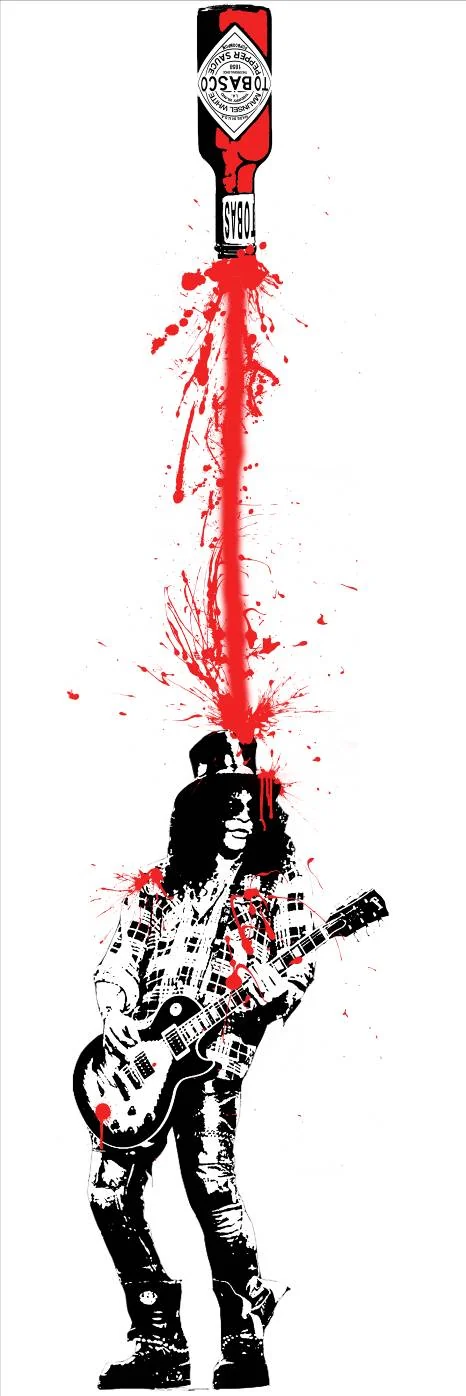
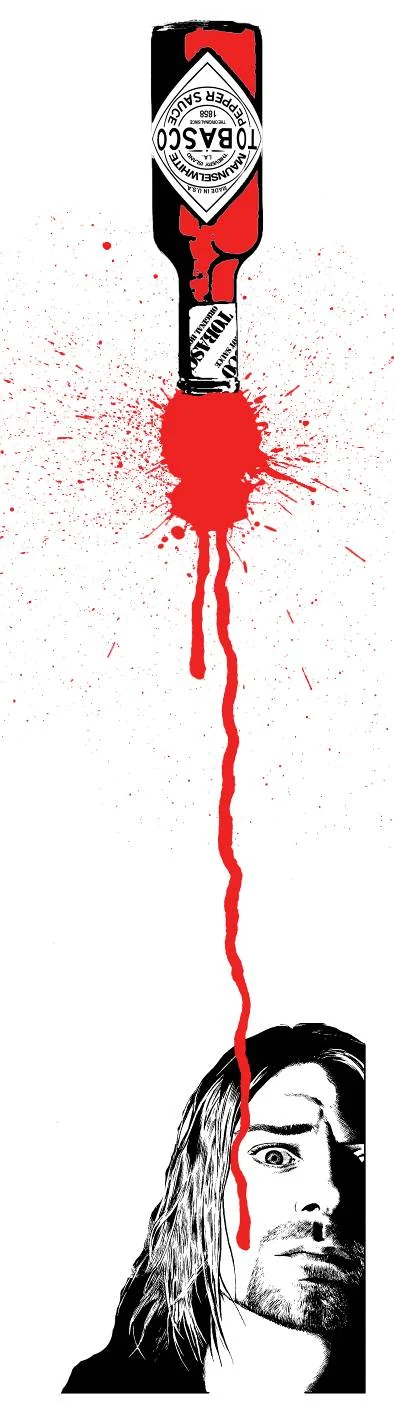
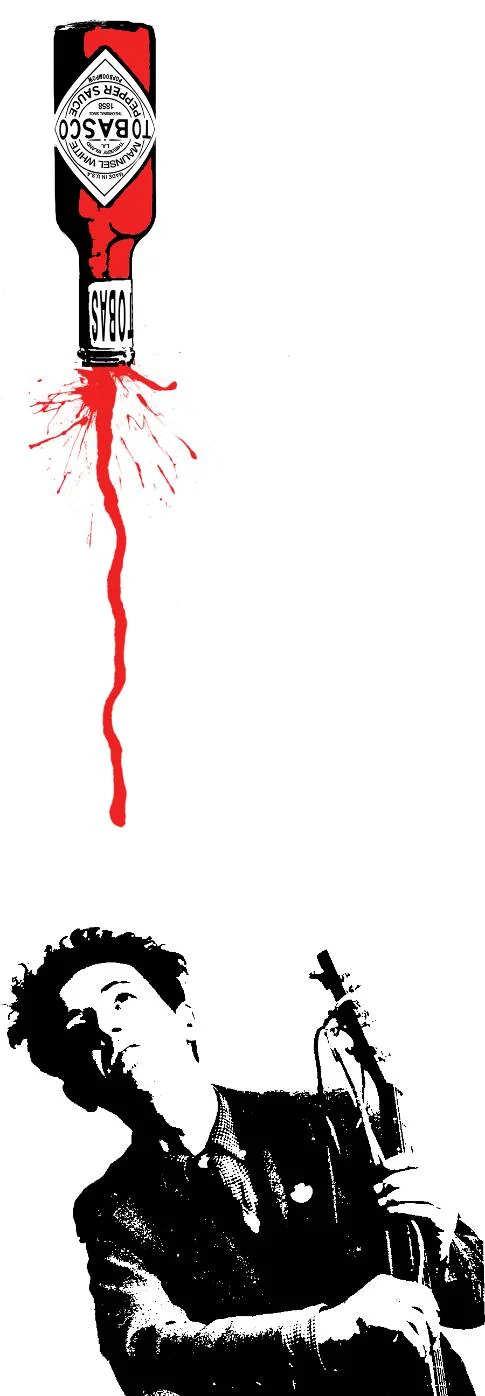

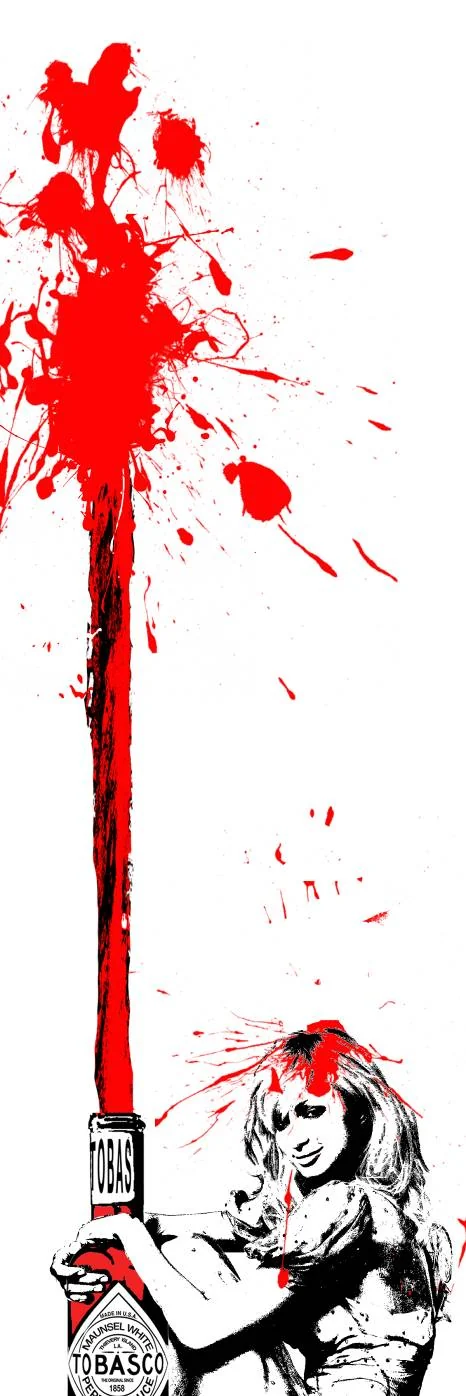


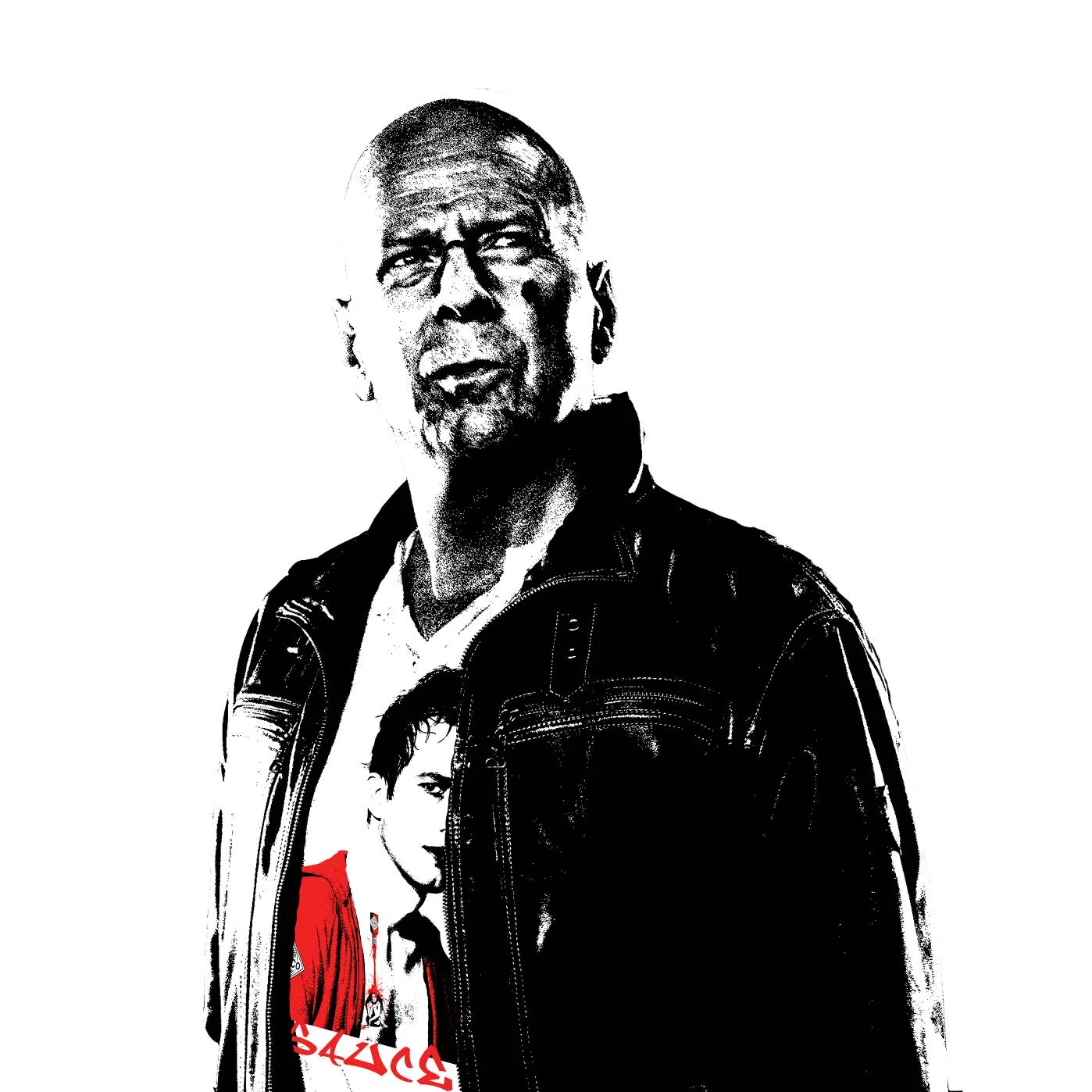
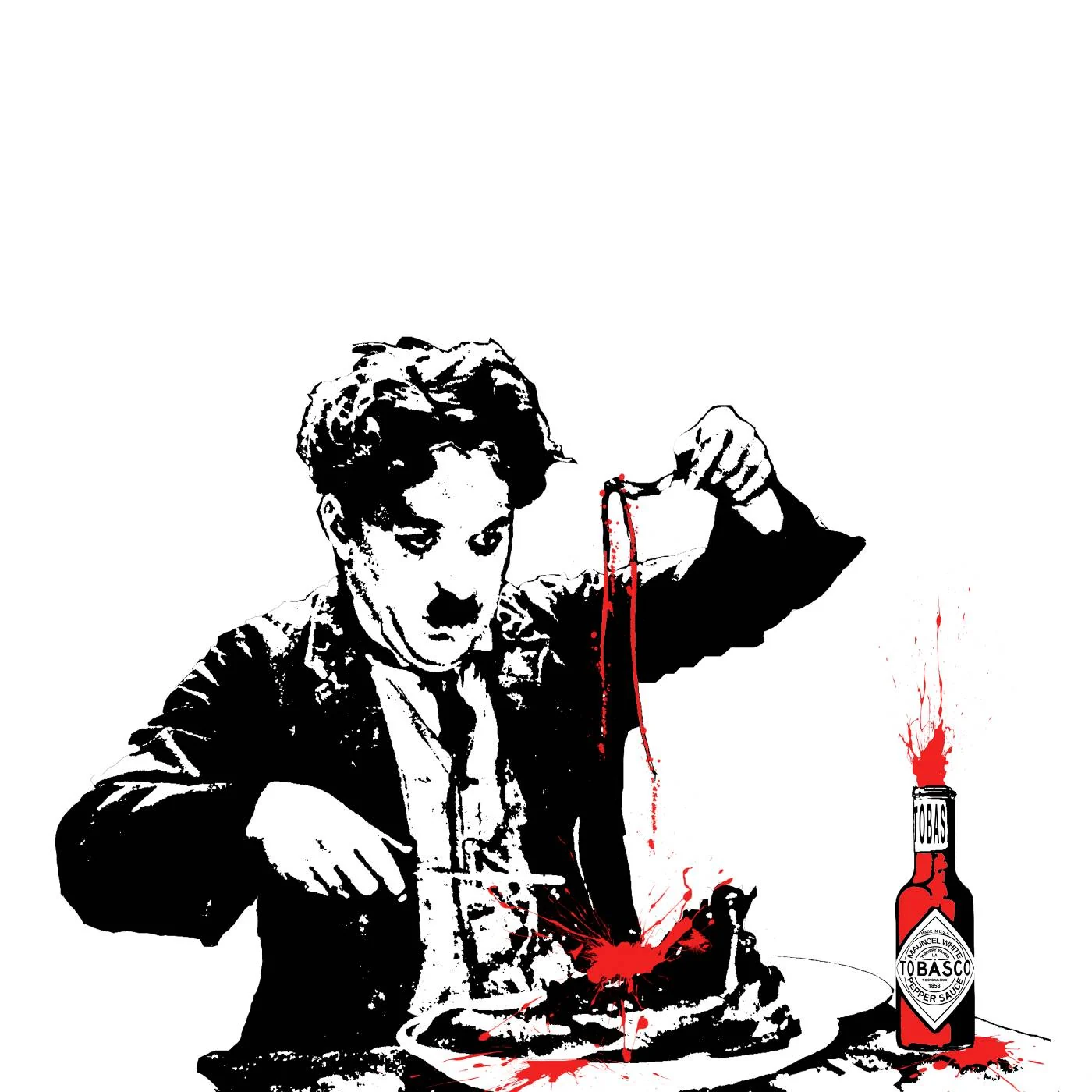

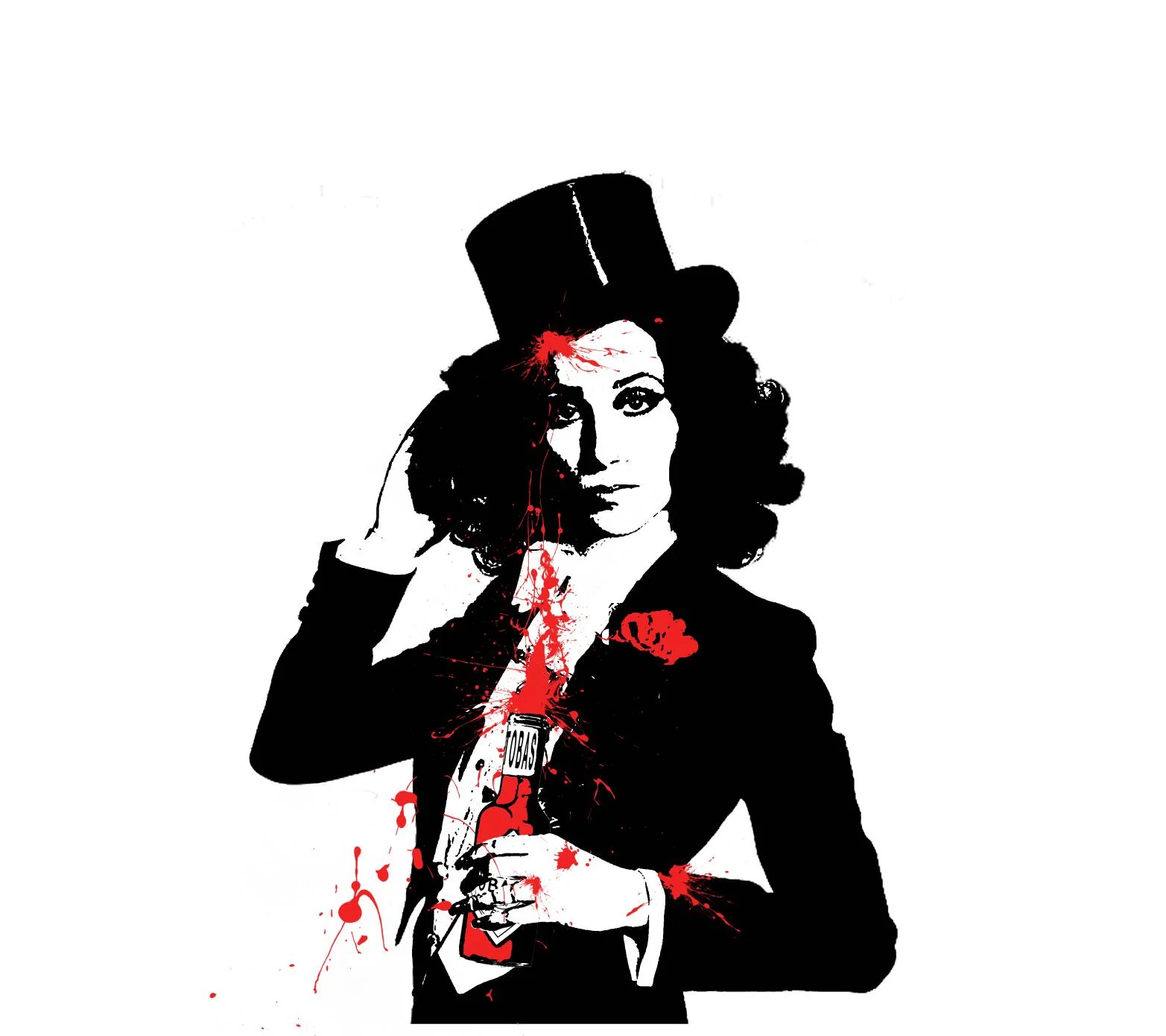
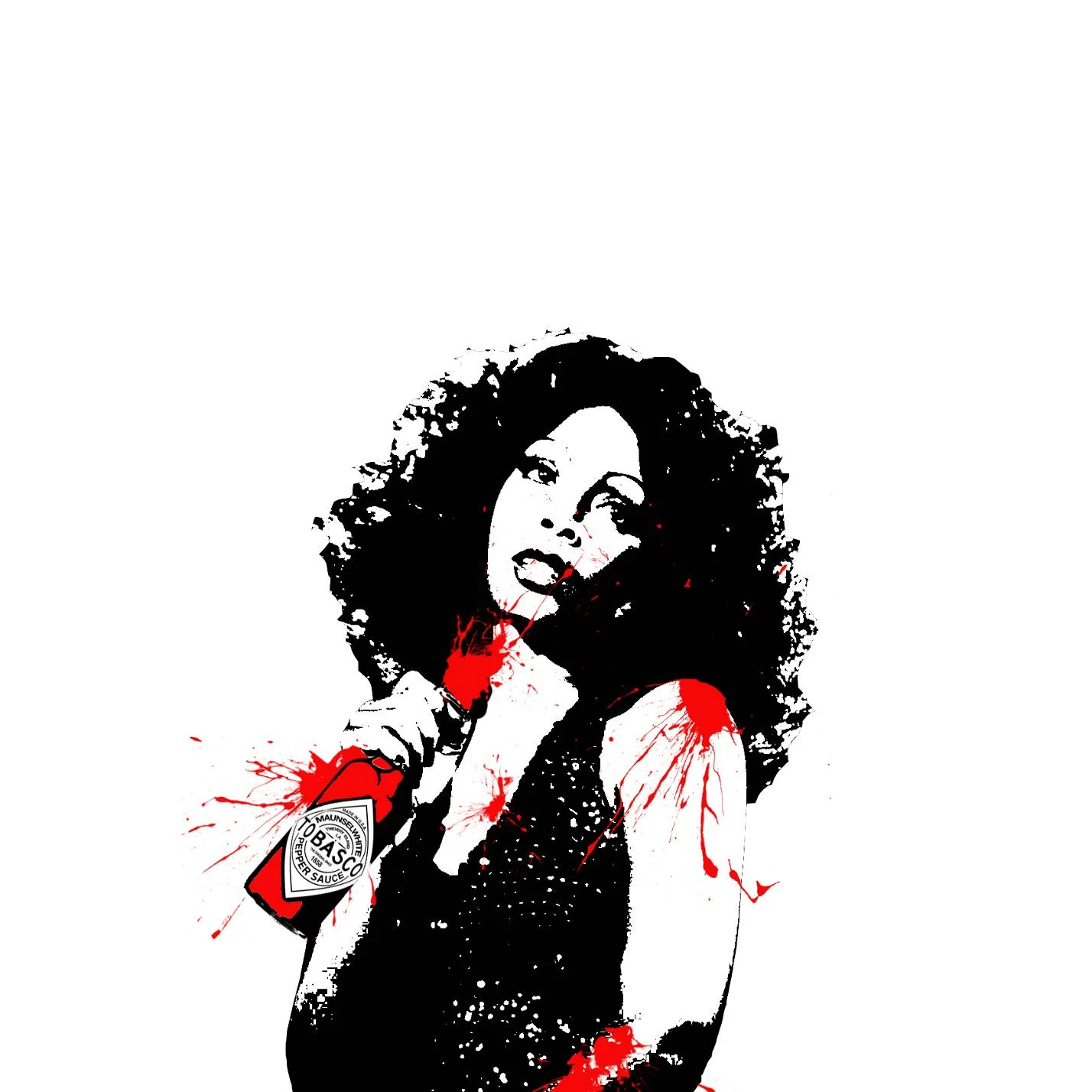
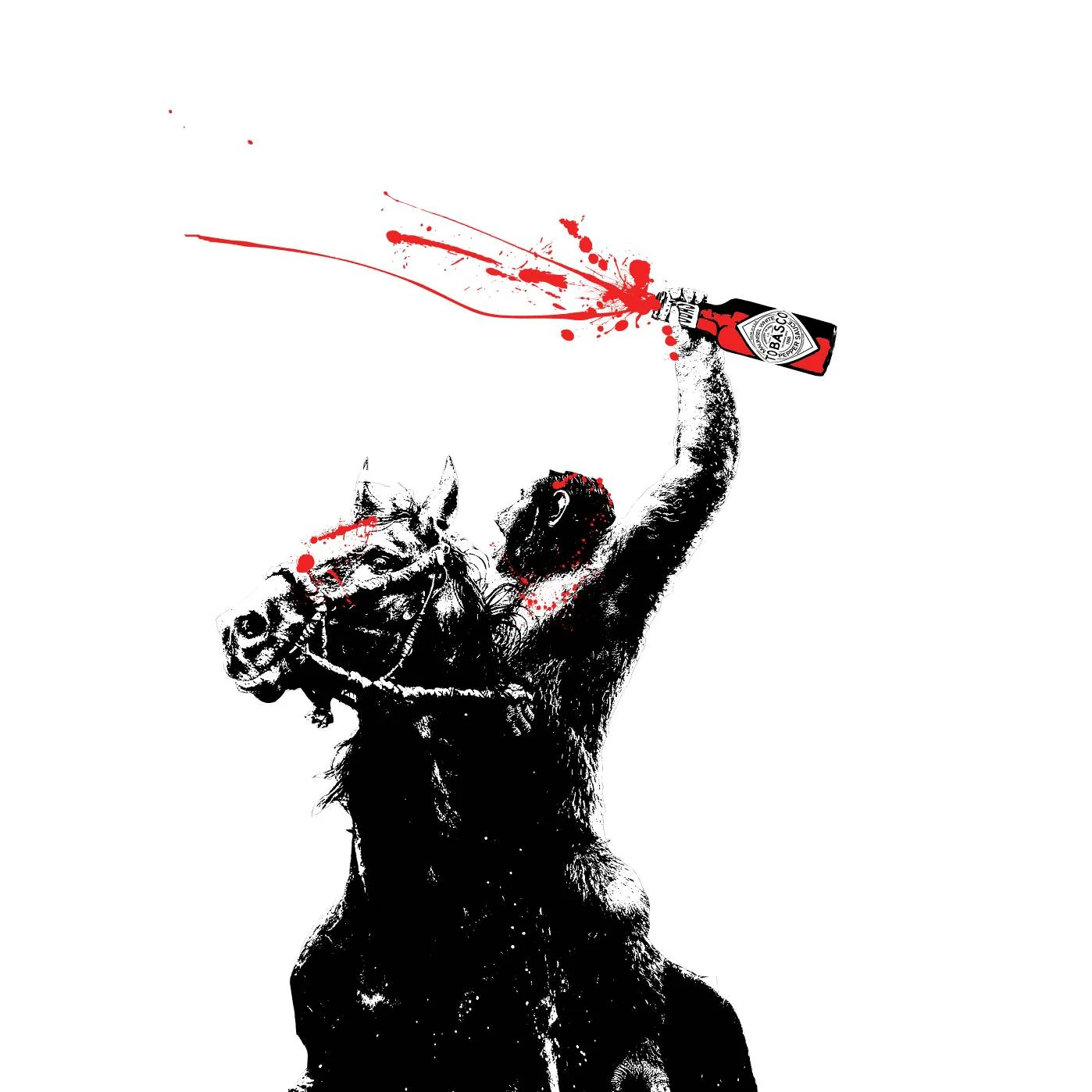
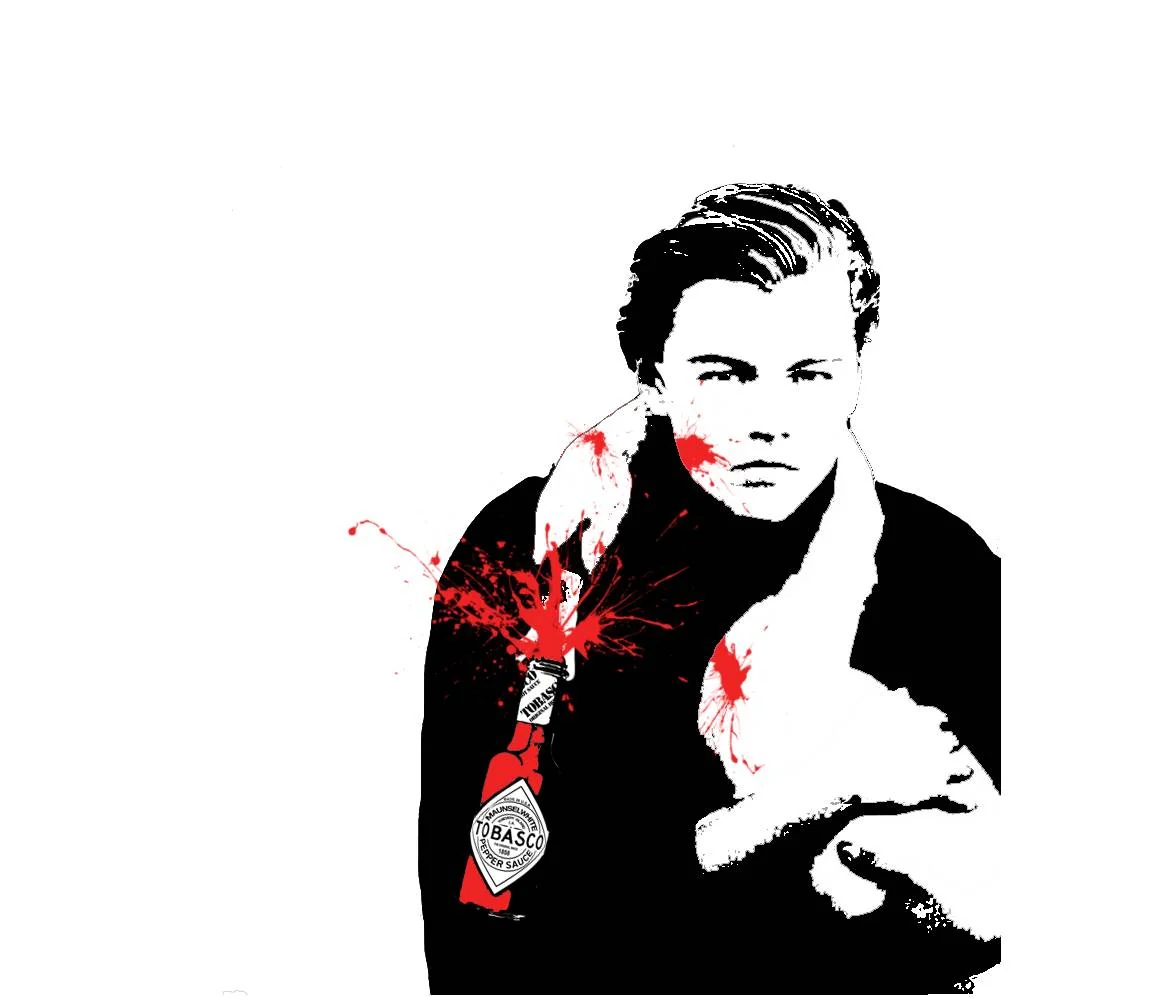
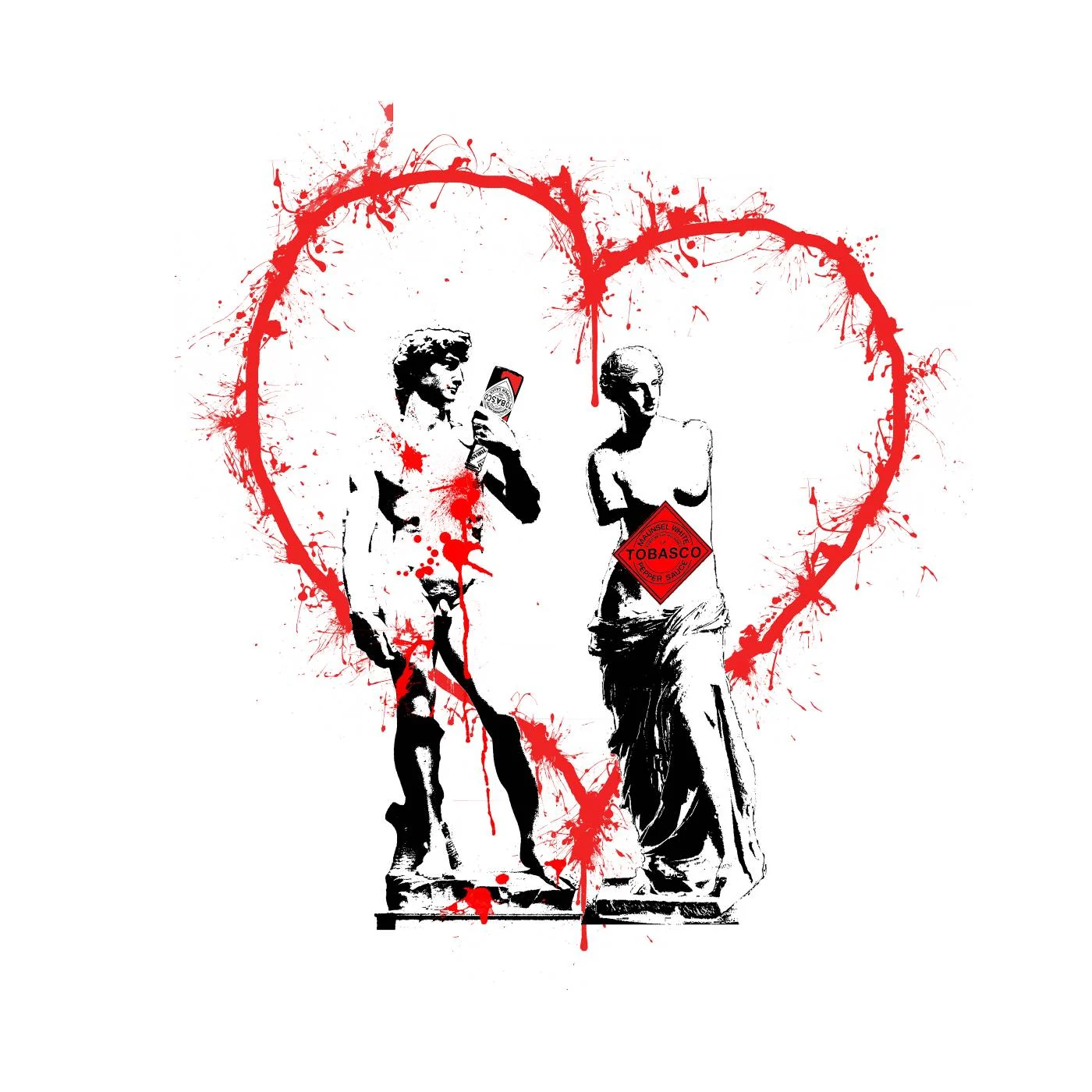
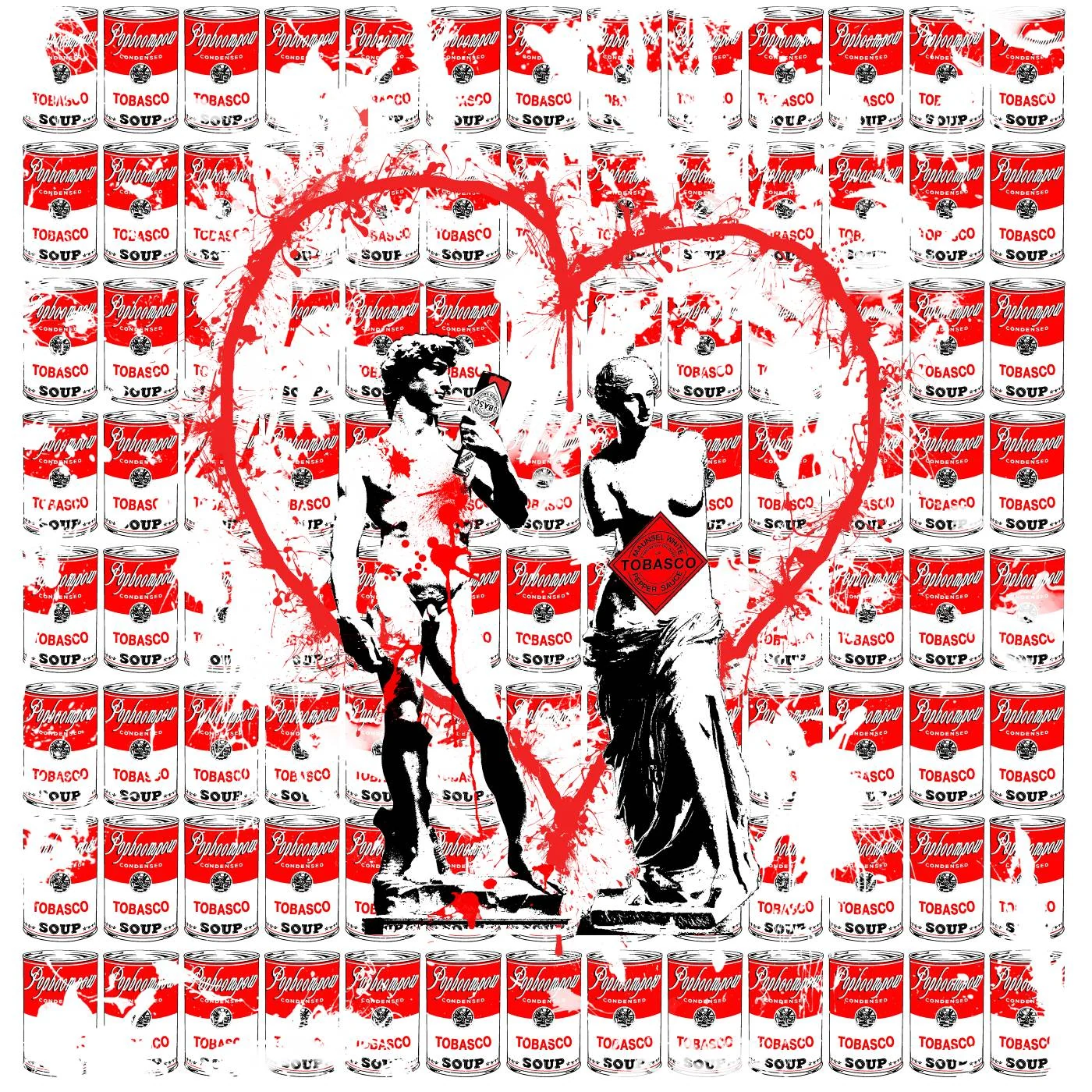
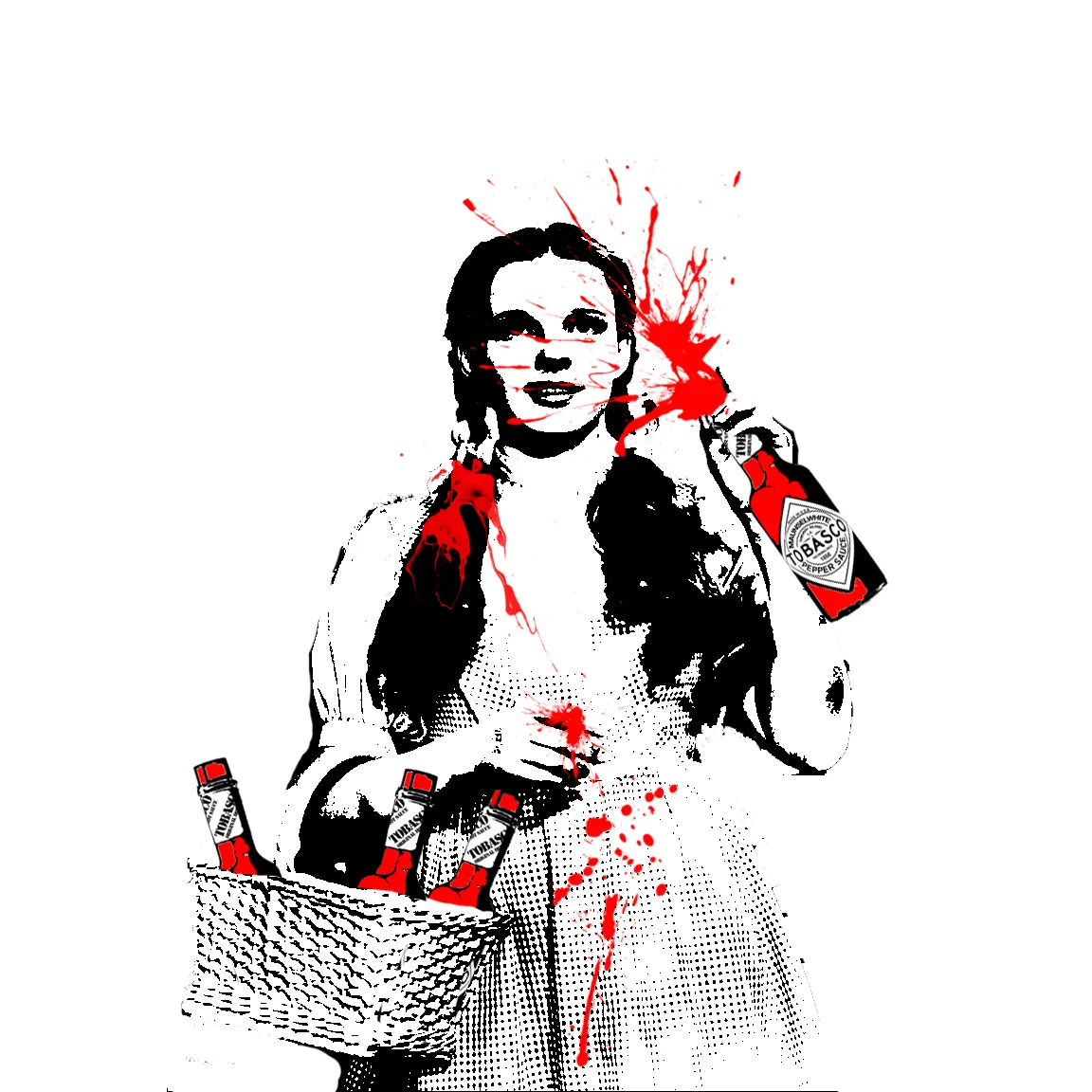
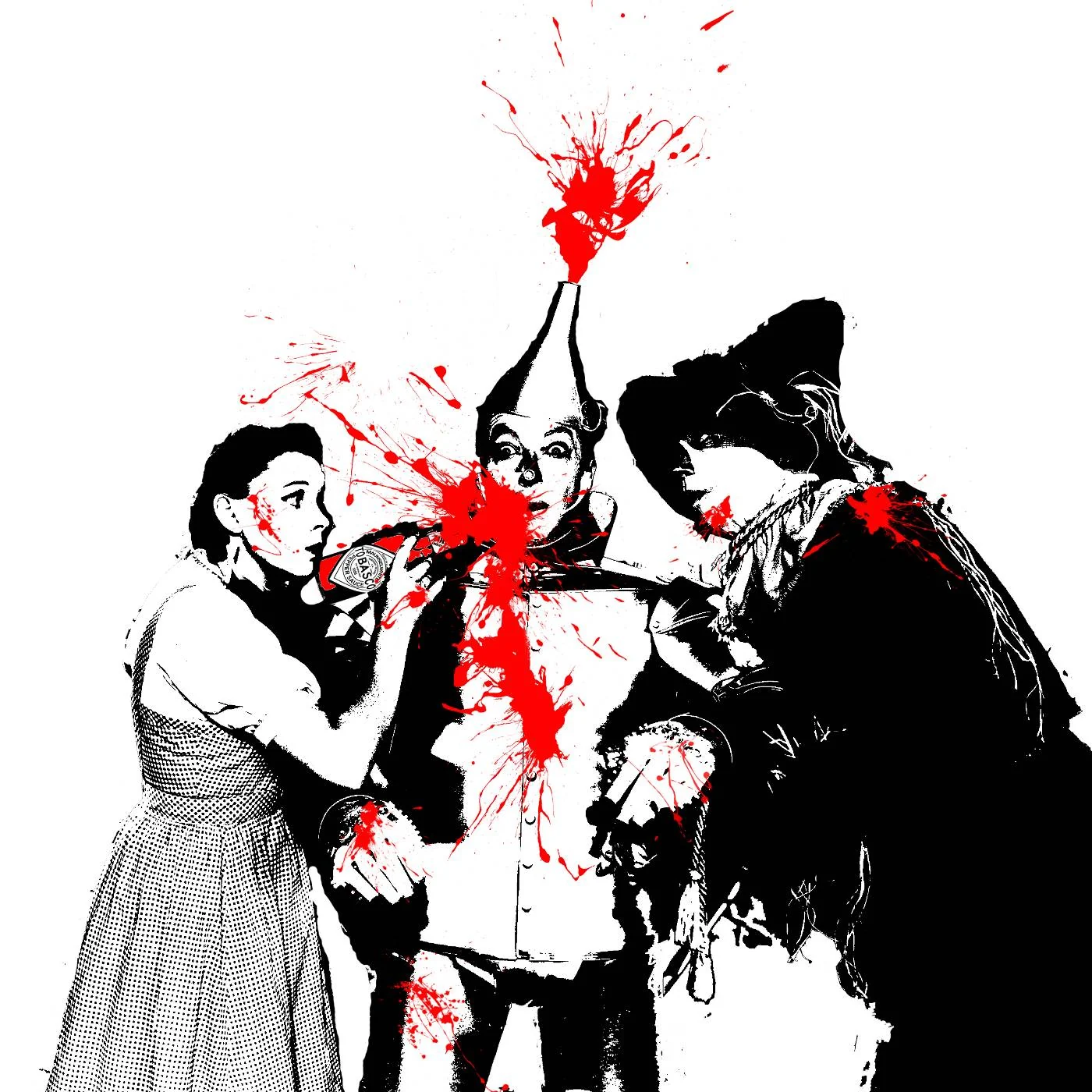






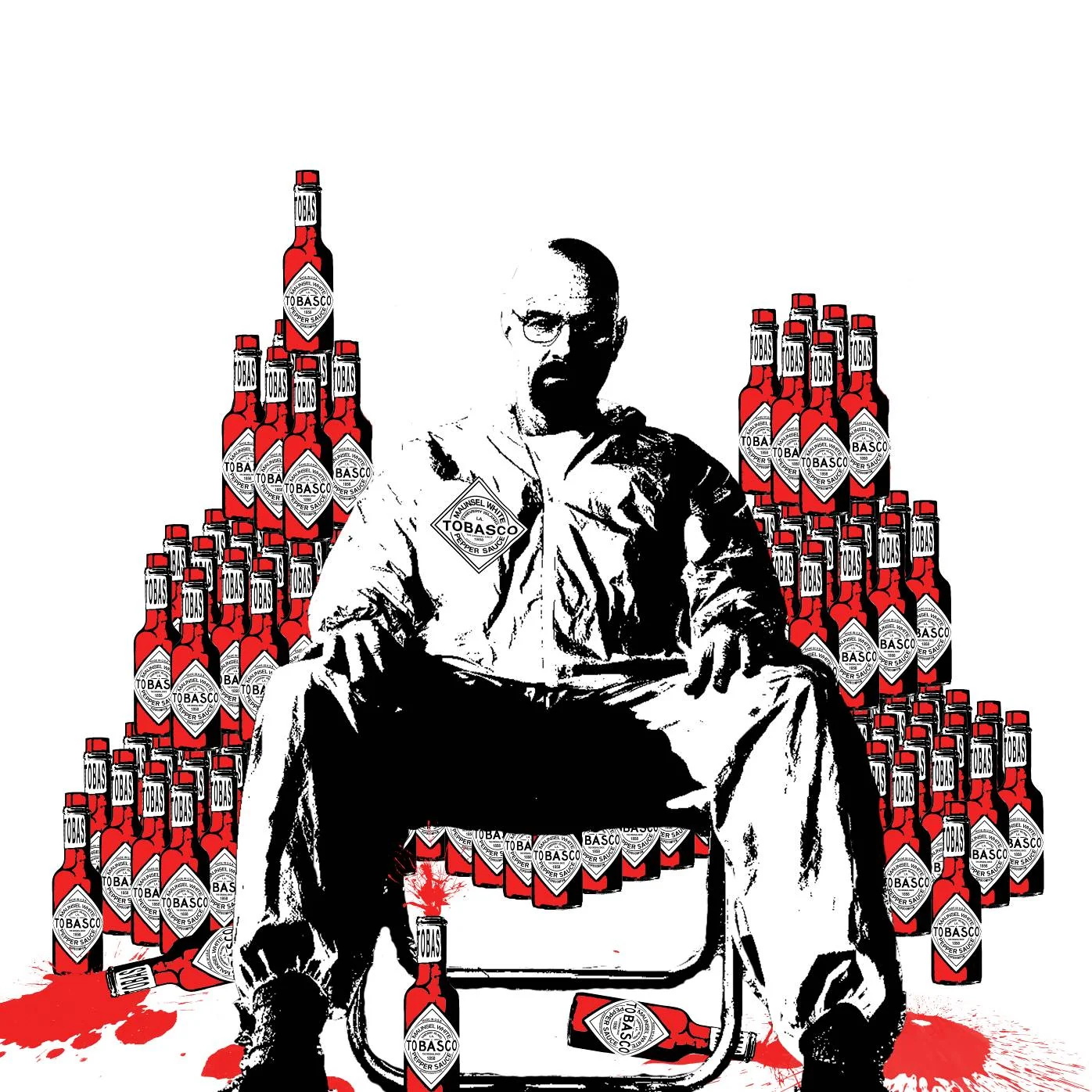
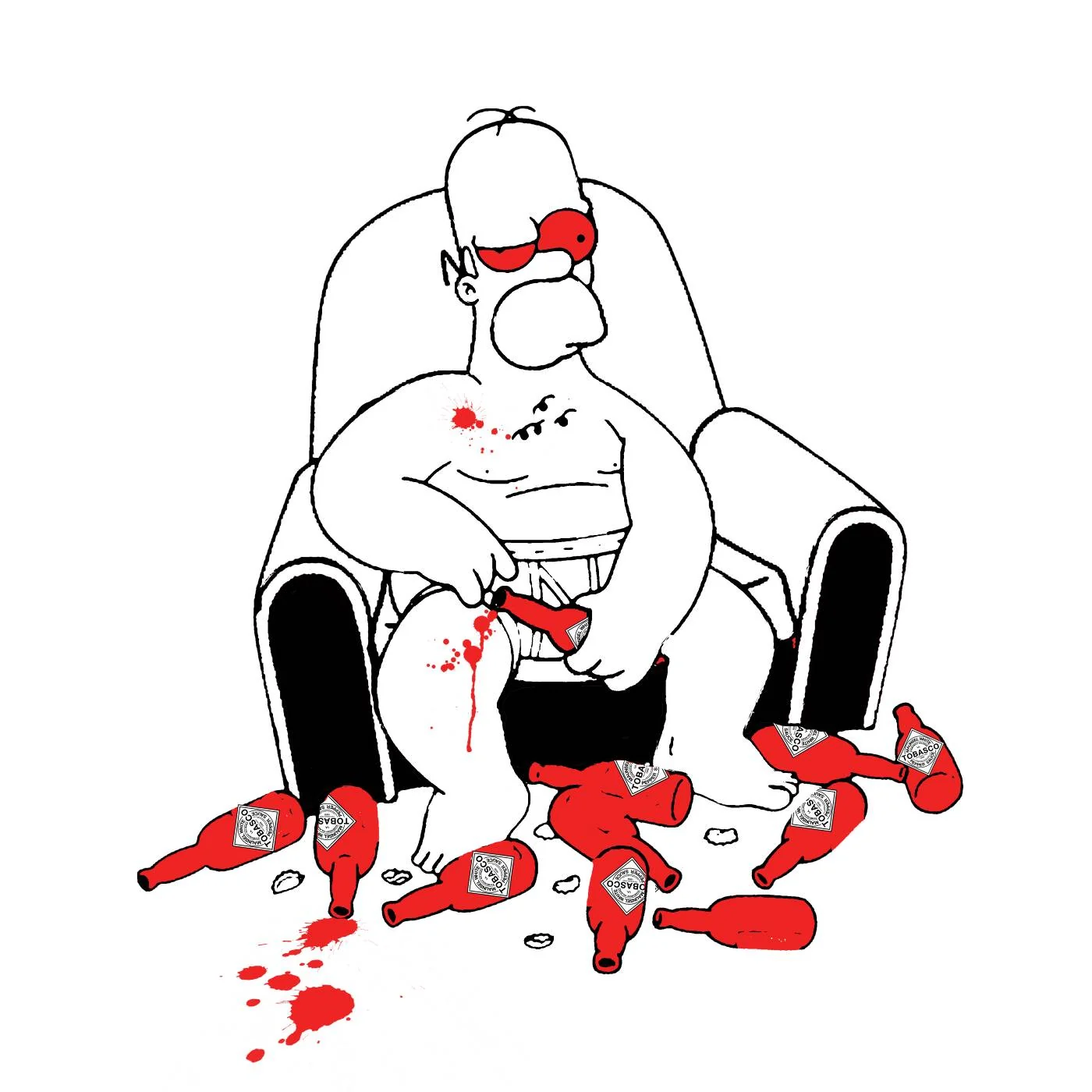
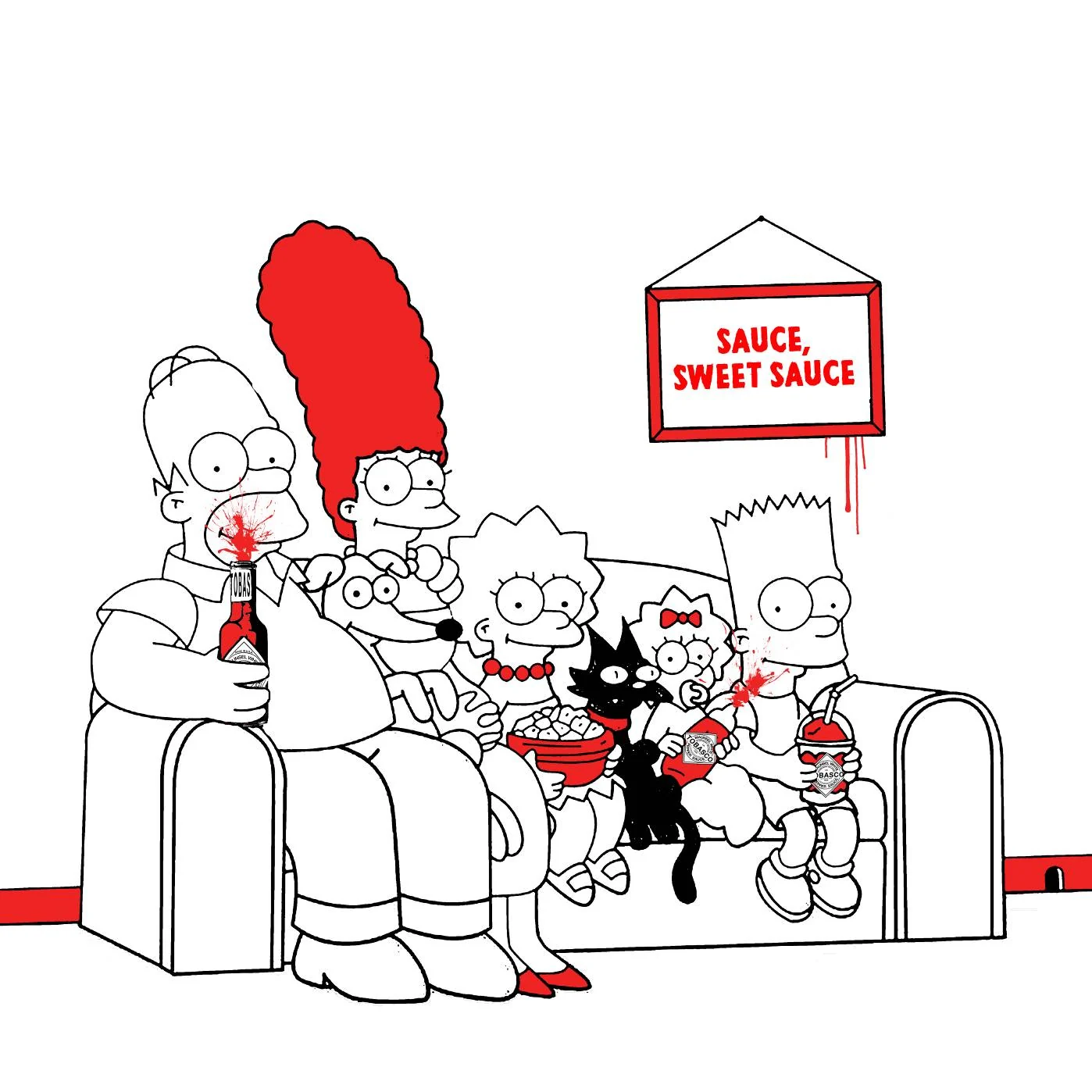





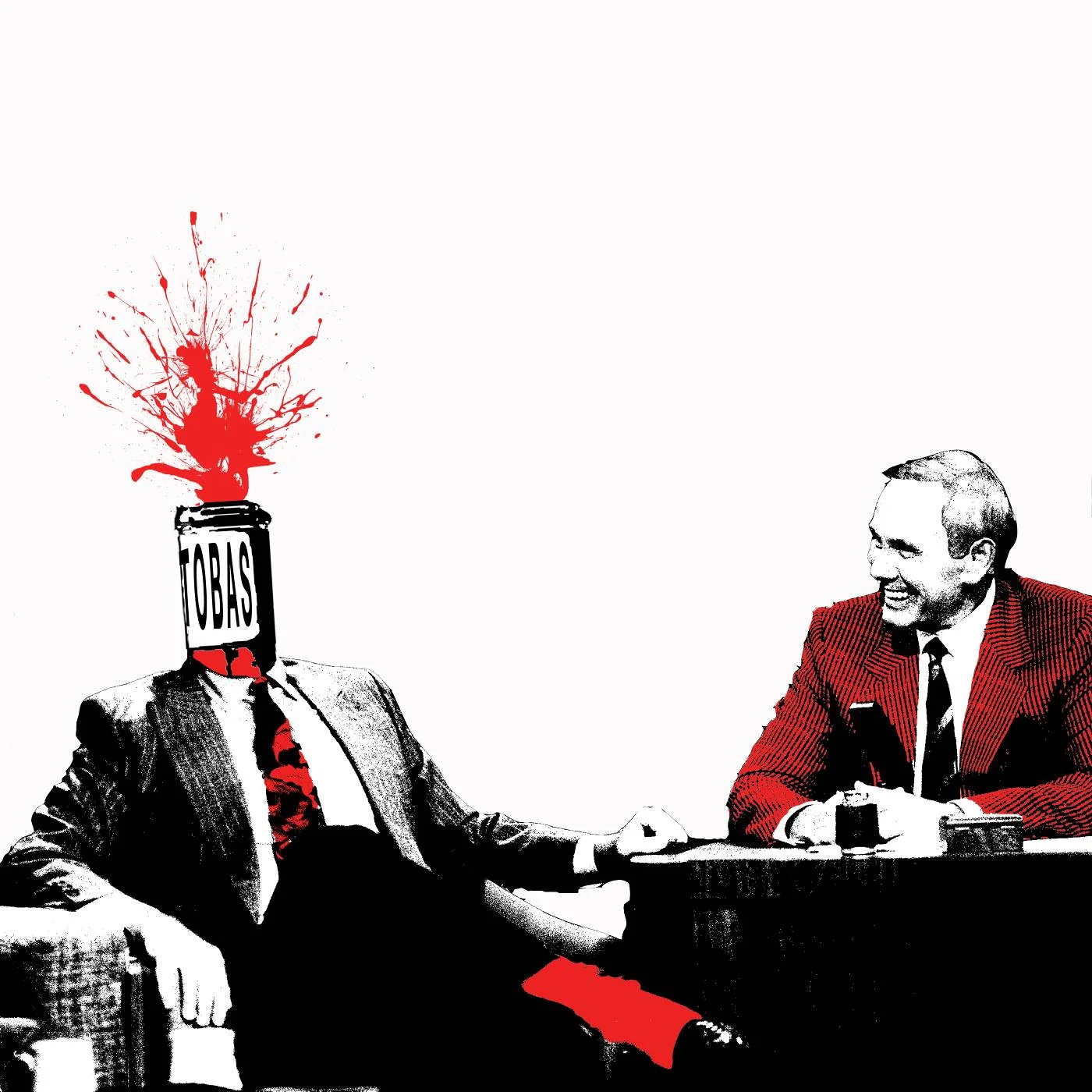

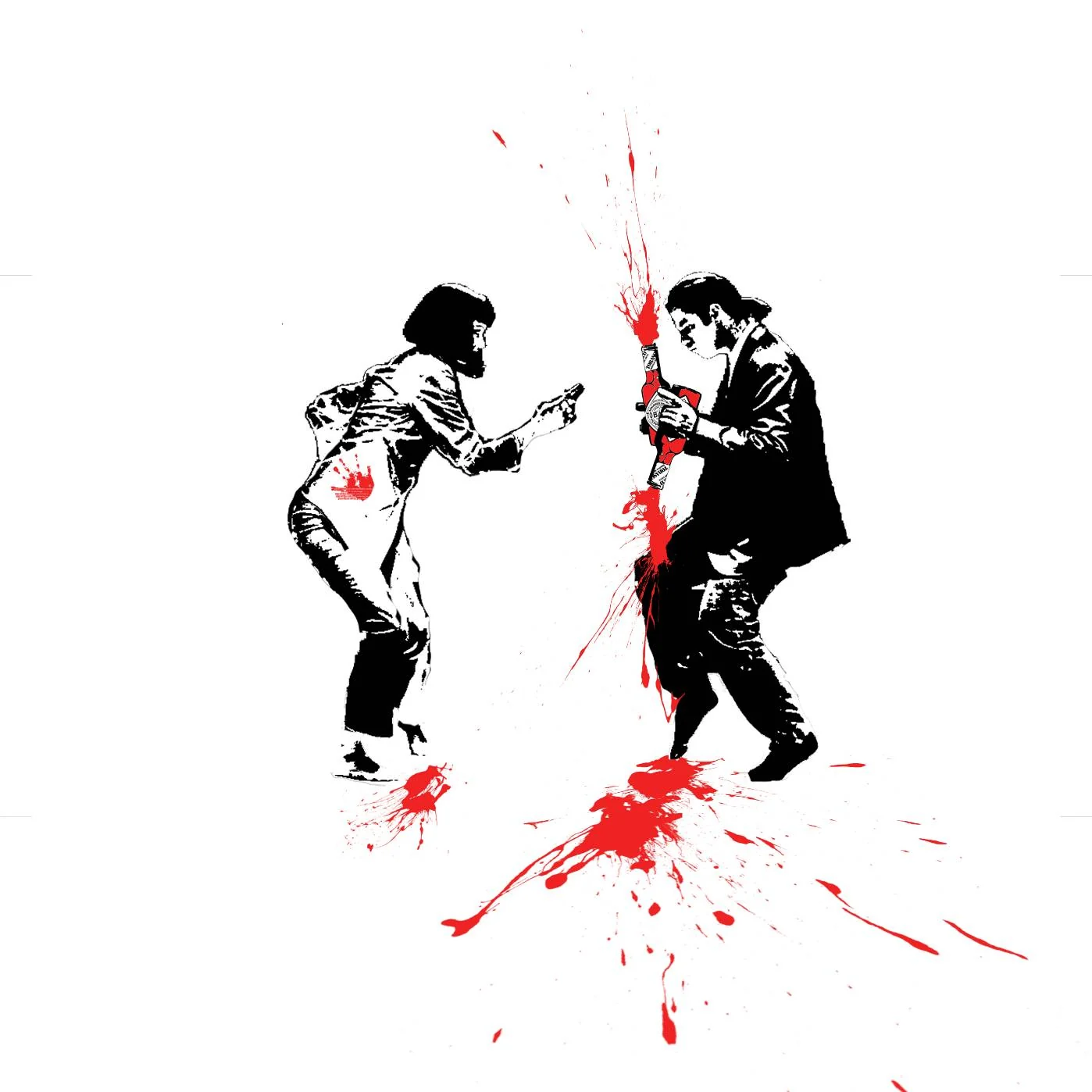

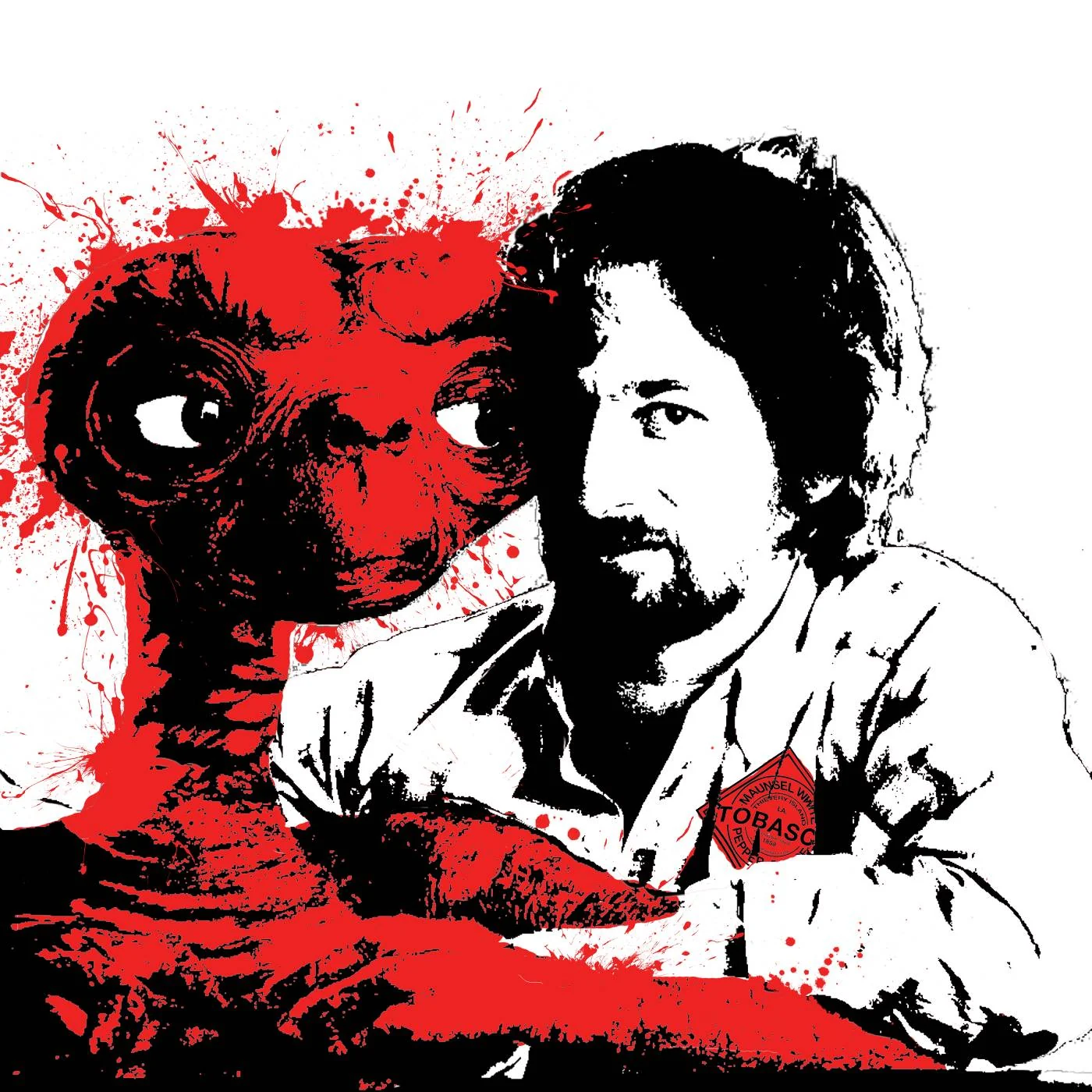


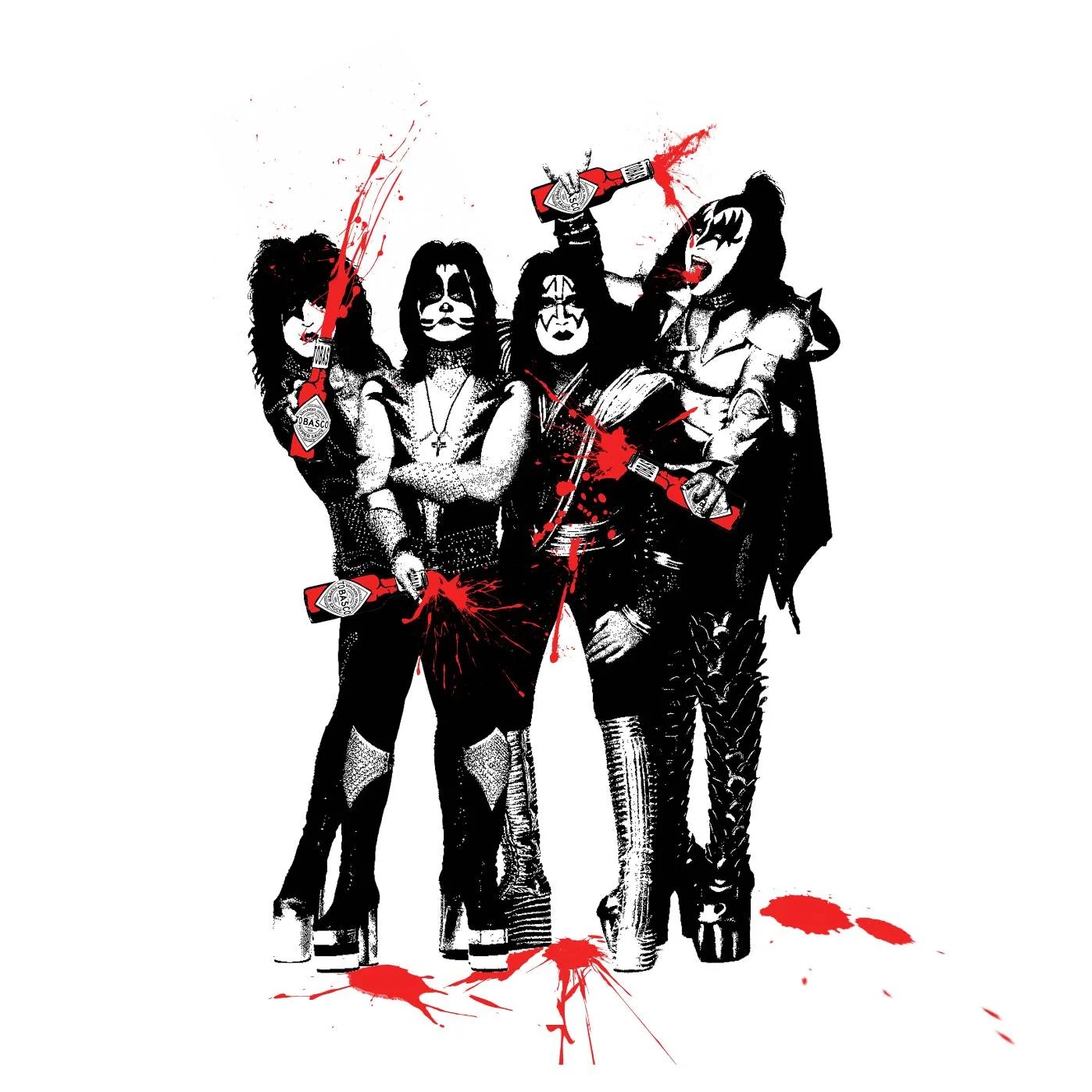



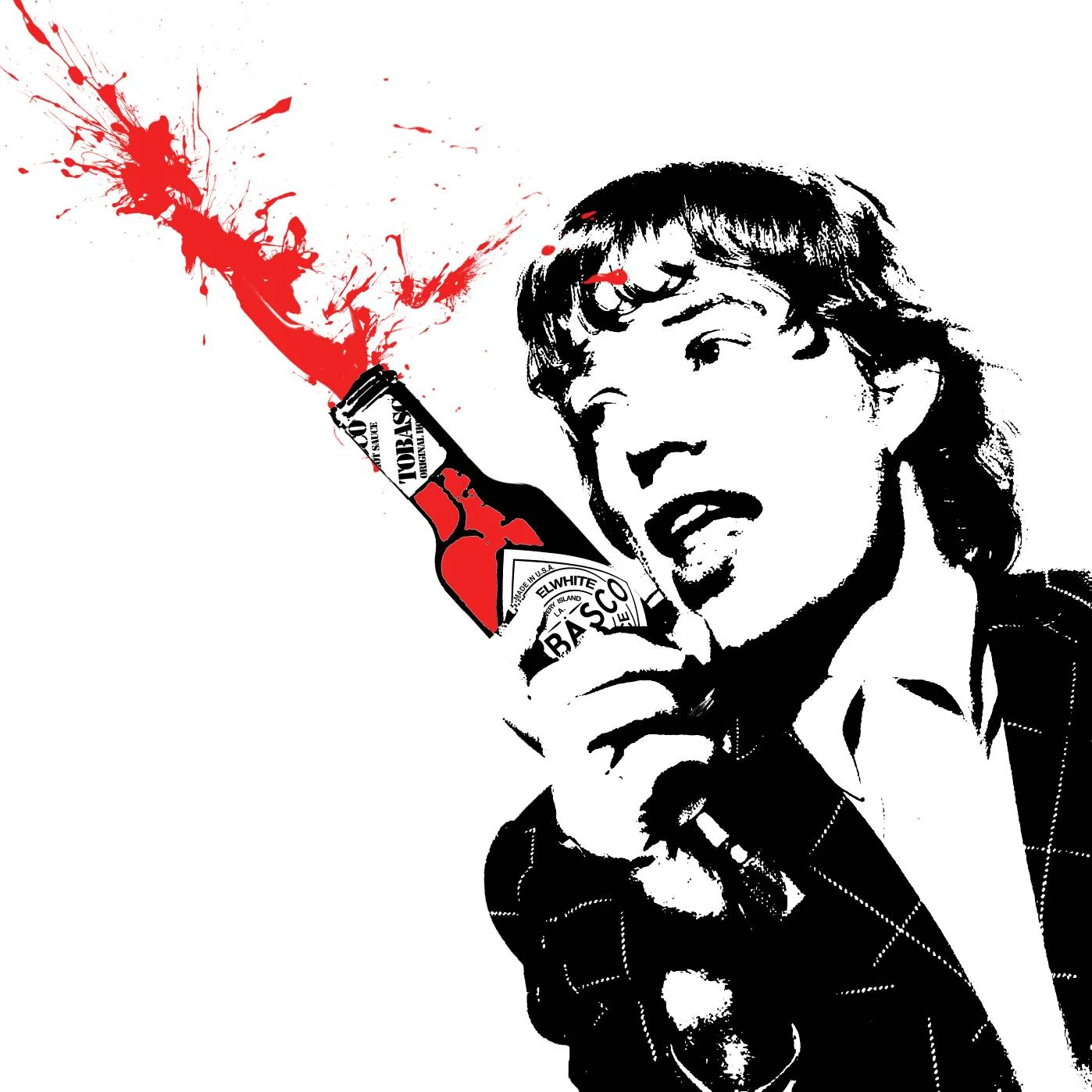
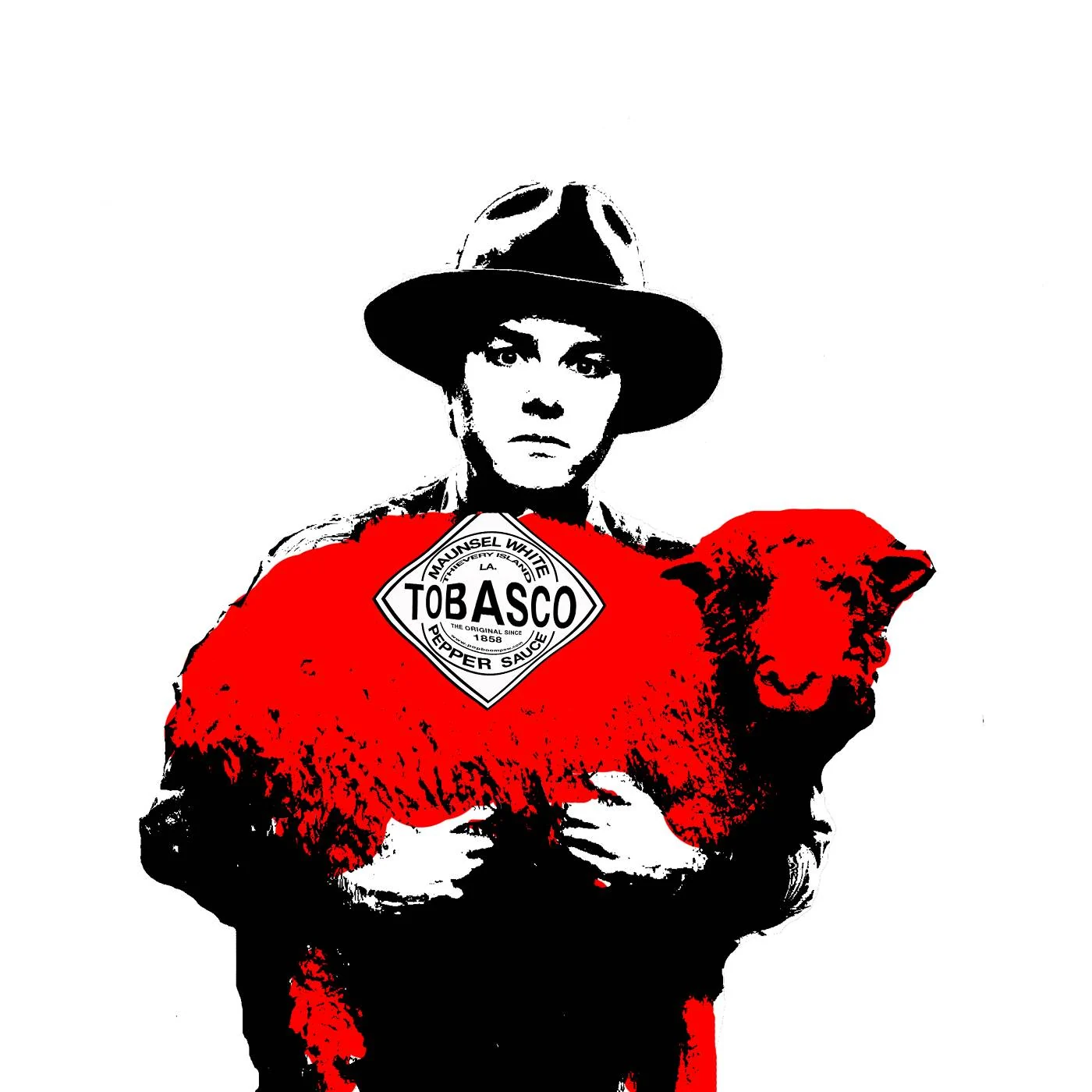
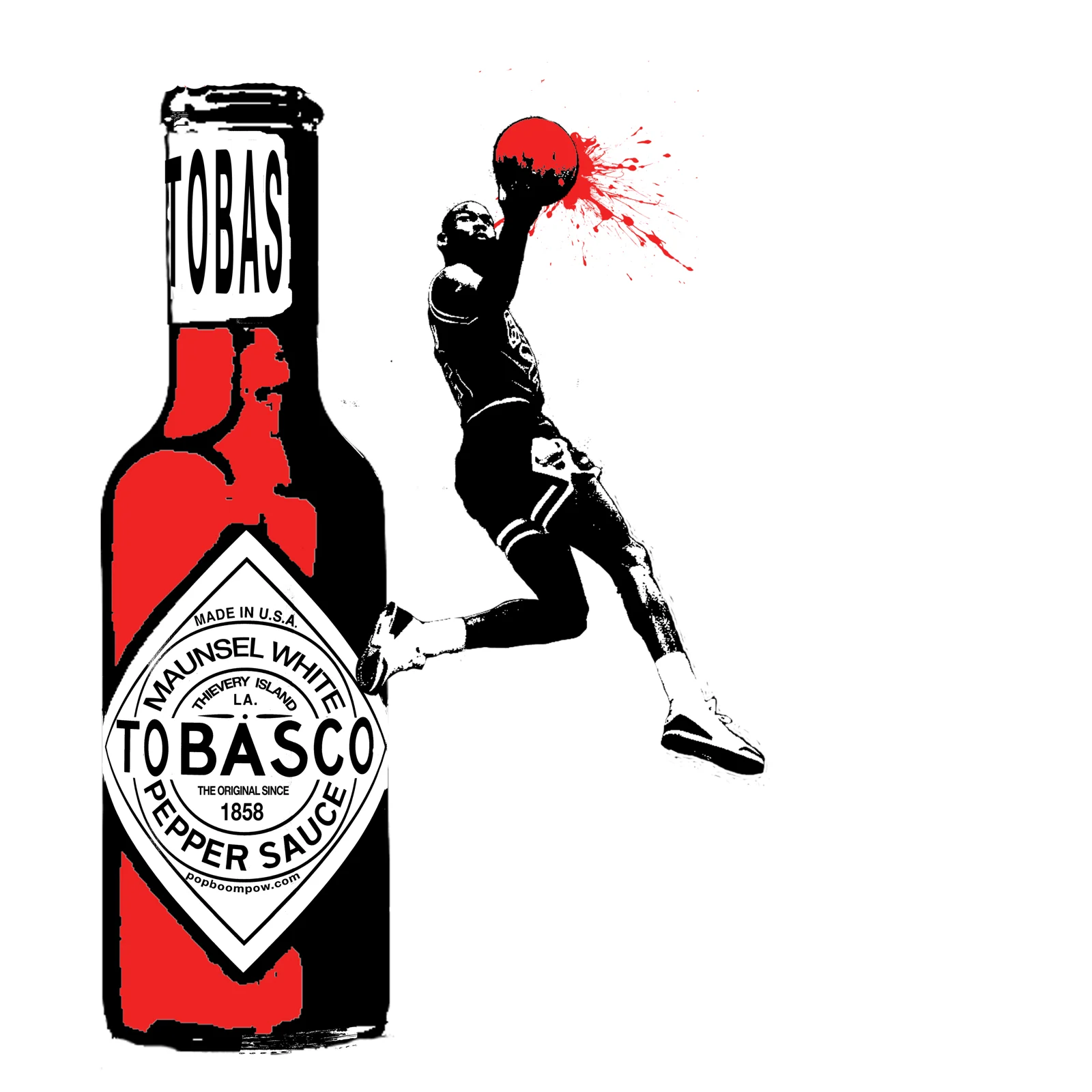
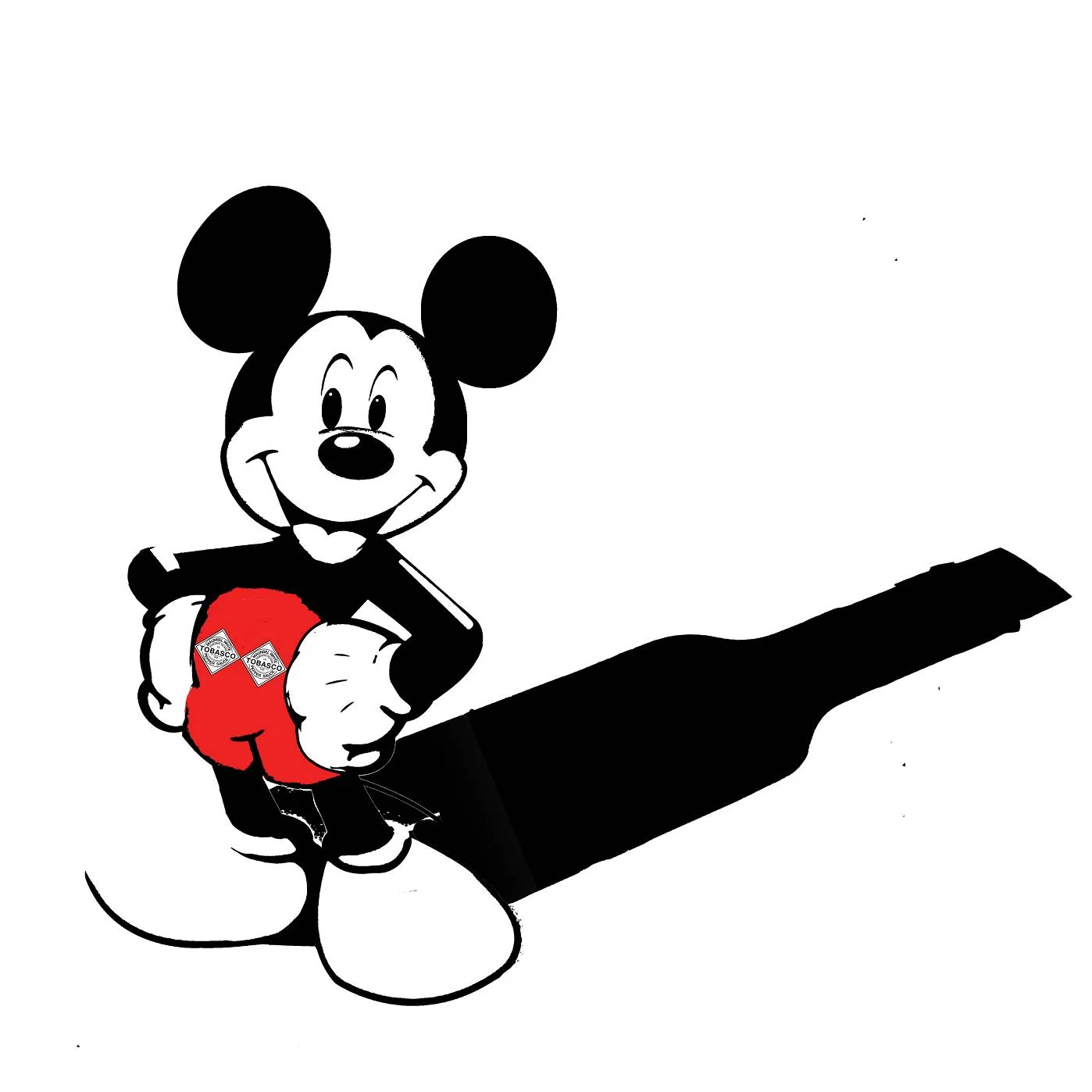
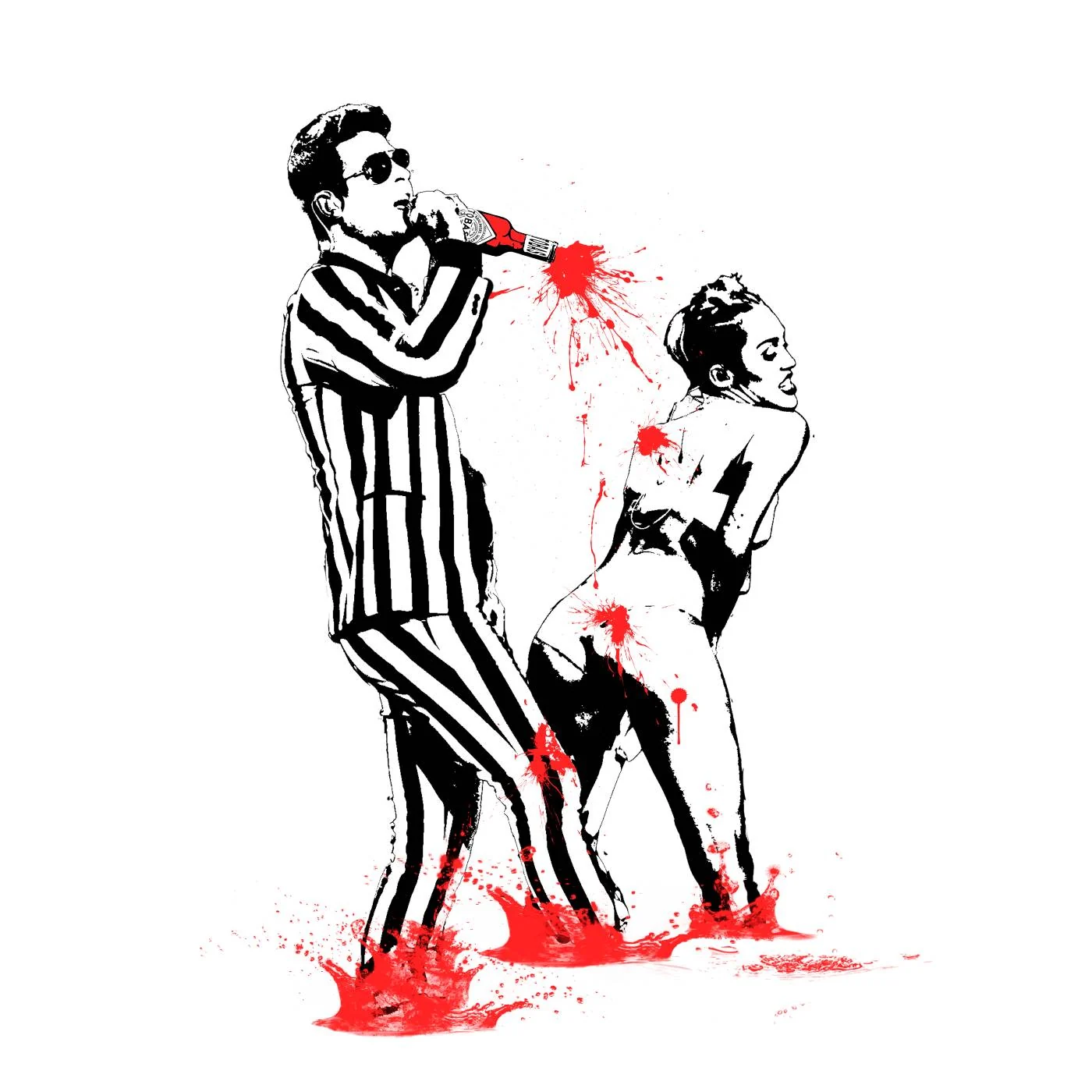

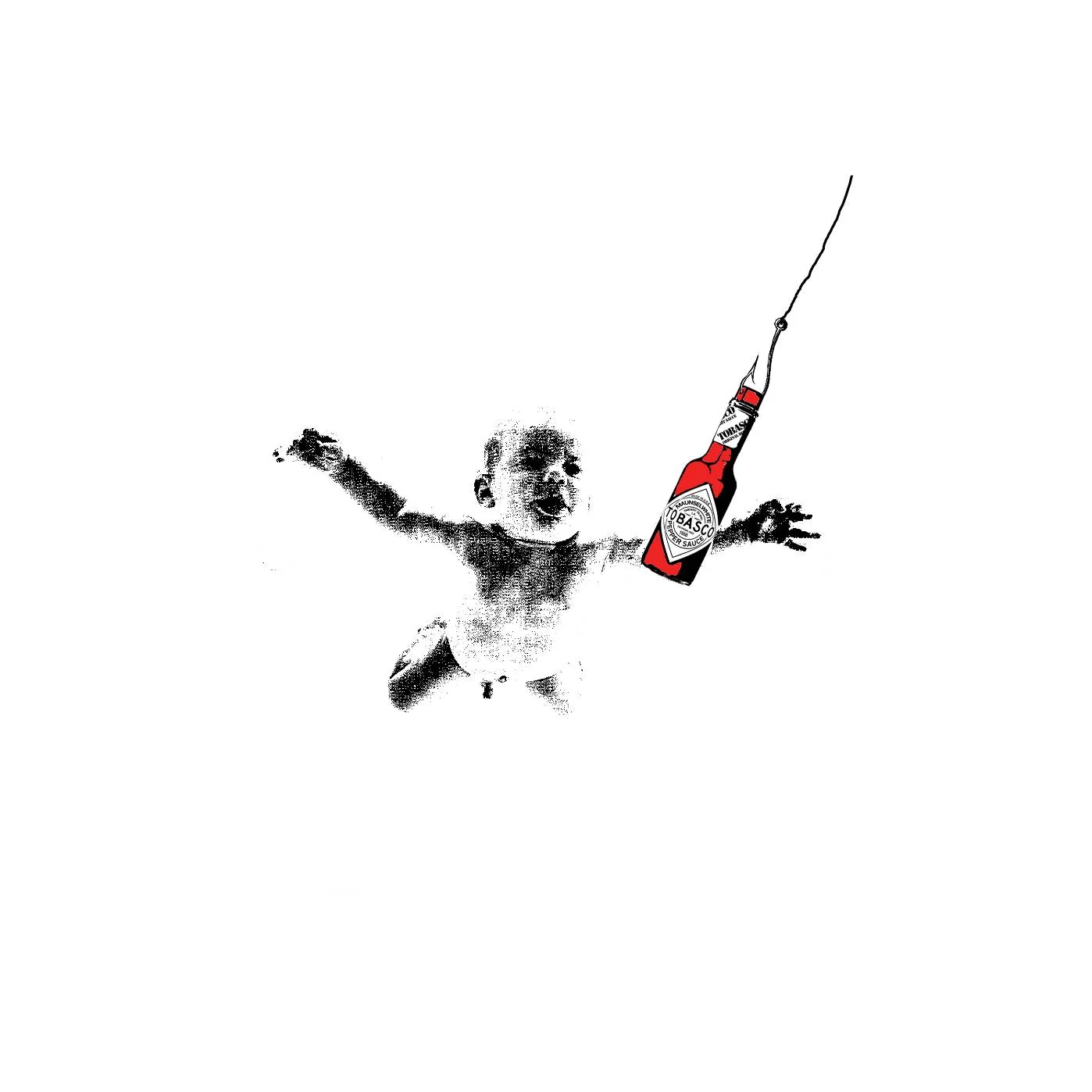
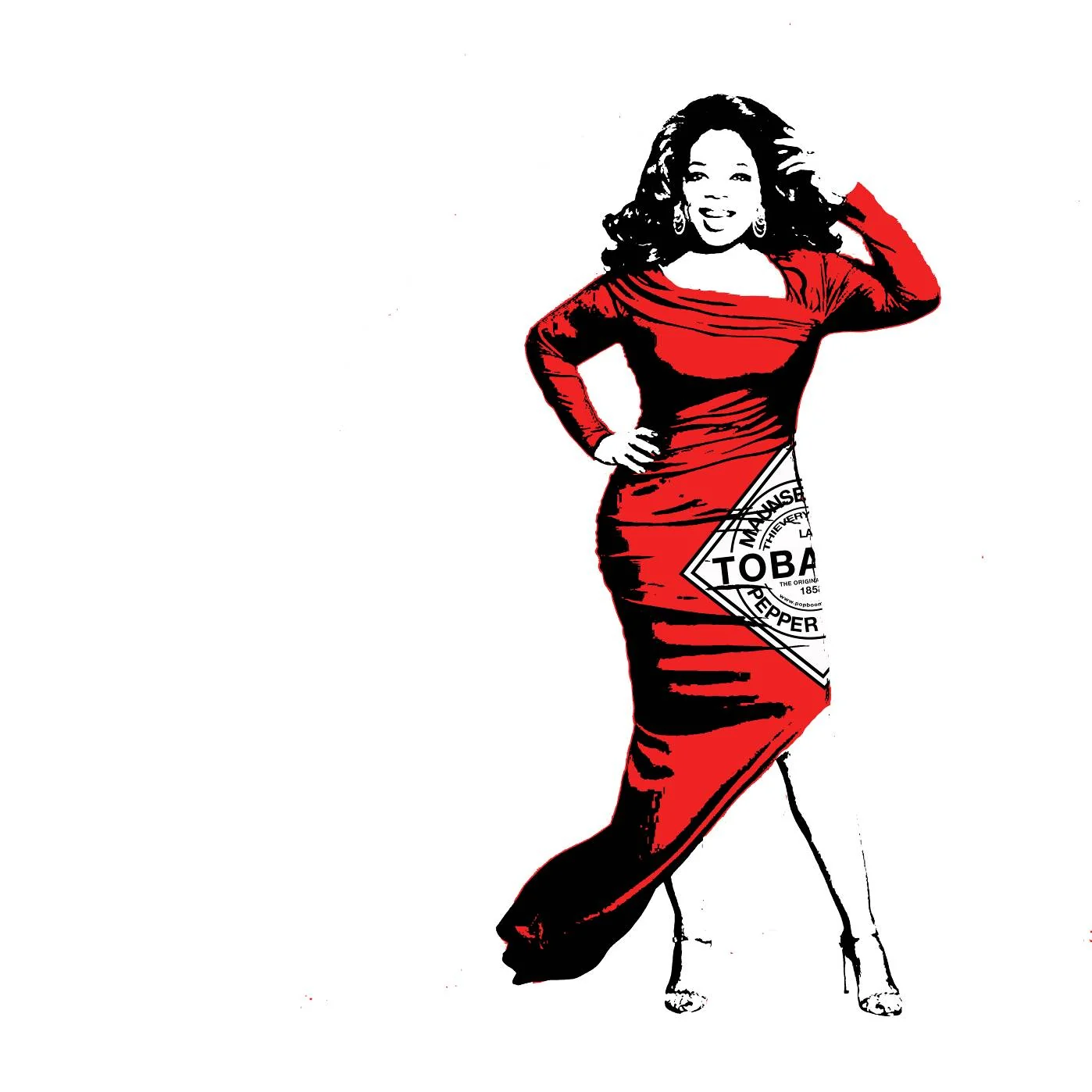

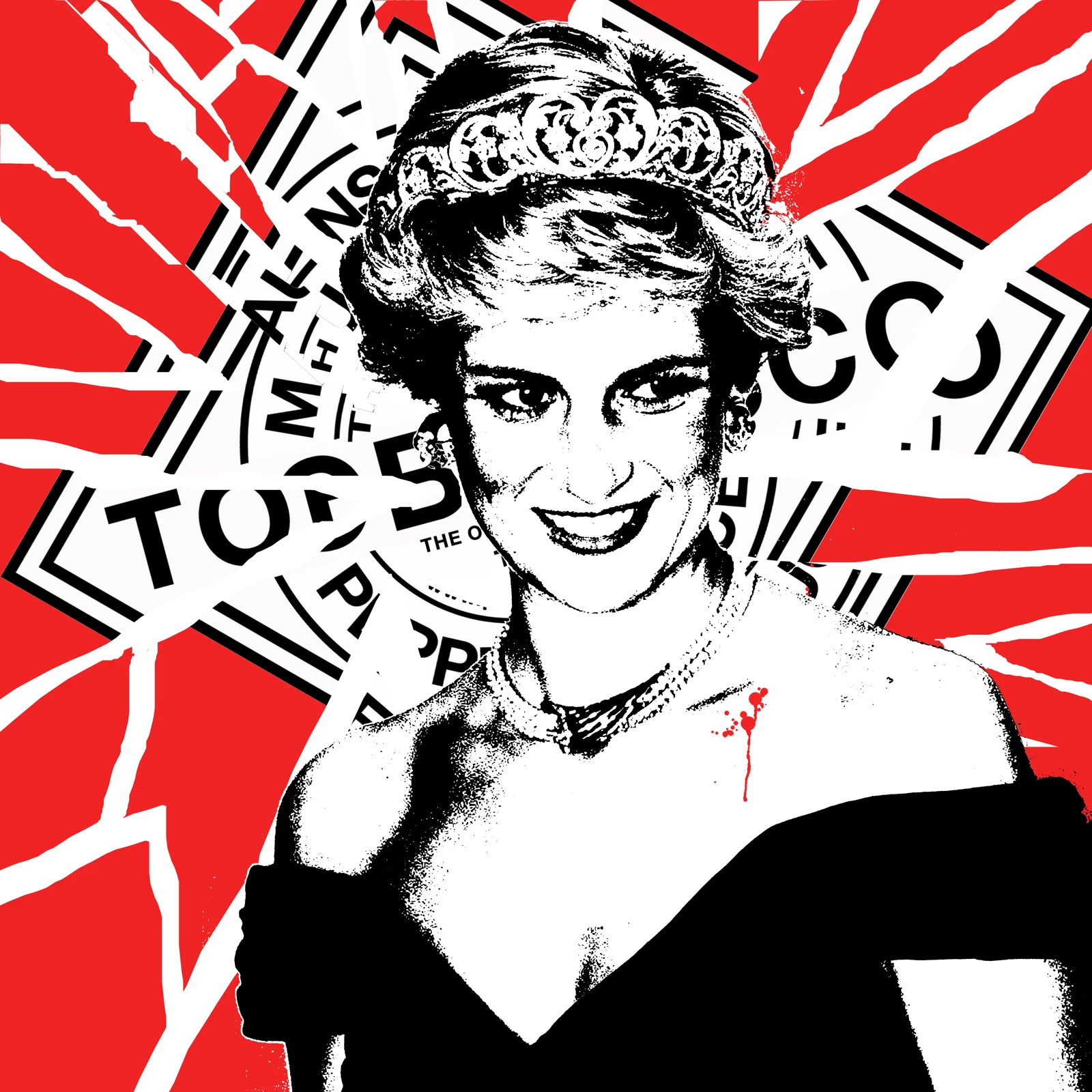

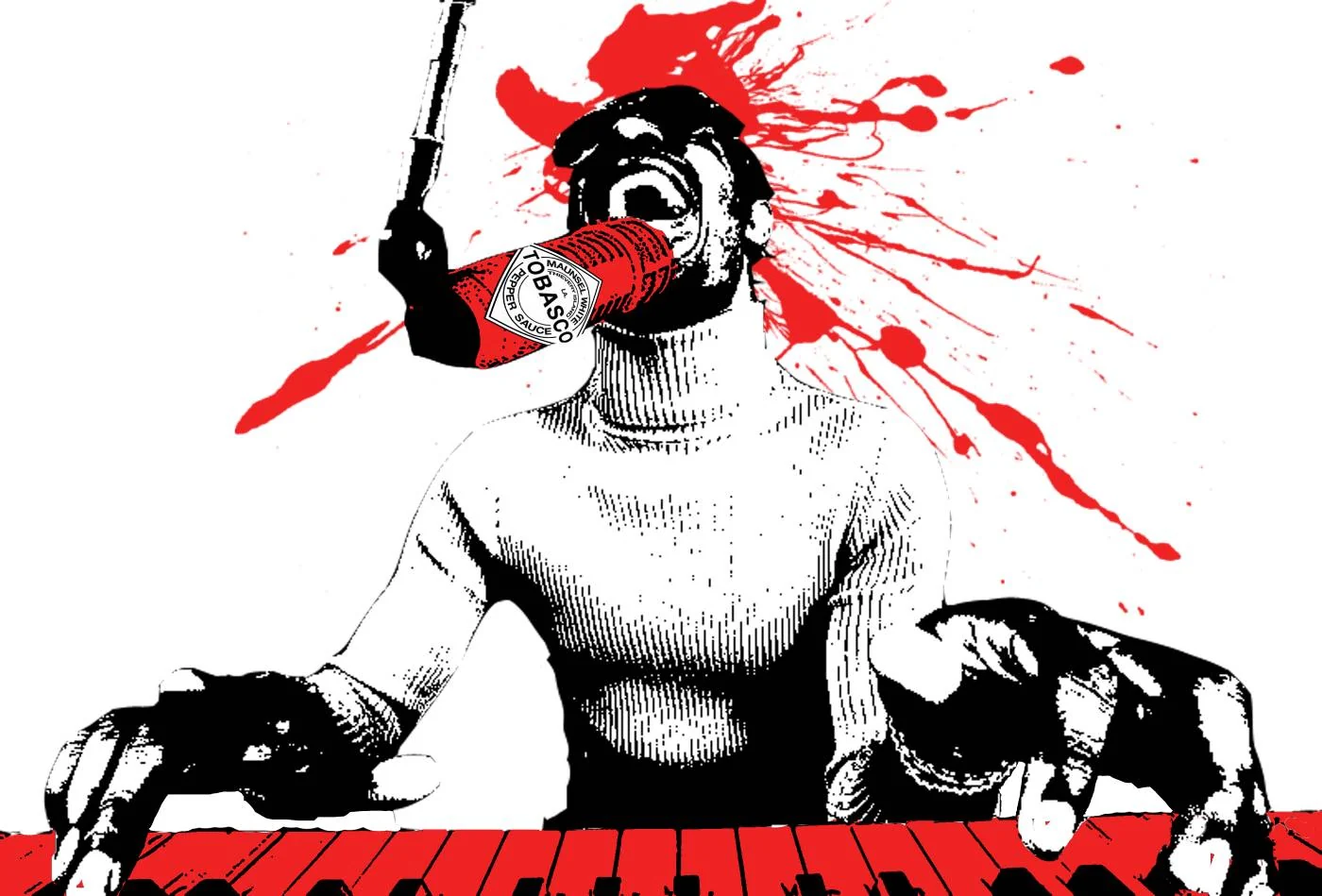

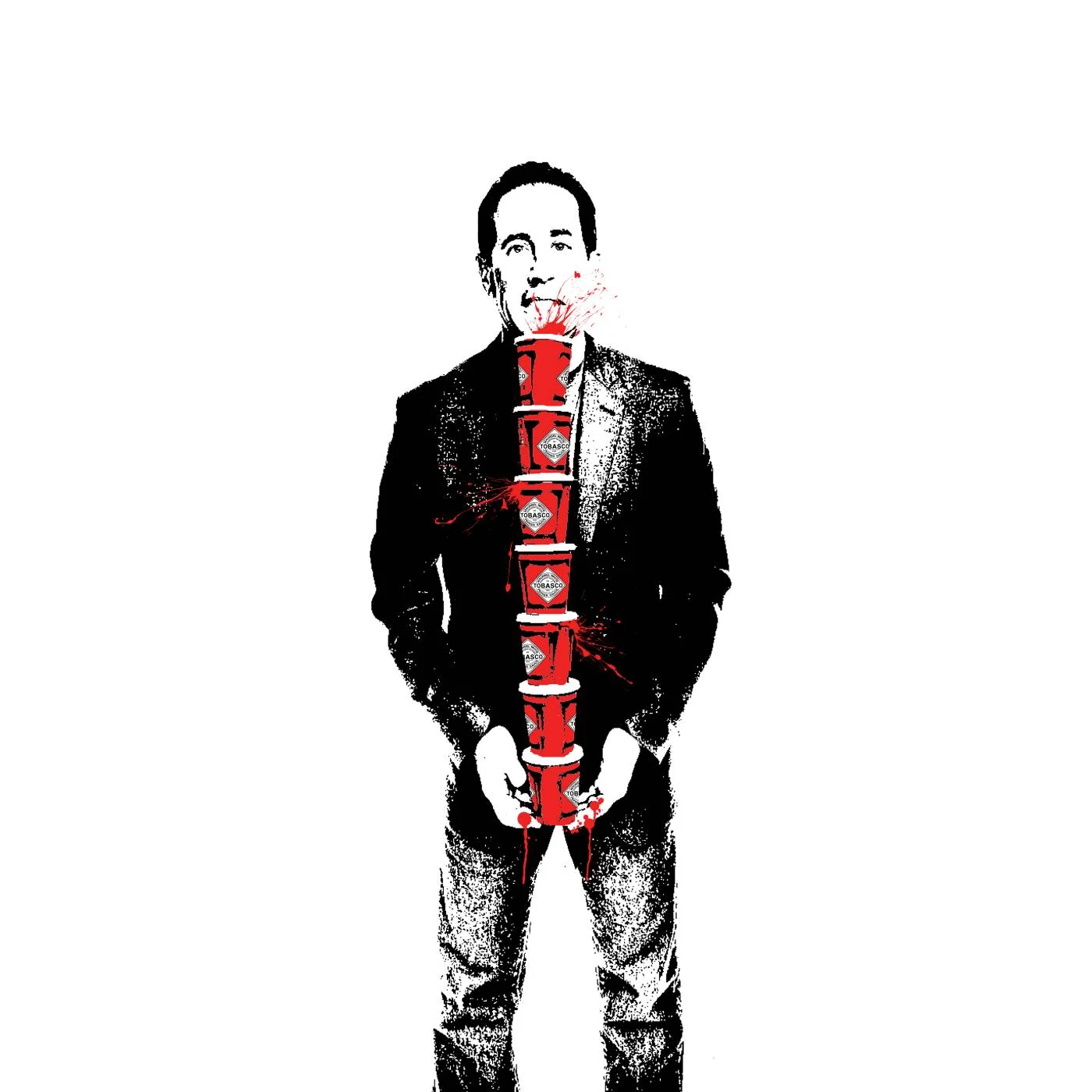
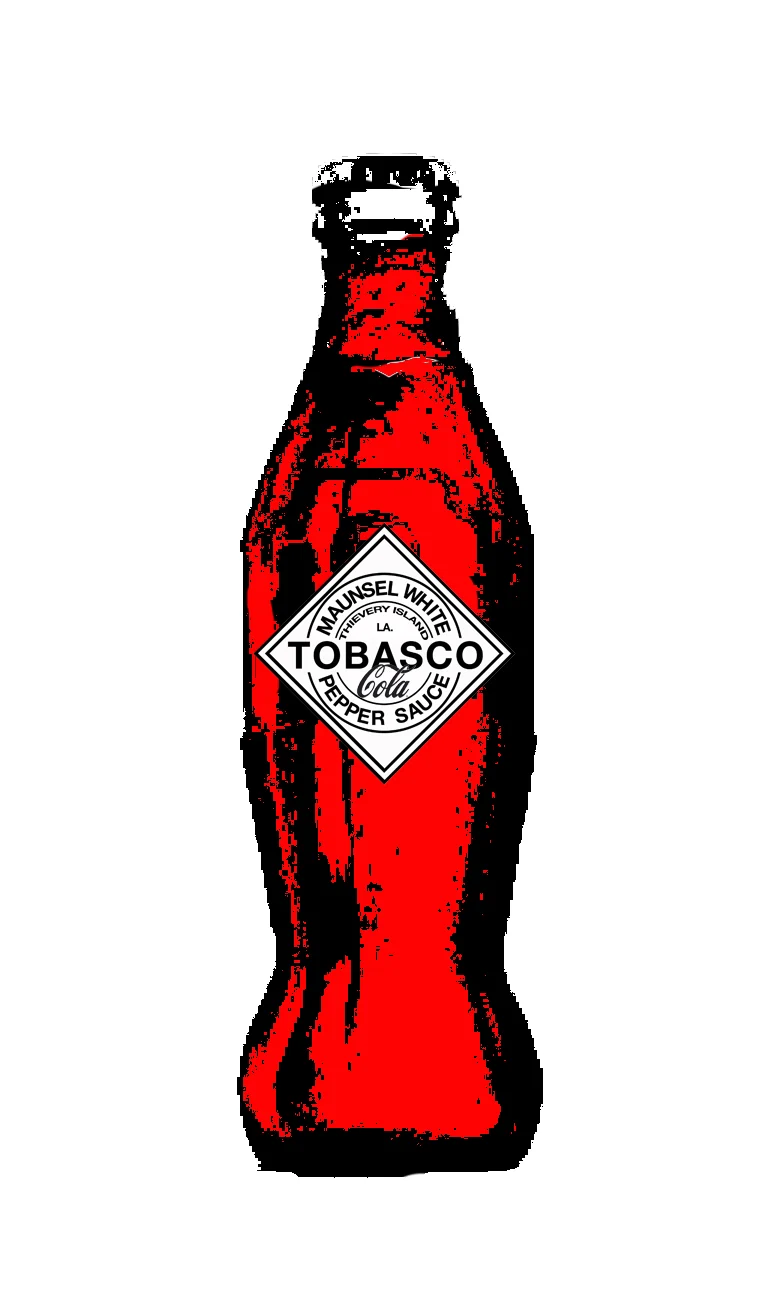








works plagiarized
[1] Quattrocchi, Umberto (2000). CRC World Dictionary of Plant Names. 4 R-Z. Taylor and Francis US. p. 2058. ISBN 978-0-8493-2678-3.
[2] Quattrocchi, Umberto (2000). CRC World Dictionary of Plant Names. 1 A-C. CRC Press. p. 431. ISBN 978-0-8493-2675-2.
[3] Gil-Jurado, A. T., in (G. Manetti, ed.), Semiofood: Communication and Culture of Meal, Centro Scientifico Editore, Torino, Italy, 2006:34–58
[4] "Bosland, P.W. 1998. Capsicums: Innovative uses of an ancient crop. ''p. 479–487. In: J. Janick (ed.), Progress in new crops. ASHS Press, Arlington, VA.''". Hort.purdue.edu. 22 August 1997. Retrieved 23 December 2010.
[5]http://www.npr.org/templates/story/story.php?storyId=93636630, What Made Chili Peppers So Spicy? Talk of the Nation, 15 August 2008.
[6] New Mexico State University - College of Agriculture and Home Economics (2005). "Chile Information - Frequently Asked Questions".
[7] Tewksbury, J. J.; Nabhan, G. P. (2001). "Seed dispersal. Directed deterrence by capsaicin in chilies". Nature 412 (6845): 403–404. doi:10.1038/35086653. PMID 11473305
[8] Joshua J. Tewksbury, Karen M. Reagan, Noelle J. Machnicki, Tomás A. Carlo, David C. Haak, Alejandra Lorena Calderón Peñaloza, and Douglas J. Levey (2008-08-19), http://www.pnas.org/content/105/33/11808.abstract , "Evolutionary ecology of pungency in wild chilies", , Proceedings of the National Academy of Sciences 105 (33): 11808–11811,
[9] http://www.americanscientist.org/issues/feature/feel-the-burn , Story GM, Crus-Orengo L (July–August 2007). "Feel the burn". American Scientist 95 (4): 326–333
[10] Geppetti, Pierangelo & Holzer, Peter (1996). Neurogenic Inflammation. CRC Press, 1996.
[11] Siemens J, Zhou S, Piskorowski R, et al. (November 2006). "Spider toxins activate the capsaicin receptor to produce inflammatory pain". Nature 444 (7116): 208–12
[12] A Perk of Our Evolution: Pleasure in Pain of Chilies, New York Times, September 20, 2010 - http://www.nytimes.com/2010/09/21/science/21peppers.html?_r=0
[13] Mary Ann Liebert, Inc. - The Journal of Alternative and Complementary Medicine - 8(3):341
http://online.liebertpub.com/doi/abs/10.1089/10755530260128032?journalCode=acm
[14] Paul Rozin1 and Deborah Schiller, Paul; Schiller, Deborah (1980). "The nature and acquisition of a preference for chili pepper by humans". Motivation and Emotion 4 (1): 77–101.
[15] Arnold WP, van de Kerkhof PC. (September 1993). "Topical capsaicin in pruritic psoriasis.". Journal of the American Academy of Dermatology (J Am Acad Dermatol.) 29 (3): 438–42.
[16] Lejeune MP, Kovacs EM, Westerterp-Plantenga MS. (September 2003). "Effect of capsaicin on substrate oxidation and weight maintenance after modest body-weight loss in human subjects.". The British journal of nutrition (Br J Nutr.) 90 (3): 651–59
[17] Caterina MJ, Schumacher MA, Tominaga M, Rosen TA, Levine JD, Julius D (October 1997). "The capsaicin receptor: a heat-activated ion channel in the pain pathway". Nature 389 (6653): 816–24
[18] http://www.ncbi.nlm.nih.gov/pmc/articles/PMC2497455/ Kissin, I. (2008). "Vanilloid-Induced Conduction Analgesia: Selective, Dose-Dependent, Long-Lasting, with a Low Level of Potential Neurotoxicity". Anesthesia & Analgesia 107 (1): 271–281
[19] http://cancerres.aacrjournals.org/content/71/8/2809 Bode, A. M.; Dong, Z. (2011). "The Two Faces of Capsaicin". Cancer Research 71 (8): 2809–2814
[20]http://www.epa.gov/oppsrrd1/REDs/factsheets/4018fact.pdf , R.E.D. Facts for Capsaicin". United States Environmental Protection Agency – Retrieved 2013–06-01
[21] Pictorial Field-Book of the War of 1812, Benson J. Lossing (1869).
[22] The Battle of New Orleans, Andrew Jackson And Americas First Military Victory, Robert V. Remini, Viking Press (1999). The Pictorial Field-Book of the War of 1812 indicates the battalion numbered three hundred and eighty-five men composed of 4 companies: Hulans, or foot dragoons, under Captain St. Genre; Francs, Captain Hudry; Louisiana Blues, Captain Maunsel White; and Chasseurs, Captain Gilbert.
[23] Records of Ante-Bellum Southern Plantations From the Revolution Through the Civil War Series J: Selections from the Southern Historical Collection Part 5: Louisiana, University Publications of America (1996).
[24] The Cabildo, Two Hundred Years of Louisiana History, Louisiana State Museum.
[25] 1851 New Orleans City Directory, Louisiana Division, Main Branch New Orleans Public Library.
[26] New Orleans Public Library-Crescent City Memory Collection.
[27] Dyas Collection-John Coffee Papers, Department of Tennessee State Library & Archives.
[28] The Advocate: Capitol Castle, article by Carol Anne Blitzer, Baton Rouge, Louisiana.
[29] The word tobasco/tabasco was erroneously translated to mean land where the soil is humid. Tapach-co {the suffix co meaning place of} is the etymological derivation of the Nhautl word tapachtl meaning coral or (oyster) shell which is the description provided Hernn Cortez in 1519 by the Nhuatl-speaking natives to describe the place of coral or oyster shell. Diccinario de la Lengua Nahuatl O Mexicana, Rmi Simon, Siglo Veintiuno Editores, SA de CV (1988). See also PEPPERS, The Domesticated Capsicums, Jean Andrews, University of Texas Press (1984).
[30] Avery Family of Louisiana Papers Inventory (#M-3289)at the Manuscripts Department of the University of North Carolina at Chapel Hill.
[31] Pepper Seeds of Fortune, C. Richard Cotton, American Profile (February 11, 2001).
[32] Column, Reminiscing: Was Col. Maunsel White the True Originator of Tabasco Sauce?, Metropolitan New-Enterprise (July 15, 2004).
[33] Column, Reminiscing: Was Col. Maunsel White the True Originator of Tabasco Sauce?, Metropolitan New-Enterprise (July 15, 2004).
[34] Times Picayune, January 10, 1977.
[35 Maunsel White has been reported from several different sources to have died in 1862 or 1863. Chuck Evans believes that White died in 1863. See Inventory of the Maunsel White Papers, 1802-1912, Collection Number 2234, at the Manuscripts Department of the University of North Carolina at Chapel Hill.
[36]PEPPERS, The Domesticated Capsicums, Jean Andrews, University of Texas Press (1984).
[37] http://www.talkorigins.org/faqs/piltdown.html Richard Harter. "Piltdown Man - The Bogus Bones Caper". The Talk Origins Archive. Retrieved 2013-05-27
[38] The Phenomenon of Man, Harper Torchbooks, The Cloister Library, Harper & Row, Publishers, Copyright 1961, p. 169.
[39] The Phenomenon of Man, Harper Torchbooks, The Cloister Library, Harper & Row, Publishers, Copyright 1961, p. 165.
[40] The Phenomenon of Man, Harper Torchbooks, The Cloister Library, Harper & Row, Publishers, Copyright 1961, p. 220.
[41] The Phenomenon of Man, Harper Torchbooks, The Cloister Library, Harper & Row, Publishers, Copyright 1961, p. 205.
[42] The Phenomenon of Man, Harper Torchbooks, The Cloister Library, Harper & Row, Publishers, Copyright 1961, p. 178.
[43] The Phenomenon of Man, Harper Torchbooks, The Cloister Library, Harper & Row, Publishers, Copyright 1961, p. 244.
[44] The Phenomenon of Man, Harper Torchbooks, The Cloister Library, Harper & Row, Publishers, Copyright 1961, p. 278.
[45] The Phenomenon of Man, Harper Torchbooks, The Cloister Library, Harper & Row, Publishers, Copyright 1961, p. 241.
[46] The Phenomenon of Man, Harper Torchbooks, The Cloister Library, Harper & Row, Publishers, Copyright 1961, p. 253.
[47] The Phenomenon of Man, Harper Torchbooks, The Cloister Library, Harper & Row, Publishers, Copyright 1961, p. 259.
[48] The Phenomenon of Man, Harper Torchbooks, The Cloister Library, Harper & Row, Publishers, Copyright 1961, p. 261.
[49] The Phenomenon of Man, Harper Torchbooks, The Cloister Library, Harper & Row, Publishers, Copyright 1961, p. 262.
[50] Marshall, Peter. Demanding the Impossible. Fontana, London. 1993. p. 558.
[51] http://fair-use.org/p-j-proudhon/general-idea-of-the-revolution/ 1923 English translation by John Beverly Robinson at the Fair Use Repository, Retrieved 2013-06-05
[52] http://fair-use.org/p-j-proudhon/general-idea-of-the-revolution/ ‘What is Government?’ 1923 English translation by John Beverly Robinson at the Fair Use Repository, Retrieved 2013-06-05
[53] http://tallerediciones.com/cuza/masonesyobreros.htm 'La Masonería y el movimento obrero' by Alberto Valín Fernández. Google translation, Retrieved 2013-06-07
[54]http://web.archive.org/web/20051224205914/http://www.lacitybeat.com/article.php?id=2696&IssueNum=122 Appleford, Steve (June 10, 2005). "The Only Way to Be – Anarchy!". LA CityBeat. Los Angeles, California: Southland Publishing. Archived from the original, Retrieved 2013-02-27
[55] Kurczynski, Karen Expression as vandalism: Asger Jorn's "Modifications", in RES: Anthropology and Aesthetics No. 53/54 (Spring - Autumn, 2008), pp.295-6
[56]http://en.wikipedia.org/wiki/Report_on_the_Construction_of_Situations , Retrieved 2012-11-17
[57] http://www.cddc.vt.edu/sionline///si/definitions.html Situationist International (1). June 1958. Retrieved 2013-6-2.
[58] Douglas B. Holt: Cultural Strategy Using Innovative Ideologies to Build Breakthrough Brands, Oxford University Press 2010, p.252
[59]http://www.npr.org/templates/transcript/transcript.php?storyId=141526467 , Martin Kaste Exploring Occupy Wall Street's 'Adbuster' Origins, NPR, October 20, 2011 – Retrieved 2013-5-12
[60] Guha, R V; Tim Bray (1997-06-06). Meta Content Framework Using XML. W3C. Retrieved 2014-10-30
[61] National Information Standards Organization; Rebecca Guenther and Jaqueline Radebaugh (2004). Understanding Metadata. Bethesda, MD: NISO Press. ISBN 1-880124-62-9.
[62] National Archives of Australia (2002). http://www.naa.gov.au/records-management/publications/index.aspx#agls-metadata-standard - "AGLS Metadata Element Set - Part 2: Usage Guide - A non-technical guide to using AGLS metadata for describing resources". Retrieved 2015-02-11
[63] Lane, Sylvan (2014-07-21) http://mashable.com/2014/07/21/how-private-browsing-works/ Retrieved 2015-02-17
[64] http://www.kdd.org/curriculum/index.html. ACM SIGKDD. 2006-04-30. Retrieved 2015-02-22
[65] O'Brien, J. A., & Marakas, G. M. (2011). Management Information Systems. New York, NY: McGraw-Hill/Irwin.
[66] Alexander, D. (n.d.). Data Mining. Retrieved from The University of Texas at Austin: College of Liberal Arts:http://www.laits.utexas.edu/~anorman/BUS.FOR/course.mat/Alex/
[67] Goss, S. (2013, April 10). Data-mining and our personal privacy. Retrieved from The Telegraph:http://www.macon.com/2013/04/10/2429775/data-mining-and-our-personal-privacy.html
[68] http://www.en.wikipedia.org/wiki/Data_mining Retrieved 2015-02-21
[69] Monk, Ellen; Wagner, Bret (2006). Concepts in Enterprise Resource Planning, Second Edition. Boston, MA: Thomson Course Technology. ISBN 0-619-21663-8.
[70] Zhu, Xingquan; Davidson, Ian (2007). Knowledge Discovery and Data Mining: Challenges and Realities. New York, NY: Hershey. p. 18. ISBN 978-1-59904-252-7.
[71] David G. Savage (2011-06-24). "Pharmaceutical industry: Supreme Court sides with pharmaceutical industry in two decisions". Los Angeles Times. Retrieved 2015-02-24.
[72] http://dl.acm.org/citation.cfm?doid=2184319.2184324 Analyzing Medical Data. (2012). Communications of the ACM 55(6), 13-15. Retrieved 2015-02-24.
[73] Pachet, François; Westermann, Gert; and Laigre, Damien; Musical Data Mining for Electronic Music Distribution http://www.csl.sony.fr/downloads/papers/2001/pachet01c.pdf, Proceedings of the 1st Wedel Music Conference, Firenze, Italy, 2001, pp. 101–106. Retrieved 2015-02-24.
[74] Government Accountability Office, Data Mining: Early Attention to Privacy in Developing a Key DHS Program Could Reduce Risks, GAO-07-293 (February 2007), Washington, DC
[75] http://www.nbcnews.com/id/20604775/ Secure Flight Program Report; MSNBC. Retrieved 2015-02-24
[76] https://w2.eff.org/Privacy/TIA/20031003_comments.php Total Terrorism Information Awareness (TIA): Is It Truly Dead? Retrieved 2015-02-24
[77] http://www.guha.com/cv.html R.V. Guha Curriculum Vitae Retrieved 2015-03-02
[78] John Backus - The History of FORTRAN
http://www.softwarepreservation.org/projects/FORTRAN/paper/p25-backus.pdf; Retrieved 2015-03-02
[79] Ramanathan V. Guha - Towards a Theory of Meta-Content http://downlode.org/Etext/MCF/towards_a_theory_of_metacontent.html; Retrieved 2015-03-02
[80] Internet Engineering Task Force http://www.rfc-editor.org/rfc/rfc7303.txt; Retrieved 2015-03-02
[81] XML and Semantic Web W3C Standards Timeline; http://www.dblab.ntua.gr/~bikakis/XMLSemanticWebW3CTimeline.pdf; Retrieved 2015-03-02
[82] Resource Description Framework (RDF) Model and Syntax Specification; http://www.w3.org/TR/PR-rdf-syntax/; Retrieved 2015-03-02
[83] Dr. Leslie Sikos; http://www.lesliesikos.com/; Major RDF Syntaxes in RDF Tutorial - Retrieved 2015-03-02
[84] Dr. Leslie Sikos; http://www.lesliesikos.com/; Standard Websites - Retrieved 2015-03-02
[85] http://sw.deri.org/2005/02/dexa/yars.pdf; Andreas Harth, Stefan Decker, 3rd Latin American Web Congress, Buenos Aires, Argentina; Retrieved 2015-03-02
[86] Lewis S. Nelson; Richard D. Shih; Michael J. Balick (2007).Handbook of poisonous and injurious plants. http://books.google.com/books?id=-J-YxItyrHEC&pg=PA211#v=onepage&q&f=false; Springer. pp. 211–212. ISBN 978-0-387-33817-0. Retrieved 2015-03-03.
[87] Cahnrsnews.wsu.edu. 29 August 2010; http://cahnrs.wsu.edu/blog/2010/09/apple-cup-rivals-contribute-to-apple-genome-sequencing/ ; Retrieved 2015-03-10
[88]http://www.nature.com/ng/journal/v42/n10/full/ng.654.html; Nature.com. ; Retrieved 2015-03-10
[89] AlphaGallileo 29 August 2010 ; http://www.alphagalileo.org/ViewItem.aspx?ItemId=83717&CultureCode=en ; Retrieved 2015-03-11
[90] Human Genome Project Information, US Department of Energy, 26 March 2008.; http://www.ornl.gov/sci/techresources/Human_Genome/project/info.shtml ; Retrieved 2015-03-11
[91] Snorri Sturluson. Edda. Translated and edited by Anthony Faulkes. London : Dent, 1995. (The Everyman library). First published in 1987. ISBN 0-460-87616-3.
[92] Orchard, Andy (1997). Dictionary of Norse Myth and Legend. Cassell. ISBN 0-304-34520-2
[93] Larrington, Carolyne (Trans.) (1999). The Poetic Edda. Oxford World's Classics. p66-67 ISBN 0-19-283946-2.
[94] Davidson, Hilda Roderick Ellis (1988). Myths and Symbols in Pagan Europe: Early Scandinavian and Celtic Religions. Manchester University Press. ISBN 0-7190-2579-6.
[95] Herodotus - The Histories; http://wps.pearsoncustom.com/wps/media/objects/2426/2484749/chap_assets/bookshelf/herodotus.pdf Retrieved 2015-02-17
[96] Edmonds, J. M., trans.; rev. John M. Cooper. "Epigrams".Plato: Complete Works. Ed. John M. Cooper. Indianapolis: Hackett, 1997. p 1744, note to VII. Print.
[97] Hertzfeld, Andy (February 1981); http://www.folklore.org/StoryView.py?project=Macintosh&story=Reality_Distortion_Field.txt ; Retrieved 2015-03-11
[98] Dudrow, Andrea (October 16, 2000). "Notes from the Epicenter: Exploring the Reality Distortion Field". CreativePro.
[99] Inside BlackBerry. October 19, 2010; http://blogs.blackberry.com/2010/10/rim-responds-to-apples-distortion-field/; Retrieved 2015-03-11
[100] The Official Dilbert Comic Strip Archive; http://dilbert.com/strip/2010-09-23 ; Retrieved 2015-03-11
[101] Isaacson, Walter; "Steve Jobs" ; Simon and Schuster ISBN 978-1-4516-4853-9
[102] Cubeta, Charles (March 2, 2012); http://bowdoinorient.com/article/7094. The Bowdoin Orient. Retrieved 2015-03-11
[103] Reed Magazine - "Prodigal Son"; December 2011; http://www.reed.edu/reed_magazine/december2011/articles/features/jobs/jobs2.html ; Retrieved 2015-03-11
[104] Kwantes, James; "How One Billionaire Influenced Another" ; http://ceo.ca/2012/09/14/robert-friedland-and-steve-jobs-how-one-billionaire-influenced-another/ ; Retrieved 2015-03-11
[105] Cubeta, Charles (March 2, 2012) ; The Bowdoin Orient. http://bowdoinorient.com/article/7094 ; Retrieved 2015-03-12
[106] http://www.ivanhoemines.com/s/projects.asp ; Overview of Projects; Retrieved 2015-03-12
[107] Williams, Martyn; New Boycott Called on Apple Products; Computer World - March 2014; http://www.computerworld.com/article/2488552/mac-os-x/new-boycott-called-on-apple-products-for-toxic-chemical-use.html Retrieved 2015-03-12